

The FDA Orange Book is the official government list that tells pharmacists, doctors, and insurers which generic drugs can safely replace brand-name medicines. It’s not just a directory-it’s the rulebook that keeps the U.S. generic drug market running. If you’ve ever picked up a cheaper version of your prescription and wondered if it’s truly the same, the Orange Book is why you can trust it.
What the FDA Orange Book Actually Is
The official name is Approved Drug Products with Therapeutic Equivalence Evaluations. It’s published by the FDA’s Center for Drug Evaluation and Research (CDER) and updated every month. You won’t find it on bookstore shelves-it’s entirely digital now, available for free at fda.gov. As of late 2023, it includes over 16,000 approved drug products, both prescription and over-the-counter. Roughly 90% of all U.S. prescriptions are filled with generics, and the Orange Book is the reason pharmacies can swap them out without a new doctor’s note.
It’s called the “Orange Book” because the original print version had an orange cover. The name stuck, even after it went digital. But don’t be fooled-it’s not a marketing tool. It’s a legal and scientific document with real consequences for drug prices, patient access, and manufacturer competition.
How Generic Drugs Get Listed
Generic drugs don’t go through the same lengthy testing as brand-name drugs. Instead, they use a faster path called the Abbreviated New Drug Application (ANDA). To get approved, a generic maker must prove their version is bioequivalent to the original. That means it delivers the same amount of active ingredient into the bloodstream at the same rate. No need to repeat clinical trials-just show the body reacts the same way.
But here’s the key: every generic must point to one specific brand-name drug as its reference. That’s called the Reference Listed Drug (RLD). The Orange Book clearly marks which product is the RLD. For example, if you search for “metformin,” you’ll see the original brand (like Glucophage) listed as the RLD, and every generic version below it marked as “No” in the RLD column.
The FDA doesn’t test these generics themselves. They review the data submitted by the manufacturer and approve based on strict standards. Once approved, the generic appears in the Orange Book-usually within a month of the approval letter being issued.
Therapeutic Equivalence (TE) Codes: The Secret Code
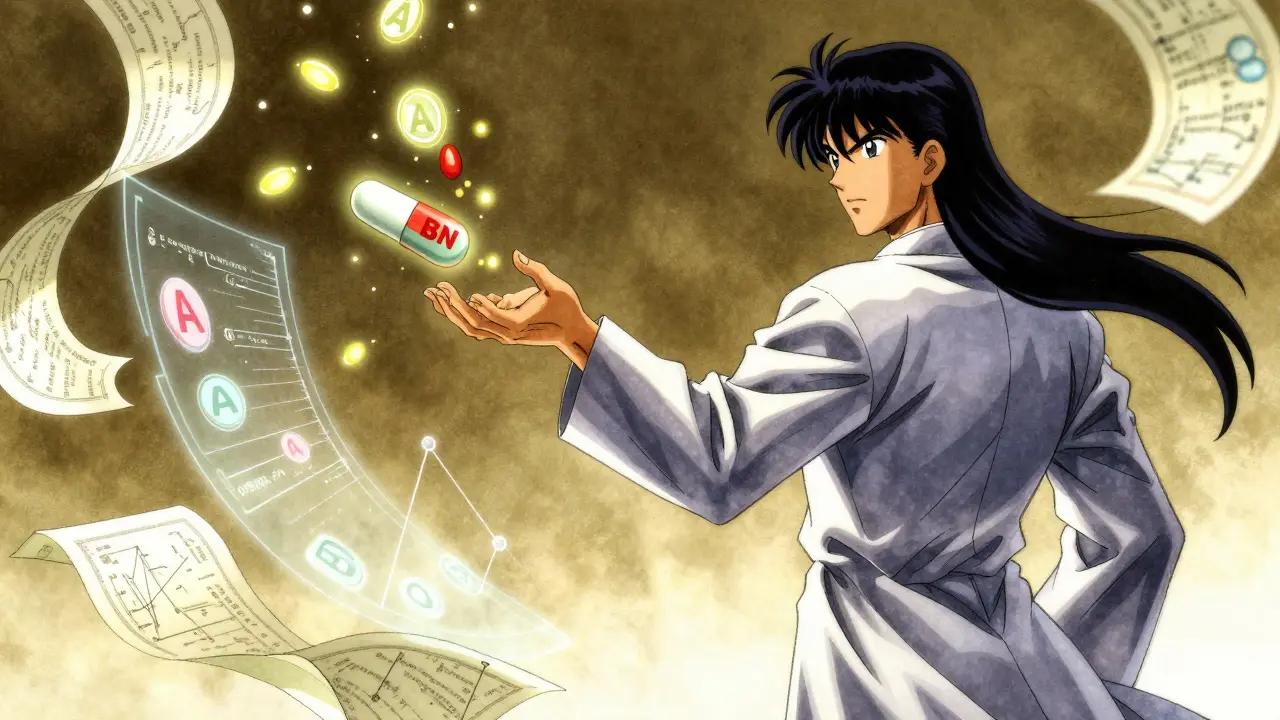
Not all generics are treated the same in the Orange Book. Each product gets a Therapeutic Equivalence (TE) Code that tells you whether it’s fully interchangeable with the brand or not.
- A codes mean the generic is therapeutically equivalent to the RLD. These are the ones pharmacies can substitute automatically, unless the doctor says no.
- B codes mean there’s uncertainty-maybe the drug has unusual absorption, or the formulation is tricky (like inhalers or eye drops). These aren’t automatically interchangeable.
- BN means it’s the only product available for that drug. No generics yet.
These codes matter. A drug with an “A” code can trigger automatic substitution under state laws. A “B” code means the pharmacist has to check with the prescriber first. Misreading a TE code can lead to denied claims, patient confusion, or even safety issues.
What’s Not in the Orange Book
There’s a big gap people often miss: authorized generics. These are brand-name drugs sold under a generic label-same pill, same factory, just no brand name on the box. They’re made by the original company, often to compete with other generics.
Here’s the catch: authorized generics don’t show up in the Orange Book. They’re listed under the original brand’s New Drug Application (NDA), not as an ANDA. The FDA keeps a separate list of authorized generics on its website, updated quarterly. If you’re looking for the cheapest version of a drug and see a generic that looks identical to the brand, it might be an authorized generic-and you won’t find it in the Orange Book.
Also missing: over-the-counter (OTC) drugs. The Orange Book doesn’t rate OTC products for therapeutic equivalence. That’s because the FDA treats them differently-they’re regulated under monographs, not individual applications.
Patents and Exclusivity: The Hidden Rules
The Orange Book doesn’t just list drugs. It also lists patents. When a brand-name company files a New Drug Application, they must tell the FDA which patents cover their drug-things like the chemical formula, how it’s made, or how it’s used.
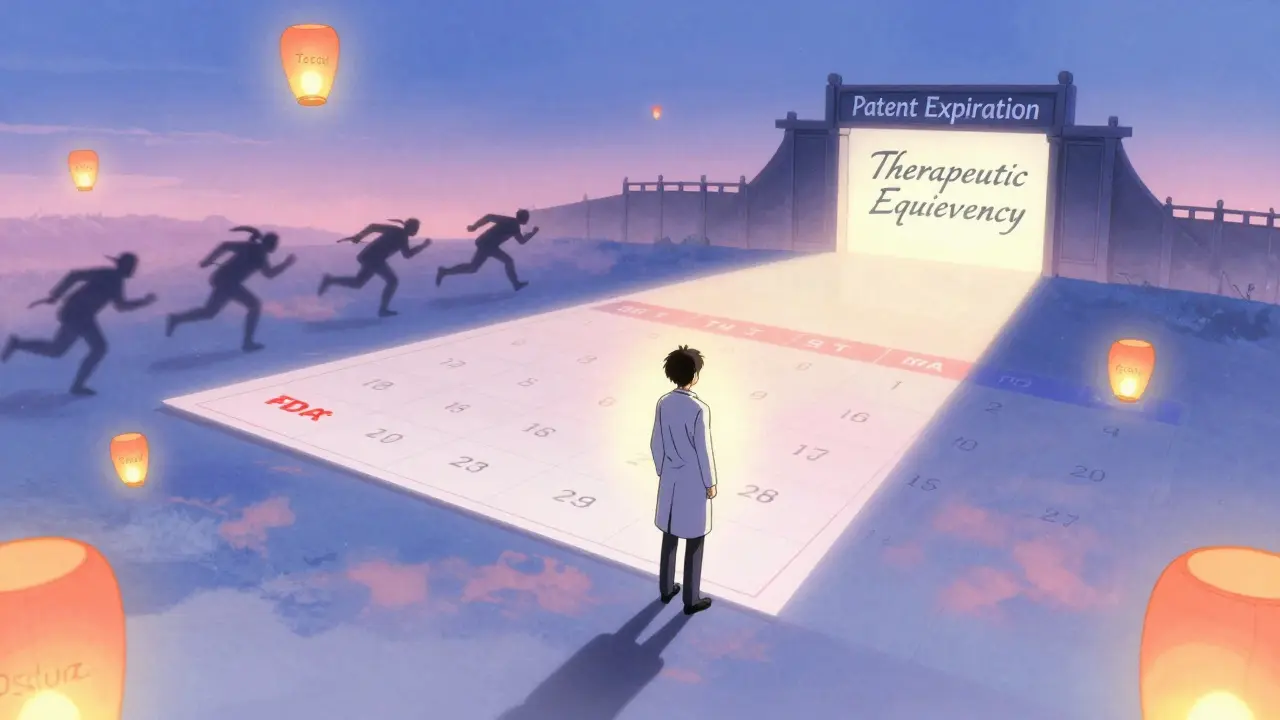
Each patent gets a number, an expiration date, and a “use code” (like U-123). These patents are what block generics from entering the market early. If a generic company challenges a patent, the brand gets a 30-month delay on approval. That’s the famous “Hatch-Waxman” 30-month stay.
But here’s the controversy: some companies list dozens of patents on one drug-sometimes for minor changes like a new pill coating or a different dosing schedule. Critics call this “patent evergreening.” The FDA says it’s just following the law, but in 2023, they tightened rules to prevent listing patents that don’t clearly relate to the drug’s approved use.
These patent listings directly affect how soon a generic can launch. A drug with 12 listed patents might face a decade-long delay. One with only one might have generics within months.
How to Use the Orange Book
Using the Electronic Orange Book isn’t hard, but it takes practice. Here’s how to find what you need:
- Go to fda.gov/orangebook
- Search by active ingredient (like “amlodipine”) or brand name (like “Norvasc”)
- Look for the RLD column-find the original product
- Check the TE Code next to each generic
- Scroll down to see patent info and exclusivity dates
Pharmacists and pharmacy benefit managers use automated systems that pull data directly from the Orange Book API. But if you’re a patient or a caregiver, you can still search manually. Pro tip: if you’re looking for a combination drug (like a pill with three ingredients), search each ingredient separately. The system doesn’t always handle multi-drug products well.
Why It Matters to You
Whether you’re paying out of pocket or through insurance, the Orange Book affects your bill. Drugs with multiple generics (and “A” codes) are cheaper because of competition. Single-source drugs-those with “BN” codes-cost more. A 2023 Congressional Budget Office study found that multi-source generics cost 18-22% less than single-source ones.
For patients with chronic conditions like high blood pressure or diabetes, switching to a generic can save hundreds a year. But if the TE code is “B,” your insurance might not cover the switch unless your doctor approves it. That’s why pharmacists often call your doctor when a new generic arrives.
And if you’re a generic manufacturer? The Orange Book is your roadmap. Getting your product listed correctly means getting to market faster. Mess up the patent listing or TE code? You could lose six to 18 months of sales.
What’s Changing
The FDA is working on a Digital Orange Book, due by 2025. The goal? Real-time updates, better search tools, and clearer data for complex drugs like inhalers, injectables, and topical creams-where bioequivalence is harder to prove.
Right now, there are gray areas. For example, some inhalers have the same active ingredient but different delivery systems. The Orange Book still lists them as “A” equivalent, but pharmacists report patients have trouble switching between them. The FDA is testing new ways to rate these products more accurately.
There’s also pressure to make the data easier to use. In a 2023 survey of 350 pharma professionals, the Orange Book scored 4.2 out of 5 for completeness-but only 3.1 for ease of use. The new digital version aims to fix that.
Final Thoughts
The FDA Orange Book isn’t flashy. It doesn’t make headlines. But it’s the quiet engine behind the $67 billion generic drug market. It balances innovation with access. It lets patients save money without sacrificing safety. And it keeps the system from being gamed by patent tricks.
If you’re a patient, knowing how to read it helps you ask better questions. If you’re a pharmacist, it’s your daily tool. If you’re a manufacturer, it’s your lifeline. And if you’ve ever wondered why your prescription suddenly cost less-it’s because the Orange Book made it possible.
Is the FDA Orange Book the same as Drugs@FDA?
No. The FDA’s Drugs@FDA database shows all drug applications-approved, pending, or rejected. The Orange Book only includes approved drugs with therapeutic equivalence ratings. If a generic is still under review, you’ll see it in Drugs@FDA, but not in the Orange Book.
Can I trust a generic drug just because it’s in the Orange Book?
Yes-if it has an “A” therapeutic equivalence code. The FDA requires strict bioequivalence testing before listing. Generics in the Orange Book are held to the same quality standards as brand-name drugs. The only difference is the price.
Why do some generics have different shapes or colors than the brand?
Because U.S. law requires generics to look different from the brand to avoid confusion. The active ingredient must be identical, but inactive ingredients (like dyes or fillers) can vary. That’s why your generic pill might be blue instead of white. It doesn’t affect how well it works.
Do all states allow pharmacists to substitute generics automatically?
Most do-but not all. Each state has its own substitution laws. The Orange Book’s TE codes are the federal standard, but state laws can be stricter. Some states require prescriber approval even for “A”-coded drugs. Always check your state’s pharmacy board rules.
What’s the difference between a generic and an authorized generic?
A generic is made by a different company using an ANDA. An authorized generic is made by the brand-name company itself, sold under a generic label. Both work the same way, but only generics appear in the Orange Book. Authorized generics are listed separately on the FDA’s authorized generic database.
How often is the Orange Book updated?
Monthly. New approvals, patent changes, and discontinued products are added or removed each month. The FDA publishes the updated version on the first business day of each month. It’s always best to check the most recent version when making decisions.
Can I use the Orange Book to find out when a drug will go generic?
Yes, if you know the patent and exclusivity dates. The Orange Book lists patent expiration dates and exclusivity periods. Once those expire, a generic can enter the market-unless there’s litigation. If a patent is challenged, the 30-month stay delays approval. You can track this by checking the patent section for each drug.
What to Do Next
If you’re a patient, ask your pharmacist to show you the TE code on your prescription. If it’s an “A,” you’re getting a safe, approved substitute. If it’s a “B,” ask if there’s a better option.
If you’re a caregiver or someone managing multiple medications, bookmark the Electronic Orange Book. It’s free, official, and updated monthly.
If you’re in the healthcare or pharma industry, invest time in learning how to interpret TE codes and patent listings. Misreading one can cost time, money, and trust.
The Orange Book isn’t perfect. But it’s the best tool we have to make sure generics are safe, affordable, and available when they need to be.
OMG this is the most important thing no one talks about 😭 I just found out my blood pressure med is an 'A' code and I’ve been overpaying for years. The Orange Book is basically the cheat code to saving $$$ on prescriptions. Thank you for making this so clear!
It’s wild how a government database with an orange cover is the only thing standing between Big Pharma and price gouging. People think generics are 'cheap junk'-but no, they’re the reason your insulin isn’t $1,000 a vial. The FDA actually does something right here, and we should be screaming about it.
The therapeutic equivalence codes are such an underappreciated layer of pharmaceutical governance. The A/B/BN taxonomy functions as a de facto regulatory semaphore system-orchestrating substitution protocols across state lines while mediating between bioequivalence thresholds and market competition dynamics. It’s a brilliant, if opaque, mechanism for balancing innovation incentives with public health equity. The real tragedy is that patients and even clinicians rarely engage with it directly, leaving systemic cost savings untapped due to informational asymmetry. We need mandatory TE code literacy in pharmacy school curricula and patient counseling protocols. This isn’t just data-it’s a social contract encoded in regulatory metadata.
funny how the orange book has more real power than half the congress. i’ve been using it for my grandma’s meds for years. no idea why more people don’t know about it. just type in the drug name, check the te code, and boom-save 80%. it’s like a secret hack for the healthcare system.
So the FDA lets companies list 12 patents on a pill that’s basically just a different color? And we call that innovation? Classic American capitalism: patent a coating, delay generics for a decade, charge $500 for a $2 drug. The orange book isn’t a rulebook-it’s a battlefield map.
Thank you for sharing this! I’m from India and we don’t have anything like this-generics are everywhere but no one knows if they’re truly the same. This makes me appreciate how structured the U.S. system is, even if it’s complicated. I’ll share this with my cousin who’s a pharmacist back home.
you guys are overthinking this. i just want my pills to work and not cost a fortune. if it says 'A' and looks like the brand, i take it. stop making it a lecture. i’m not a pharmacist.
The Orange Book is not merely an administrative register-it is the sacred codex of American pharmaceutical sovereignty. It embodies the constitutional imperative of competitive market integrity, safeguarding the republic from the encroaching oligarchy of foreign-manufactured pharmaceuticals. To dismiss its TE codes as bureaucratic minutiae is to reject the very foundations of evidence-based governance. This document, forged in the fires of Hatch-Waxman, is the last bulwark against the erosion of American medical autonomy. Let us honor it with reverence, not casual scrolling.