
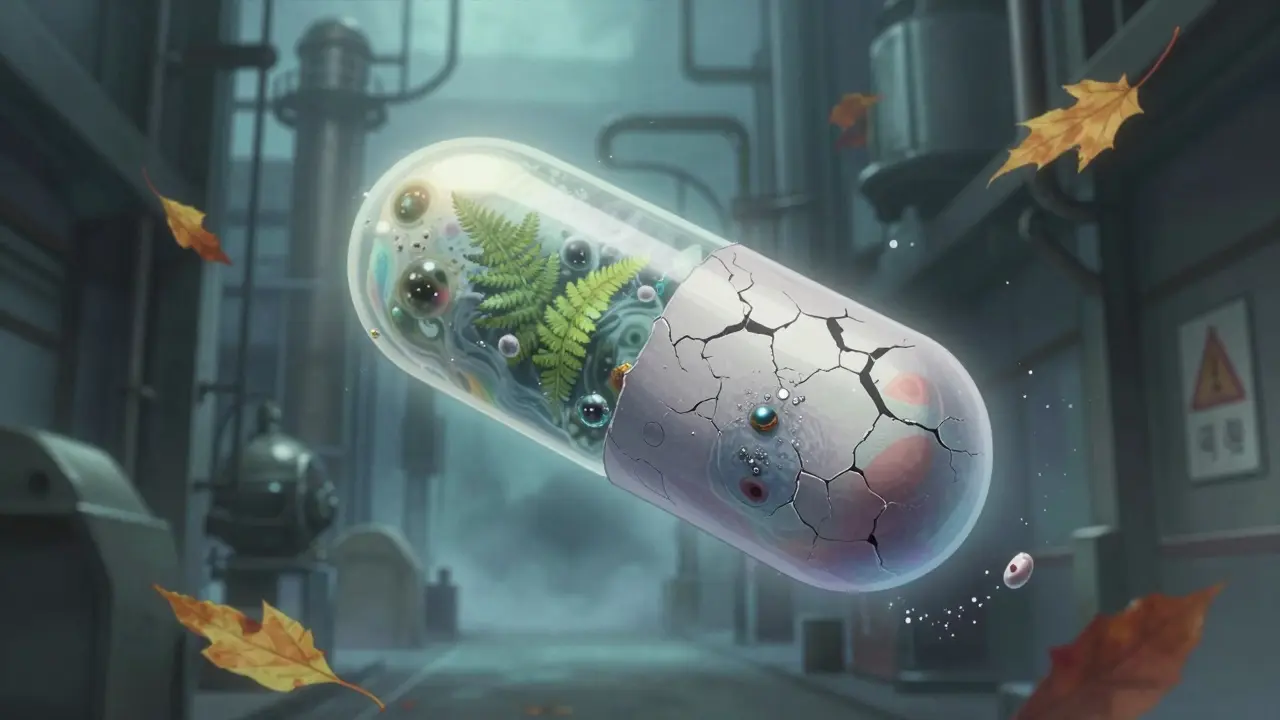
Every year, millions of people in the U.S. take generic drugs. They’re cheaper, widely available, and legally required to work the same as brand-name versions. But behind the scenes, a quiet danger is growing: contamination. Not every generic drug is safe. Some contain invisible particles, harmful chemicals, or even mold - and patients are getting sick because of it.
What Exactly Is Generic Drug Contamination?
Contamination means something unwanted got into your medicine. It could be leftover chemicals from another drug made on the same machine, dust from workers’ skin, mold spores, or toxic substances like nitrosamines. The FDA calls this cross-contamination - when impurities from one product accidentally mix with another during manufacturing.
It’s not just dirt. These are dangerous substances that can cause allergic reactions, organ damage, or even cancer. For example, in 2018, a batch of blood pressure pills was found to contain a cancer-causing chemical called NDMA. That single contamination led to over 2,300 recalls across eight countries. And it wasn’t an isolated case.
Generic drugs make up 90% of all prescriptions filled in the U.S. But they’re often made in factories overseas - mostly in India and China - where 80% of the active ingredients come from. These facilities aren’t always inspected as often as they should be. The FDA checks only about 1% of imported drugs for impurities. That means most contaminated batches slip through.
How Contamination Happens: The Hidden Risks in Manufacturing
Contamination doesn’t happen by accident. It’s built into how some factories operate.
One major source? Shared equipment. Many generic manufacturers run multiple drugs on the same lines. If they don’t clean thoroughly between batches, tiny traces of the previous drug can stick around. The FDA says cleaning must remove at least 10 parts per million of residue. But for powerful drugs - like cancer treatments or hormones - even that’s too much. Experts say acceptance limits should be tailored to each drug, not set at a one-size-fits-all number.
Then there’s human error. Workers shed about 40,000 skin cells per minute. Each one carries particles. In cleanrooms meant to be sterile, people are the biggest source of contamination - accounting for 75-80% of airborne particles. Poor gowning, rushed procedures, and lack of training make it worse.
Even simple actions like piercing a vial with a needle or breaking an ampule can introduce contaminants. OSHA found that 62% of hazardous drug contamination incidents happen during these routine steps.
Older factories are more at risk. Facilities built before 2000 have 34% higher contamination rates. Why? Outdated airflow systems, poor ventilation, and lack of closed manufacturing systems. Modern plants use sealed machines that keep drugs isolated from the environment. But not every company can afford the $500,000 to $2 million price tag per line.
Why Generic Drugs Are More at Risk Than Brand-Name Ones
You’d think all drugs, generic or brand, follow the same rules. And technically, they do. But money changes everything.
Brand-name companies make 60-70% profit margins. Generic manufacturers? Often 20-25%. That tight squeeze means less money for quality control. Fewer staff. Slower testing. Less investment in modern equipment.
FDA inspection data shows that 8.3% of generic drug factories received official warnings for contamination issues in 2022. For brand-name makers, it was just 5.1%. In India - home to many top generic producers - contamination-related violations were 12.7% higher than in U.S.-based facilities.
But it’s not all bad news. Some generic companies are leading the way. Teva’s factory in Bologna, Italy cut cross-contamination by 78% between 2018 and 2022 by switching to closed systems. Mylan’s Morgantown plant reduced incidents by 82% using real-time particle monitors and better staff training.
The difference? Investment. Vertical integration - making your own active ingredients instead of buying them - cuts contamination risk by 22%. Companies that use rapid microbiological testing can detect mold or bacteria in 4 hours instead of waiting 7 days. That’s life-saving speed.
What Happens When Contamination Is Found?
When a contaminated drug is discovered, the system kicks in - but it’s slow and reactive.
The FDA doesn’t catch most problems before they reach shelves. Instead, it relies on reports. Pharmacists, doctors, and patients file complaints through MedWatch. Between 2020 and 2022, over 1,200 reports mentioned possible contamination. Nearly 400 described actual harm - rashes, nausea, organ damage, even hospitalizations.
One Reddit user, a pharmacist, posted in January 2022 about metronidazole pills with blue specks. Lab tests confirmed copper contamination. Another patient developed severe skin burns from a contaminated hydrocortisone cream. The FDA logged it as Report #123456.
When a recall happens, it’s expensive. The average cost per recall? $18.7 million. Companies lose money. Patients lose trust. And sometimes, people are already hurt before the recall is issued.
There’s also a gap in detection. Most independent pharmacies don’t have the tools to test drugs for contamination. A 2022 survey found that 63% of community pharmacists can’t verify if a generic drug is safe. They rely on the manufacturer’s word - and the FDA’s inspection record, which might be outdated.
How to Protect Yourself and Others
You can’t test your pills at home. But you can take steps to reduce your risk.
- Know your pharmacy. Chain pharmacies and hospital systems usually have stricter sourcing policies. Independent pharmacies may buy from cheaper, less reliable distributors.
- Check for recalls. Visit the FDA’s recall page regularly. Sign up for email alerts. If your drug is pulled, don’t just toss it - call your doctor.
- Report anything strange. If your pill looks different - odd color, smell, texture - tell your pharmacist. File a report with MedWatch. One report won’t stop a batch, but 100 might trigger an investigation.
- Ask about the manufacturer. Not all generics are equal. Some brands, like Teva, Mylan, or Sandoz, have better track records. Ask your pharmacist: “Who makes this?” If they don’t know, that’s a red flag.
- Don’t assume cheaper is safer. The cheapest option might be the one cutting corners. Paying a little more for a trusted generic can mean avoiding hospital bills later.
The Future: Better Tech, Stronger Rules
Change is coming - but slowly.
In 2023, the FDA started mandatory nitrosamine testing for all blood pressure drugs in the sartan class. That’s a direct response to the 2018 crisis. The new PREDICT system now flags 37% more suspicious imports than before. It uses data to target high-risk shipments before they even land.
Technology is helping too. Rapid testing cuts detection time from days to hours. AI-powered systems, still in testing, can predict contamination risks by analyzing 15,000 data points per facility. By 2024, the FDA plans to roll these out to major manufacturers.
Regulators are also updating standards. The USP revised its disinfectant rules to require sporicidal agents - chemicals that kill tough fungal spores - in cleanrooms. And new guidelines now demand that acceptance limits for residues be based on actual toxicity, not arbitrary numbers.
Analysts predict contamination-related recalls will drop by 40% by 2027. But the global supply chain is still fragile. As long as 80% of active ingredients come from overseas, and inspections remain rare, the risk won’t disappear.
What You Need to Remember
Generic drugs save lives - and billions of dollars. But safety isn’t guaranteed just because a pill is cheap. Contamination is real, preventable, and often hidden. The system is catching up, but it’s still playing catch-up.
Your best defense? Stay informed. Ask questions. Report anomalies. And don’t let cost be the only factor when choosing your medication. A slightly more expensive generic from a reputable maker is worth it - if it keeps you safe.
The truth is, your medicine should never hurt you. And with better oversight, smarter tech, and more awareness, it doesn’t have to.
Had a friend get hospitalized from a bad batch of generic metformin. Smelled like burnt plastic. Pharmacist said it was ‘normal variation.’ Bullshit.
THEY’RE DOING THIS ON PURPOSE!! The FDA’s in the pocket of Big Pharma!! They want you sick so you keep buying pills!! You think they care if you get cancer from mold in your blood pressure med? NO!! They make billions off chemo!!
Most people don’t realize generics are made in the same plants as brand name. The difference is the label.
Actually that’s not true. Many generics are made in separate facilities. But the real issue is the lack of real-time contamination monitoring. Most plants still rely on end-product testing, which is like checking the last cookie in the batch to see if the dough was contaminated.
India makes 40% of the world’s generics. You think they care about your health? They care about profit. Clean rooms cost money. Workers are paid $3 a day. They don’t wash hands. They don’t change gowns. You think your pill is safe? You’re naive.
It’s not all doom and gloom. I’ve been working in pharma logistics for 12 years. The good companies-Teva, Sandoz, Sun Pharma-they’re investing in closed systems. The tech exists. It’s just not mandatory everywhere. If you’re on a chronic med, ask your pharmacist for the manufacturer name. Don’t just take whatever’s cheapest.
They’re adding fluoride to the pills too. You think it’s contamination? Nah. It’s a mind-control additive. They want you docile. Watch the news. Every time a recall happens, the same 3 corporations get fined and keep operating. Coincidence? I think not.
The article is well-researched, but the conclusion is misleading. The FDA’s inspection rate is not the issue; the regulatory framework is antiquated. Acceptance limits for residues must be toxicity-based, not arbitrary. This is not a failure of enforcement-it is a failure of statutory authority.
I’ve been taking generic lisinopril for 8 years. Never had an issue. But I always check the batch number and look up recalls. It takes 2 minutes. Why wouldn’t you? Your health isn’t cheap.
As someone who’s worked in Indian pharma plants, I can say this: most facilities are clean. But the pressure to cut costs leads to corners being cut. Not because they’re evil-because they’re trapped in a global race to the bottom. The solution isn’t boycotts. It’s pressure from consumers and regulators to raise standards, not punish.
I used to buy the cheapest generic until my mom had a reaction. Now I pay extra for the ones with the blue label. Worth it. No one should have to gamble with their meds.
They’re putting microchips in the pills to track you. That’s why the FDA won’t test them properly. They don’t want you to know. The mold? It’s a cover. The real danger is the surveillance. You think your pharmacy is safe? They’re all connected. You’re being watched. Every pill you take.
Why do people even take generics anyway? Just pay the extra 5 bucks for brand name. If you can’t afford it then maybe you shouldn’t be on meds. Your life isn’t that important
China and India are poisoning us on purpose. The government lets them do it because they hate Americans. You think this is coincidence? The same plants make the pills that make people sick. It’s a war. And we’re losing.
Hey, I get it. Some of you are scared. But panic doesn’t fix anything. The system’s flawed, yeah. But the solution isn’t paranoia or quitting meds. It’s demanding transparency. Ask your pharmacist for the manufacturer. Check the FDA’s website. Report weird pills. One person doing this doesn’t change much-but 10,000 people? That’s how recalls start.