
When you're managing type 2 diabetes with metformin, every pill, every meal, and every supplement matters. What you might not realize is that a popular herbal supplement called goldenseal could be quietly undermining your blood sugar control - even if you feel fine. This isn't speculation. It's backed by clinical studies, and the data is clear: goldenseal reduces how much metformin your body absorbs, and that can lead to unpredictable glucose levels.
What Exactly Is Goldenseal?
Goldenseal is a plant native to North America, often sold as a capsule, tea, or tincture. People take it for colds, digestive issues, or as a general "immune booster." But its real power lies in one compound: berberine. Berberine isn't just a minor ingredient - it's the star. And it's not just some herbal fluff. Berberine has been studied in over 27 clinical trials involving more than 2,300 people. It lowers fasting blood sugar, reduces post-meal spikes, and even brings down HbA1c levels - the same way metformin does. In fact, some studies show berberine works almost as well as metformin on its own.
But here’s the catch: when you take goldenseal alongside metformin, you're not getting a double dose of blood sugar control. You're getting a tug-of-war.
The Hidden Interaction: How Goldenseal Lowers Metformin’s Effect
For years, doctors assumed herbal supplements like goldenseal interacted with drugs by messing with liver enzymes - like grapefruit juice does with statins. That’s not what’s happening here. A landmark 2021 study from Washington State University, followed up by a 2025 clinical trial, found something entirely different.
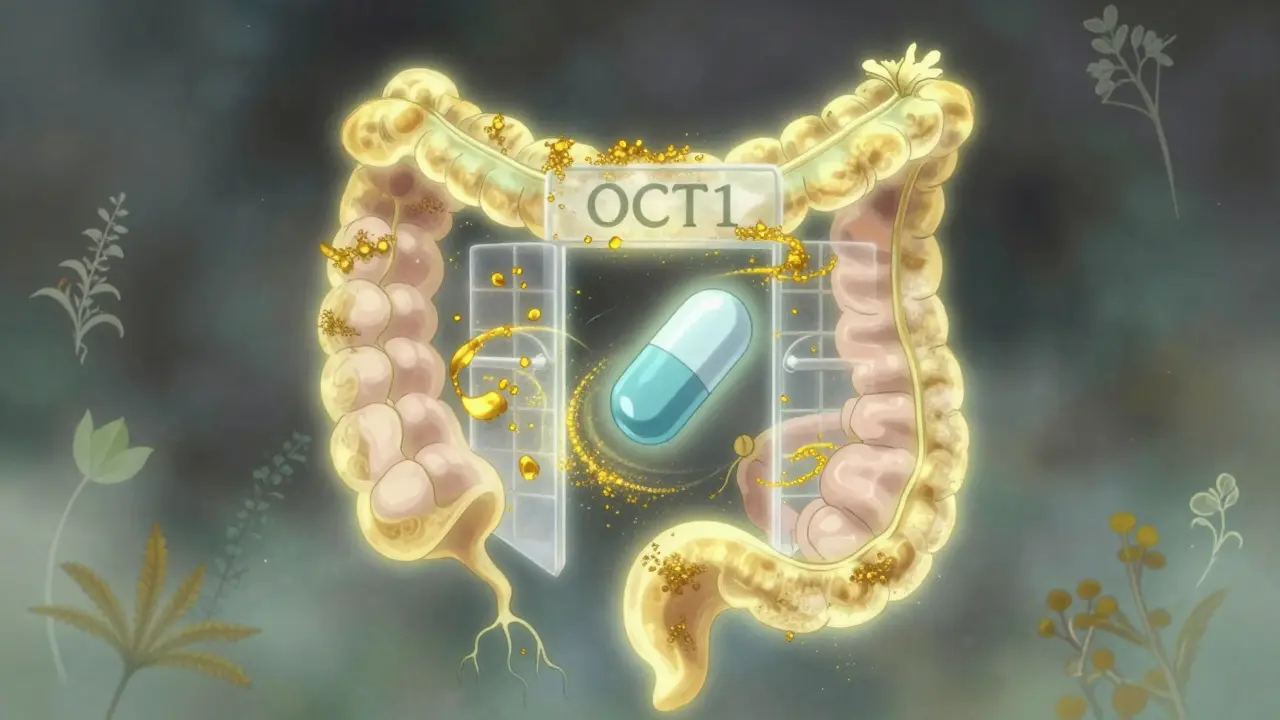
The interaction happens in your gut. Goldenseal’s berberine blocks a transporter called organic cation transporter 1 (OCT1), which is responsible for pulling metformin from your intestines into your bloodstream. Think of OCT1 as a gate. Metformin needs to pass through it to work. Berberine rushes in first, clogs the gate, and keeps metformin from getting through.
The result? Less metformin in your blood. A 2025 study showed that at low metformin doses (500-750 mg daily), goldenseal cut metformin exposure by 20-25%. That’s not a small drop. That’s enough to make your blood sugar rise again - even if you’ve been doing everything right.
Dose Matters: Why Higher Metformin Doses Might Be Safer
Not all metformin users are at equal risk. The interaction fades as your metformin dose goes up. At 1,000-1,500 mg daily, the drop in metformin levels was only 14%. And at 2,000 mg or more? No significant change at all.
This isn’t random. Metformin’s absorption is naturally saturable - meaning your gut can only handle so much at once. At higher doses, the transporter gets overwhelmed, so berberine can’t block it as effectively. That’s why early studies in healthy volunteers using tiny metformin doses (like 50 mg) showed big drops - but those doses don’t reflect real-world diabetes treatment.
If you’re on 500 mg of metformin and you start taking goldenseal, your body might suddenly be getting less than it needs. If you’re on 2,000 mg? You’re probably fine. But you won’t know unless you test.
The Confusing Twist: HbA1c Still Went Down
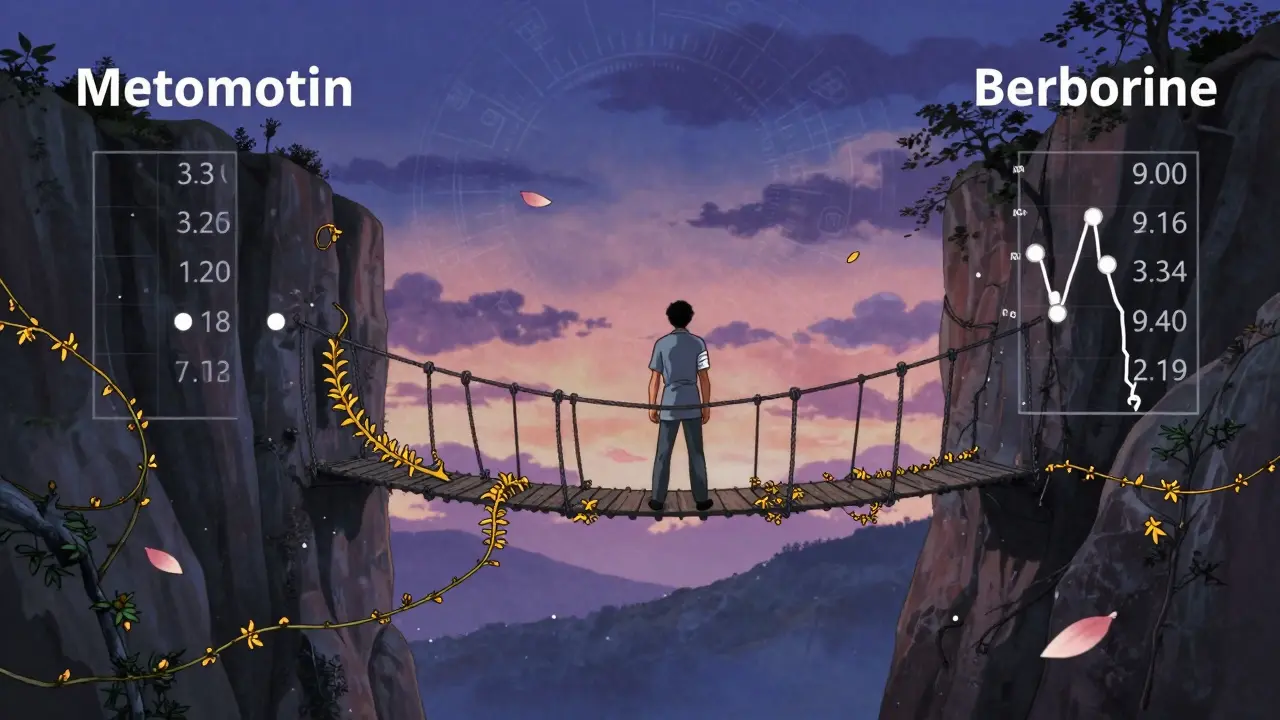
Here’s where it gets messy. In the 2025 study, even though metformin levels dropped, participants’ HbA1c went from 6.8% to 6.5% - an improvement. How? Because berberine itself lowers blood sugar. So while you’re losing some metformin, you’re gaining berberine’s glucose-lowering effect.
That sounds great, right? But it’s a trap. This isn’t a safe combo - it’s a balancing act on a tightrope. The drop in HbA1c might look like success, but it’s masking a hidden problem: your body is now relying on berberine, not metformin, to control your sugar. If you stop the goldenseal, your blood sugar could spike overnight. If you take too much berberine, you could crash your glucose too low. And if you get sick, change your diet, or start another supplement? The whole system could go sideways.
What the Experts Say
The MSD Manual (2024 update) warns plainly: "Goldenseal may decrease the blood levels of metformin, potentially hindering glucose control." It also adds: "Berberine may increase the hypoglycemic effects of antidiabetic drugs." So you’re caught between two risks: too little metformin, or too much blood sugar drop.
The American Diabetes Association doesn’t have a specific guideline on goldenseal yet. But it does say: "Routine assessment of all medications and supplements" is part of good diabetes care. That means your doctor should ask - not assume. And if you’re not telling them about your goldenseal, you’re not getting full care.
The Endocrine Society issued an advisory in 2022 saying herbal products like goldenseal can have "clinically significant interactions" with diabetes drugs. They didn’t say "avoid them." They said "be vigilant."
What Should You Do?
If you’re on metformin and taking goldenseal - stop. Don’t quit cold turkey. But talk to your doctor or pharmacist. Tell them exactly what you’re taking, how much, and how long.
If you’re thinking about starting goldenseal? Don’t. Not without medical advice. The risk isn’t worth the guesswork. There are safer, better-studied ways to support blood sugar - like exercise, fiber, or even standardized berberine supplements (which don’t contain goldenseal’s other unknown compounds).
Here’s a simple rule: If you’re on metformin, avoid goldenseal entirely. The interaction is real. The consequences are unpredictable. And there’s no benefit that can’t be achieved more safely.
What About Other Herbal Supplements?
Goldenseal isn’t alone. Other herbs like bitter melon, fenugreek, and cinnamon also affect blood sugar. Some may help. Some may interfere. But none are regulated like drugs. None come with clear dosing instructions. And none have been tested alongside metformin in large, long-term studies.
That’s why the safest move is transparency. Keep a list of everything you take - vitamins, herbs, teas, tinctures. Bring it to every appointment. Your doctor doesn’t need to judge you. They need to know.
Why This Matters Beyond One Herb
Over 23% of U.S. adults use herbal supplements. For people with diabetes, that number jumps to 35-40%. Many believe "natural" means "safe." It doesn’t. Goldenseal is a perfect example: a plant with real pharmacological power, sold as a wellness product, but with real risks when mixed with prescription medicine.
This isn’t just about one interaction. It’s about how we think about health. We need to stop treating supplements like harmless add-ons. They’re active chemicals. And when you’re managing a condition like diabetes - where small changes can mean big consequences - that matters.
Can I take goldenseal if I’m not on metformin?
If you’re not on metformin, goldenseal may still affect your blood sugar. Berberine lowers glucose, so if you have prediabetes or diabetes and aren’t on medication, taking goldenseal could cause your blood sugar to drop too low - especially if you’re also dieting or exercising heavily. Always monitor your glucose if you start any new supplement.
Is berberine the same as goldenseal?
No. Goldenseal is the whole plant. Berberine is one compound inside it - and the one responsible for most of its effects. You can buy pure berberine supplements without goldenseal. These are more consistent in dosing and don’t carry the same environmental or purity risks. But they still interact with metformin the same way.
How long does it take for goldenseal to affect metformin?
The interaction becomes noticeable after about 6 days of regular goldenseal use. That’s because it takes time for berberine to build up enough in your gut to block the transporter. If you’ve been taking goldenseal for weeks or months, the effect is likely already happening - even if you feel fine.
What should I do if I’ve been taking both and my blood sugar is rising?
Stop the goldenseal immediately and contact your healthcare provider. Do not increase your metformin dose on your own. Your doctor may need to adjust your dose, check your kidney function, or test your blood sugar patterns over several days. Rising blood sugar after starting a supplement is a red flag.
Are there safer herbal alternatives to goldenseal for blood sugar?
There’s no herbal supplement that’s proven safer than metformin. But if you want to support your blood sugar naturally, focus on proven lifestyle changes: walking after meals, eating more fiber, getting enough sleep, and managing stress. These have zero interaction risk and real, lasting benefits. If you’re considering herbs like cinnamon or fenugreek, talk to your doctor first - they can still affect glucose levels.
Interesting read. I’ve been on metformin for years and never even heard about goldenseal messing with absorption. I take turmeric and ginger daily-guess I should check if those have similar issues too. No rush, but I’ll bring it up at my next appointment.
They dont tell you this because big pharma dont profit off herbs but berberine is basically metformin in disguise and goldenseal is just the delivery system
Man this is so true in India too-we use neem, fenugreek, and bitter gourd like they’re candy. Everyone thinks natural = safe. But when your sugar drops to 60 and you’re dizzy in the middle of the office, you learn fast. Maybe we need a ‘herb alert’ system like drug interaction checkers. Just saying.
How many people have actually been monitored for this interaction? I’m skeptical. The study sample sizes seem small, and the 2025 trial sounds like it might be a preprint. Also-berberine is not FDA-approved. Why are we treating it like a medication?
So let me get this straight-taking a natural supplement that works almost as well as my prescription is bad… because it might work too well? I’m not mad, I’m just confused. Why is this even a controversy? If it helps, why stop it? Let’s get real.
I’m so glad someone wrote this. I’ve been taking goldenseal for ‘immune support’ since last winter. My A1c was 6.6, now it’s 6.4-I thought I was doing great! But now I’m terrified I’ve been playing Russian roulette with my health. I’m stopping it tomorrow and calling my endo. Thank you for the clarity.
Oh wow. So the ‘magic herb’ that supposedly helped my cousin’s diabetes… is actually sabotaging his metformin? Classic. And here I thought he was just bad at tracking his sugars. Funny how ‘natural’ always sounds better until it breaks your lab results. Also-berberine supplements are way cheaper than goldenseal. Just saying.
Stop. Now. This isn’t a suggestion. It’s a warning.
Man, I’ve been on 2,000 mg metformin for 5 years and I swear I’ve been taking goldenseal tea every morning since 2021. No issues. Sugar’s stable. I even tested my levels before and after a week of heavy use-no change. Maybe the 2025 study was looking at low-dose folks? I know people who’ve been doing this for decades and they’re fine. Maybe it’s not as universal as they say? Just my experience.
Okay, so here’s the real tea: we’re all just one supplement away from a glucose rollercoaster. I’ve been on metformin since 2018. I took ashwagandha for stress, cinnamon for ‘glow,’ and now goldenseal because my yoga instructor said it’s ‘detoxing.’ I didn’t think any of it mattered. Now I’m looking at my glucometer like it’s a betrayal. 😅 I’m deleting all my herbal tabs and making a list. My doctor’s gonna think I’m a hoarder. But hey-I’m alive, and that’s the win. Also-yes, I’ll bring the list. No judgment. Just facts. 🙏