
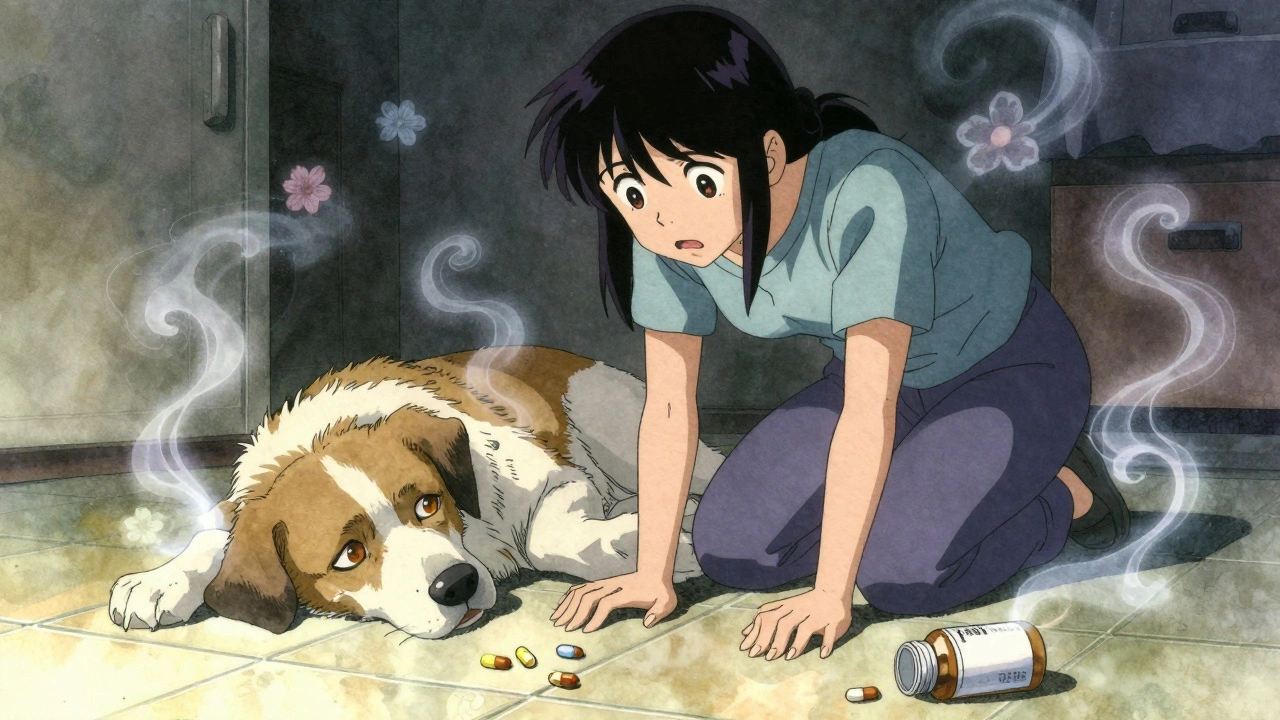
Every year, tens of thousands of pets end up in emergency vet clinics because they ate something they shouldn’t have-and most of the time, it’s not chocolate or grapes. It’s your medicine. A pill you left on the nightstand. A capsule that fell out of your purse. A bottle you forgot to lock away. For dogs and cats, human medications are one of the most dangerous things in the house. And the worst part? Many owners don’t realize their pet is in trouble until it’s too late.
What Happens When Pets Eat Human Medications?
Pets don’t process drugs the same way humans do. Their bodies break down chemicals differently, and what’s safe for you can be deadly for them. Dogs are the most common victims-making up about 85% of cases-because they’ll eat just about anything. Cats, though smaller, are even more vulnerable to certain drugs because their livers can’t process them at all.Take acetaminophen, for example. One regular-strength tablet (325 mg) can kill a cat. In dogs, it takes about 15 times that amount to cause serious harm. Why? Cats lack a key enzyme needed to detoxify acetaminophen. Instead of breaking it down safely, their bodies turn it into a poison that destroys red blood cells and shuts down the liver. Within hours, their gums turn brown, they struggle to breathe, and their body can’t carry oxygen anymore.
Same goes for ibuprofen. A single 200 mg pill can cause stomach ulcers and kidney failure in a 20-pound dog. For a cat? Even half a pill can be fatal. These aren’t rare cases. According to Pet Poison Helpline, NSAIDs like ibuprofen and naproxen are the #1 cause of pet medication poisonings, accounting for nearly 28% of all reported cases.
Common Medications That Kill Pets (And How to Spot the Signs)
Not all overdoses look the same. The symptoms depend on the drug, the dose, and the species. Here’s what to watch for with the most dangerous ones.Antidepressants: SSRIs and SNRIs (Prozac, Lexapro, Effexor)
These are second only to NSAIDs in poisonings. Dogs and cats can overdose on just one or two pills. The problem? They trigger serotonin syndrome-a dangerous overload of brain chemicals.
Symptoms in dogs: Restlessness, pacing, vocalizing, tremors, high fever (103°F-106°F), fast heart rate, seizures. Some dogs act hyper, others collapse. It’s unpredictable.
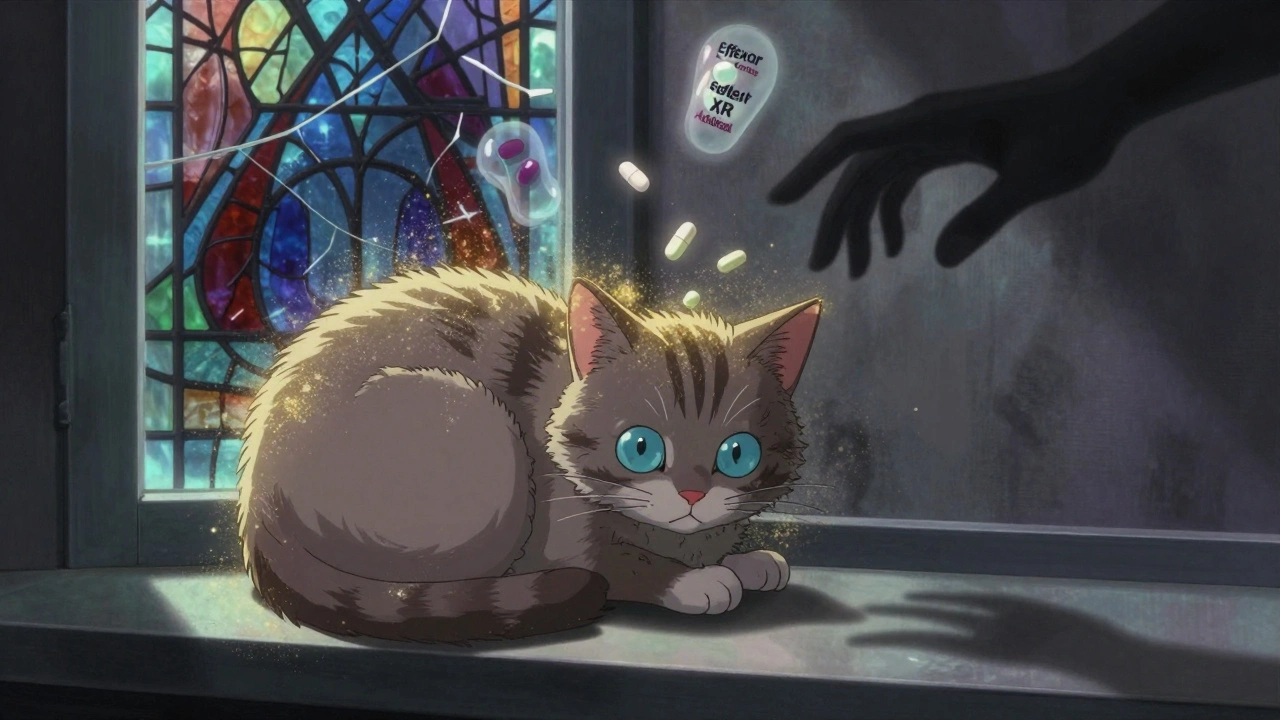
Symptoms in cats: Effexor (venlafaxine) is especially deadly. Just one extended-release capsule can cause seizures, high blood pressure, and liver failure. Cats may drool, stumble, or stop eating. Their liver enzymes can spike to over 1,200 U/L (normal is under 100).
Time matters. Signs show up within 1 to 12 hours. If your dog starts acting strange after you took your morning pill, don’t wait.
ADHD Medications: Adderall, Concerta, Ritalin
These are stimulants. In pets, they turn up the volume on every system-heart, brain, body temperature. One Adderall pill can send a small dog into cardiac arrest.
Symptoms: Extreme restlessness, panting, shaking, drooling, heart rate over 220 beats per minute (normal is 60-140), body temperature above 107°F, dilated pupils, seizures. Symptoms hit fast-within 30 to 60 minutes.
One case from Dove Mountain Veterinary Hospital involved a Labrador that ate two Concerta pills. Within an hour, his temperature hit 107.2°F. He was lucky-his owner recognized the signs and rushed him in. He survived. Most don’t make it if treatment is delayed beyond two hours.
Benzodiazepines: Xanax, Ambien, Klonopin
You might think these make pets sleepy. Not always. In dogs, about half the time, they cause the opposite-agitation, aggression, howling, pacing. It’s called a paradoxical reaction. Cats? They get liver damage.
Symptoms in dogs: Hyperactivity, vocalizing, uncoordinated movement, vomiting, tremors. Some act like they’re having a panic attack.
Symptoms in cats: Lethargy, jaundice (yellow gums), loss of appetite, vomiting. Liver enzymes rise fast. By the time they look sick, it’s often too late.
Acetaminophen: Tylenol
This one kills cats silently. There’s no warning sign until it’s too late.
In cats: Brown or blue-tinged gums (methemoglobinemia), difficulty breathing, swelling in the face or paws, vomiting, dark urine. This isn’t a slow process. It happens in 1-4 hours. If you see brown gums, get to a vet now. Survival drops to 12% if methemoglobin levels go above 40%.
In dogs: More delayed. Liver damage shows up in 24-72 hours. Vomiting, jaundice, lethargy, dark stools. By then, the liver is already failing.
NSAIDs: Ibuprofen, Naproxen, Celebrex
These are the most common offenders. People think, “It’s just a painkiller,” and leave the bottle out. But even a single pill can wreck a pet’s stomach and kidneys.
Symptoms: Vomiting (92% of cases), black tarry stools (68%), loss of appetite, increased thirst, urinating less or not at all. Blood tests show kidney failure-BUN levels above 120 mg/dL (normal is 10-25). This isn’t a slow burn. Kidney damage can start within 24 hours.
What to Do If You Suspect an Overdose
Don’t wait. Don’t Google. Don’t call your neighbor. Act.
Here’s your 5-minute action plan:
- Check for evidence. Look for pill fragments, empty bottles, or chewed packaging. Even a wrapper helps identify the drug.
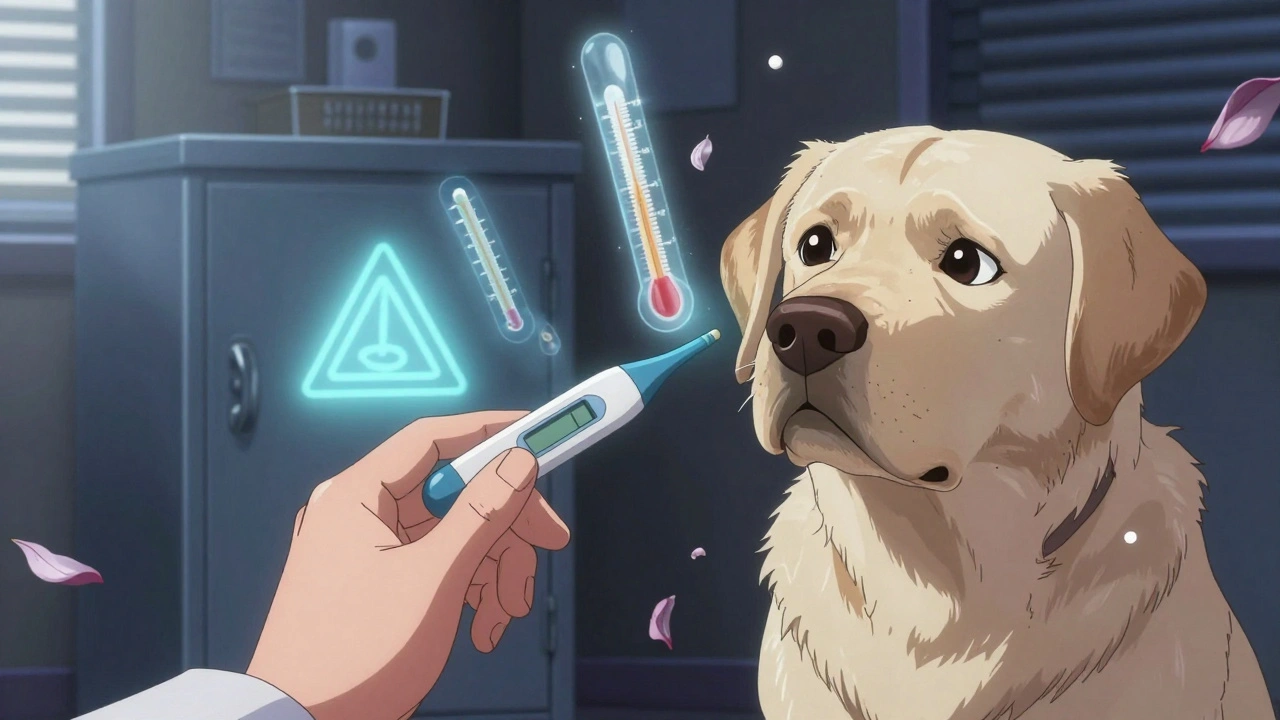
- Take your pet’s temperature. A rectal thermometer is best. Anything above 103.5°F suggests stimulant or SSRI toxicity.
- Check the gums. Are they pink? Healthy. Brown? Acetaminophen poisoning. Blue? Lack of oxygen. Pale? Shock.
- Look at the pupils. Dilated pupils are a red flag for ADHD meds or benzodiazepines.
- Call a poison control center immediately. Pet Poison Helpline (1-800-213-6680) and ASPCA Poison Control (1-888-426-4435) are staffed 24/7. They’ll tell you what to do next-and whether to induce vomiting or rush to the vet.
Time is everything. Studies show 93% of pets survive if treatment starts within two hours. After four hours, survival drops sharply. If your pet ate a pill 90 minutes ago, you’re still in the window. Don’t waste it.
Why Owners Miss the Signs (And How to Avoid It)
Most owners don’t recognize poisoning because the symptoms look like something else.
They think:
- “My dog is just excited!” - But it’s serotonin syndrome.
- “He’s shivering because it’s cold.” - But it’s amphetamine tremors.
- “She’s just tired.” - But it’s liver failure from acetaminophen.
A 2023 PetMD survey of over 1,200 pet owners found that 68% misinterpreted early symptoms. Nearly half thought agitation was normal excitement. A third thought tremors were just shivering.
There’s a better way. Learn the clusters.
For example:
- ADHD overdose triad: High fever + fast heart rate + dilated pupils = 94% chance it’s Adderall or Ritalin.
- SSRI syndrome: Tremors + vocalizing + fever + disorientation = serotonin overload.
- Acetaminophen in cats: Brown gums + breathing trouble + lethargy = emergency.
These combinations are your early warning system. If you see two or more together, don’t wait.
How to Prevent It
The best treatment is prevention.
- Store all medications in locked cabinets-not on nightstands, countertops, or in purses.
- Use child-proof containers, even if you don’t have kids. Pets are smarter than you think.
- Never give human meds to your pet without vet approval. Even “natural” supplements can be toxic.
- Keep your vet’s number and poison control hotlines saved in your phone.
- Be extra careful with extended-release pills (like Effexor XR). They last longer, so the danger lasts longer too.
And if you’re on medication for anxiety, depression, or ADHD? Be mindful. Your pet isn’t just a companion-they’re a living, breathing patient with a completely different biology.
What’s Changing in 2025
Things are getting better-but slowly.
The American College of Veterinary Emergency and Critical Care launched an AI-powered app in 2023 that helps owners identify symptoms in real time. It’s 89% accurate. The ASPCA is rolling out species-specific checkers in 2024-cat mode first, then dog mode.
More vets are training staff. Banfield Pet Hospital now requires all 1,022 locations to complete medication toxicity training. Misdiagnoses dropped from 38% to 12% in six months.
But the real change needs to happen at home. You don’t need an app to know that if your dog ate your Adderall, you need to get him to a vet now.
Can I give my pet human medicine if it’s for pain or anxiety?
Never give human medication to your pet without veterinary approval. Even common drugs like ibuprofen or Tylenol can be deadly. Dogs and cats metabolize drugs differently than humans. What’s safe for you can cause kidney failure, liver damage, or death in your pet. Always consult your vet first.
How long does it take for symptoms to appear after a pet eats human medication?
It depends on the drug. Stimulants like Adderall cause symptoms within 30-60 minutes. Antidepressants like Prozac may take 1-12 hours. NSAIDs like ibuprofen can cause vomiting within 1-6 hours, but kidney damage takes 24-72 hours. Acetaminophen in cats shows signs in as little as 1-4 hours. The sooner you act, the better the outcome.
What should I do if my cat ate a pill but seems fine?
Even if your cat seems normal, take them to the vet immediately. Cats are especially vulnerable to toxins like acetaminophen and Effexor. Symptoms can be delayed, and by the time they appear, organ damage may already be irreversible. Don’t wait for signs-act on exposure.
Are there any safe human medications for pets?
Some human medications are used in pets under strict veterinary supervision, like certain antibiotics or antihistamines. But the dose and formulation must be correct. Never assume a human dose is safe for your pet. Always get professional advice before giving any medication.
What’s the best way to store medications to keep pets safe?
Store all medications in locked cabinets or drawers, out of reach. Avoid leaving pills on nightstands, countertops, or in purses. Use child-proof containers even if you don’t have children. Extended-release pills and transdermal patches are especially dangerous-keep them sealed and secured. Pets are curious and persistent; treat every pill like a hazard.
Is there a 24/7 hotline I can call if my pet ingests medication?
Yes. Pet Poison Helpline (1-800-213-6680) and the ASPCA Animal Poison Control Center (1-888-426-4435) are available 24/7. Both charge a fee, but they provide immediate expert advice. Have the medication name, dose, your pet’s weight, and time of ingestion ready. Don’t wait-call as soon as you suspect ingestion.
Final Thought: It’s Not Just About Pills
Your medicine is part of your life. But for your pet, it’s a potential death sentence. The difference between life and death often comes down to one thing: how fast you act.
Don’t wait for the vet to tell you what’s wrong. Learn the signs. Know your meds. Secure your bottles. And if something happens? Call. Now. Not later. Not tomorrow. Right now.
Your pet doesn’t have a voice. But you do. Use it.
Just saw this and had to share-my lab ate a single ibuprofen last year. We got to the vet in 45 minutes. He survived. But I’ll never leave meds out again. Ever. Even if I’m in a rush. Even if I think ‘it’s just one pill.’ It’s not. It’s a death sentence waiting to happen.
Ugh. I can't believe people still do this. Seriously? You leave your Xanax on the nightstand? Your dog isn't a toddler-you're the adult! And cats? They're not little dogs. They're fragile, silent killers of their own bodies. One Effexor capsule-and poof-your cat's liver is a goner. You think it's 'just a pill'? It's negligence with paws.
Let’s be real: 90% of these cases are preventable. And yet, here we are. People treat meds like snacks. They leave them in purses, on counters, in open drawers. And then they act shocked when their pet gets sick. It’s not ‘accidental.’ It’s lazy. It’s careless. It’s the kind of behavior that makes me question how anyone survives parenthood-human or animal.
Also, the fact that 68% of owners misread symptoms? That’s not ignorance-it’s willful denial. You see trembling and think ‘he’s cold.’ You see panting and think ‘he’s excited.’ No. He’s dying. And you’re too distracted to notice.
And don’t even get me started on ‘natural supplements.’ Those are worse. At least you know what’s in Tylenol. But ‘turmeric paste for arthritis’? That’s just poison with a yoga vibe.
Bro. My dog ate my Adderall. One pill. He went nuts. Panting, shaking, eyes wide. I panicked. Called the vet. They said ‘get here now.’ We got there in 20 minutes. He lived. But I swear, I didn’t even know pets could OD on human meds. I thought it was just chocolate. My bad. I’m not smart. I’m just a guy who forgets stuff. But now? Locked cabinet. Always.
Respected colleague, this is an exceptionally well-researched and urgently needed guide. As a veterinary technician in Mumbai, I have witnessed over 37 cases of acetaminophen toxicity in cats in the past year alone. The tragedy lies not in the absence of knowledge, but in the absence of vigilance. I implore all pet owners: store medications in sealed, locked containers, preferably above head height. A single unattended pill may cost a life. Please, for the sake of your companion, treat medicine as a lethal substance-because it is.
Also, I recommend saving the Pet Poison Helpline number in your phone under ‘EMERGENCY’-not ‘MEDS.’ It saved my own cat last winter.
You’re not alone. I used to be the person who left my pills out. Then my cat got into my Effexor. I didn’t know anything was wrong until she stopped eating. By then, it was too late. I lost her. I’m not mad at myself-I’m just done being careless. If you’re reading this and you’ve ever left a pill unattended? You can change. Start today. Lock it up. Talk to your vet. Learn the signs. Your pet deserves that much. You’ve got this.
This is such an important post, and I really appreciate the level of detail-especially the part about serotonin syndrome clusters and the liver enzyme thresholds. I’ve been researching this for my own dog, who’s on a low-dose SSRI for separation anxiety (under vet supervision, of course). But I’m curious-how do extended-release formulations like Concerta or Effexor XR behave differently in pets compared to immediate-release? Do they cause prolonged toxicity, or is the absorption rate the same? I’ve read conflicting info online, and I’d love to see more data on pharmacokinetics in canines and felines. Also, is there any peer-reviewed research comparing the half-life of these drugs in cats vs. dogs? I’m asking because I’m trying to build a pet-safe medication protocol for my household, and I want to make sure I’m not missing anything critical. Thanks for the great resource!
Yeah, sure. Let’s all panic about pills. Meanwhile, your neighbor’s kid is eating candy from the floor and you’re worried about your dog getting a Tylenol? This is why people lose perspective. Most pets are fine. Most meds are safe if you’re not an idiot. But now we’re turning every accidental ingestion into a horror story. It’s fearmongering dressed up as ‘education.’
My cat licked a drop of ibuprofen off the counter three years ago. He sneezed. Then he ate his food. No problem. Stop scaring people. Not every pill is a death sentence. Maybe your dog just needs to learn to stop being a garbage disposal.