

You’re taking a new medication. Maybe it’s for high blood pressure, depression, or diabetes. At first, you feel hopeful. But then, after a few days, something feels off. Your mouth tastes like metal. You’re exhausted all the time. Or you get dizzy when you stand up. You mention it to your doctor at your next appointment-and they shrug and say, "That’s normal." What do you do then?
Too many people let it go. They assume their doctor already knows, or that the side effect isn’t serious enough to report. But here’s the truth: medication side effects are one of the most underreported dangers in modern healthcare. And speaking up isn’t just about your own comfort-it can save lives.
Why Your Voice Matters
Clinical trials for new drugs involve thousands of people. That sounds like a lot. But once a drug hits the market, millions take it. And some side effects only show up in rare cases-like one in 10,000, or even one in 100,000. Those won’t show up in trials. That’s why real-world reports from patients and doctors are the only early warning system we have.
In 2022, the FDA received over 2.2 million reports of adverse drug reactions. That’s a 37% jump from just four years earlier. Many of those reports came from patients like you who noticed something strange and decided to act. One nurse reported unusual blood clots after a COVID-19 vaccine. That report helped identify a rare but dangerous side effect within weeks. Another patient described a metallic taste after taking Paxlovid. That led to the recognition of "Paxlovid mouth"-something no clinical trial had caught.
Without you speaking up, these signals stay hidden. And that means other people keep getting hurt.
What Counts as a Side Effect Worth Reporting?
You don’t need to be a doctor to know if something’s wrong. The FDA defines a serious adverse event as one that:
- Is life-threatening
- Requires hospitalization
- Causes permanent disability
- Results in a birth defect
- Needs medical intervention to prevent serious harm
But here’s the thing: you don’t have to wait for something "serious." If a side effect is new, unexpected, or just really messing with your daily life-report it. Even if your doctor says it’s "normal," if it’s not listed in the medication’s official leaflet, it’s worth reporting.
For example: if you’ve never had nausea before but now you can’t keep food down after taking your new cholesterol pill, that’s not just "bad luck." It’s data. And that data helps regulators update safety labels so future patients know what to watch for.
Who Reports-And Why So Few Do
Only about 15% of reports to the FDA come directly from patients. The rest come from doctors, pharmacists, and drug companies. But here’s the problem: studies show that healthcare professionals report fewer than 10% of serious side effects they see. Why?
- They think the side effect is "expected" and already known
- They don’t know how to report
- They assume someone else already did
- They’re too busy
Patients face similar barriers. A 2022 survey found that 68% of people didn’t even know they could report side effects to the FDA. Another 42% thought their doctor would handle it automatically. And 58% feared they’d be dismissed if they brought it up.
But here’s what no one tells you: you have a right to be heard. And your report matters-even if you’re not sure it’s "big enough."
How to Report Side Effects (Step by Step)
You don’t need a medical degree. You don’t need to fill out a 20-page form. Here’s how to do it in under 15 minutes.
- Call 1-800-FDA-1088-this number is now required on every prescription bottle and label. You can report by phone, and someone will walk you through it.
- Or go online to www.fda.gov/medwatch and download Form 3500 (Consumer/Patient version).
- Have this info ready:
- Drug name (check the bottle)
- Dosage and how long you’ve been taking it
- When the side effect started
- What happened (be specific: "dizziness when standing," "rash on arms," "uncontrollable shaking")
- Did you stop the drug? Did it get better?
- Your age and gender (optional, but helpful)
- Submit-you can do it online, by mail, or fax. No signature needed. No ID required.
That’s it. No follow-up. No waiting. Your report goes straight into the FDA’s safety database. You won’t get a reply. But someone will see it.
What Happens After You Report?
The FDA doesn’t investigate every report. But they look for patterns. If 10 people report the same rare side effect within a month, that’s a red flag. If 50 do, they start digging. They might:
- Update the drug’s warning label
- Require a new safety study
- Send out alerts to doctors and pharmacies
- Even pull the drug off the market (rare, but it’s happened)
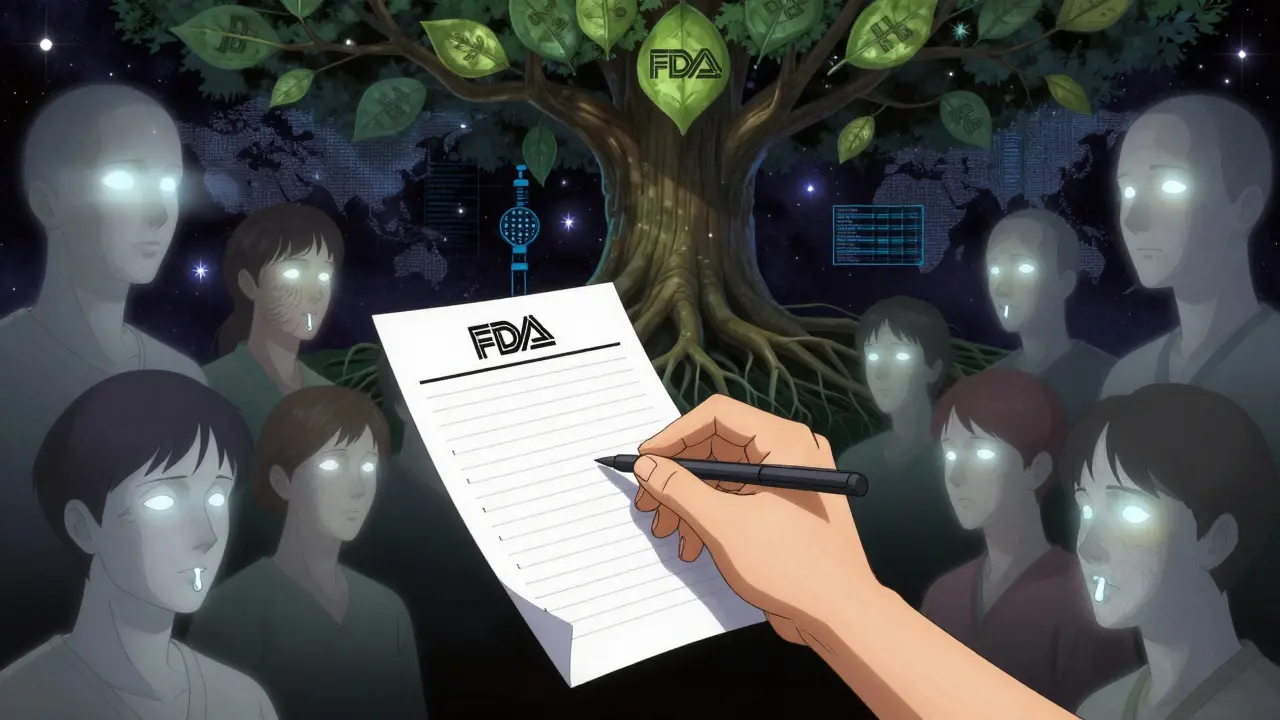
And here’s the kicker: the FDA doesn’t just look at reports from the U.S. They track global data. If a side effect shows up in Australia, Germany, or Japan, they connect the dots. Your report could be the piece that completes the puzzle.
What If Your Doctor Says It’s "Normal"?
Doctors aren’t trying to dismiss you. But they’re overwhelmed. They see hundreds of patients a week. They’re trained to focus on life-threatening issues first. And they often assume common side effects aren’t worth reporting-because they’ve seen them before.
But here’s what you can say next time:
"I know this might be common, but I’ve never experienced this before. Can we document it? And can you help me report it to the FDA? I want to make sure others don’t go through this."
That simple shift-from passive acceptance to active advocacy-changes the conversation. And if your doctor refuses? You can still report on your own. The FDA doesn’t require doctor confirmation.
What About Drug Companies?
Pharmaceutical companies are legally required to report any serious side effects they hear about-whether from a patient, doctor, or study. But they’re not always quick to do it. And they don’t always share everything with the public.
That’s why independent reporting matters. Your report goes directly to the FDA, not through the company. It’s your direct line to safety oversight.
Real Stories, Real Impact
In 2022, a woman in Ohio reported severe muscle pain after starting a statin. She didn’t think much of it-until she read online that others had the same issue. She filed a report. Within six months, the FDA updated the statin label to include muscle pain as a more common side effect than previously listed.
A teenager in Texas reported blurred vision after taking a new ADHD medication. His mom submitted the report. Months later, the drug’s manufacturer added a warning about visual disturbances.
These aren’t outliers. They’re examples of what happens when people stop assuming someone else will speak up.
What You Can Do Today
Here’s your action plan:
- Check the label on your medication. Look for the 1-800-FDA-1088 number. Save it in your phone.
- Write down any side effect you’ve had-no matter how small.
- If you’ve been told "it’s normal," ask: "Is this listed in the official side effects?" If not, report it.
- Share this with someone you care about. Someone on a new medication. A parent. A friend.
You don’t need to be a scientist. You don’t need to understand pharmacology. You just need to notice something’s off-and care enough to say something.
Medication safety isn’t just about science. It’s about people. And your voice? It’s part of the system.

What If I’m Not Sure It’s the Medication?
You don’t need to be certain. The FDA’s own guidelines say: "Report even if you’re not sure the drug caused the problem."
Let’s say you started a new antidepressant and began having headaches. You also started drinking more coffee. Maybe it’s the caffeine. Maybe it’s the drug. Maybe it’s both.
Report it anyway. The FDA doesn’t need to know the cause-they need to know the pattern. If 20 other people report headaches after taking the same drug, that’s a signal. You don’t have to solve the mystery. You just have to point to it.
Will Reporting Get Me in Trouble?
No. Reporting side effects is protected. You can’t be penalized for reporting. Your name isn’t shared publicly. Your doctor won’t be notified unless you ask them to be.
The FDA’s system is designed to protect your privacy. They remove personal details before analysis. Your report is anonymous by default.
Can I Report for Someone Else?
Yes. You can report for a child, an elderly parent, or a friend who can’t do it themselves. Just write "reporting on behalf of" and include their name (optional) and your contact info. The FDA accepts these reports regularly.
What About Over-the-Counter Drugs or Supplements?
Yes, you can report those too. The FDA tracks side effects from everything: vitamins, herbal products, pain relievers, antacids. Even if it’s not prescription, if it caused harm, report it.
Supplements aren’t tested like drugs-but they’re used by millions. And they can interact dangerously with prescription meds. Your report might be the first warning that a popular herbal blend causes liver damage.
How Long Does It Take for Changes to Happen?
It varies. Some warnings come out in months. Others take years. But every report adds to the pile. And sometimes, the change doesn’t come until five years later-when someone else reports the same thing. Your report might be the one that finally tips the scale.
Think of it like this: you’re not just reporting for yourself. You’re reporting for the next person who takes that pill.
i never thought i could report side effects myself, honestly. i just figured doctors knew all this stuff already. but after reading this, i’m gonna write down that weird metallic taste from my blood pressure med. maybe it’ll help someone else.
Oh wow. A whole article about reporting side effects? How novel. I’m sure the FDA is just dying for another 10,000 reports from people who can’t tell the difference between caffeine jitters and drug toxicity. 🙄
THIS. RIGHT HERE. You don’t need to be a doctor to know when something’s off. If it’s messing with your sleep your mood your appetite your whole damn life - report it. No excuses. The system only works if we all show up. Just do it. Now. Your future self will thank you.
YESSSSS this is so important!! 💪 I reported my weird rash after that new antibiotic and they actually changed the warning label!! 🎉 You guys are not crazy - your voice matters!! Share this with everyone you know!! ❤️
It’s funny how we trust science until it’s inconvenient. We’ll cite peer-reviewed studies on climate change or mRNA tech, but when it comes to our own bodies, we defer to authority without question. The FDA’s database isn’t just paperwork - it’s collective intuition made visible. Every report is a tiny act of epistemic resistance. We’re not just patients. We’re sensors in a vast biological network. And if we stop transmitting… the system goes blind.
Also, I once had a 3-week migraine after a flu shot. Reported it. Never heard back. But I still did it. Because someone else might be having the same thing. And if they do? Maybe they won’t feel alone.
People who report side effects are the reason drug companies get dragged into lawsuits. Don’t be that person. If your doctor says it’s normal, shut up and take your pill. You’re not special. You’re not a whistleblower. You’re just annoying.
Just a quick note: I’ve been reporting every weird symptom since my dad died from a reaction no one documented. I don’t do it for the FDA. I do it because I don’t want another family to lose someone because ‘it was probably just stress.’ You don’t have to be loud. You don’t have to be brave. You just have to be willing to type a few sentences. That’s enough. Please. Just do it.
Love this. Seriously. I’m a nurse, and I used to think most side effects were ‘just part of it.’ Then I saw a patient go into kidney failure from a supplement she thought was ‘natural’ and safe. She didn’t report it because she didn’t think anyone cared. I wish I’d known this sooner. I’m sharing this with every patient I see from now on. You’re not just reporting - you’re protecting someone you’ll never meet. That’s powerful.