

What Is Meniere’s Disease?
Meniere’s disease isn’t just dizziness. It’s a full-body shock to your inner ear that leaves you feeling like the world is spinning, your hearing is fading in and out, and your ear is clogged with pressure. You might hear a ringing that won’t quit - tinnitus - and then, out of nowhere, you’re on the floor, nauseous, unable to stand. These attacks can last from 20 minutes to hours, and they come without warning. The good news? What you eat can make a real difference.
First described in 1861 by French doctor Prosper Ménière, this condition is tied to a buildup of fluid in the inner ear called endolymphatic hydrops. That extra fluid messes with your balance and hearing signals. Doctors don’t know exactly why it happens, but they’ve known since the 1920s that salt and water play a huge role. Too much sodium? Your body holds onto water. That water ends up in your inner ear - and boom, symptoms flare up.
Why Sodium Restriction Works
You don’t need to become a nutritionist to understand this: salt pulls water into your bloodstream. Your kidneys try to flush it out, but if you’re eating too much salt, they can’t keep up. That excess fluid doesn’t just swell your ankles - it builds up in your inner ear. That’s the trigger for vertigo, hearing loss, and that constant buzz in your ear.
Multiple studies, including a major one published in Acta Otolaryngologica in February 2024, show that cutting sodium to 1,500 mg per day leads to measurable improvements. Patients in that study saw their hearing thresholds improve by an average of 12.3 decibels at key frequencies. Their vertigo attacks dropped in frequency. Their tinnitus got quieter. Their dizziness scores dropped by more than half.
The science behind it? Sodium affects aldosterone, a hormone that controls how your body manages salt and water in the inner ear. When you eat less salt, your body adjusts its aldosterone levels, helping the inner ear drain excess fluid more effectively. It’s not magic - it’s physiology.
How Much Sodium Is Too Much?
Most health guidelines agree: aim for 1,500 to 2,000 mg of sodium per day. That’s less than a teaspoon of table salt. But here’s the catch - you’re probably eating three times that without realizing it.
Here’s what that looks like in real life:
- One slice of packaged bread: 230 mg
- A single serving of canned soup: 800 mg
- A fast food burger with fries: over 1,800 mg
- Two tablespoons of soy sauce: 1,400 mg
That’s why the real challenge isn’t adding salt at the table - it’s avoiding the hidden sodium in processed foods. According to the NIH, 77% of the sodium Americans consume comes from restaurant meals and packaged goods, not from your salt shaker.
So if you’re trying to hit 1,500 mg, you need to think like a detective. Read labels. Compare brands. Choose the lowest-sodium option - even if it costs a little more. A can of beans with 400 mg per serving is better than one with 700 mg. A frozen veggie burger with 350 mg beats one with 600 mg.
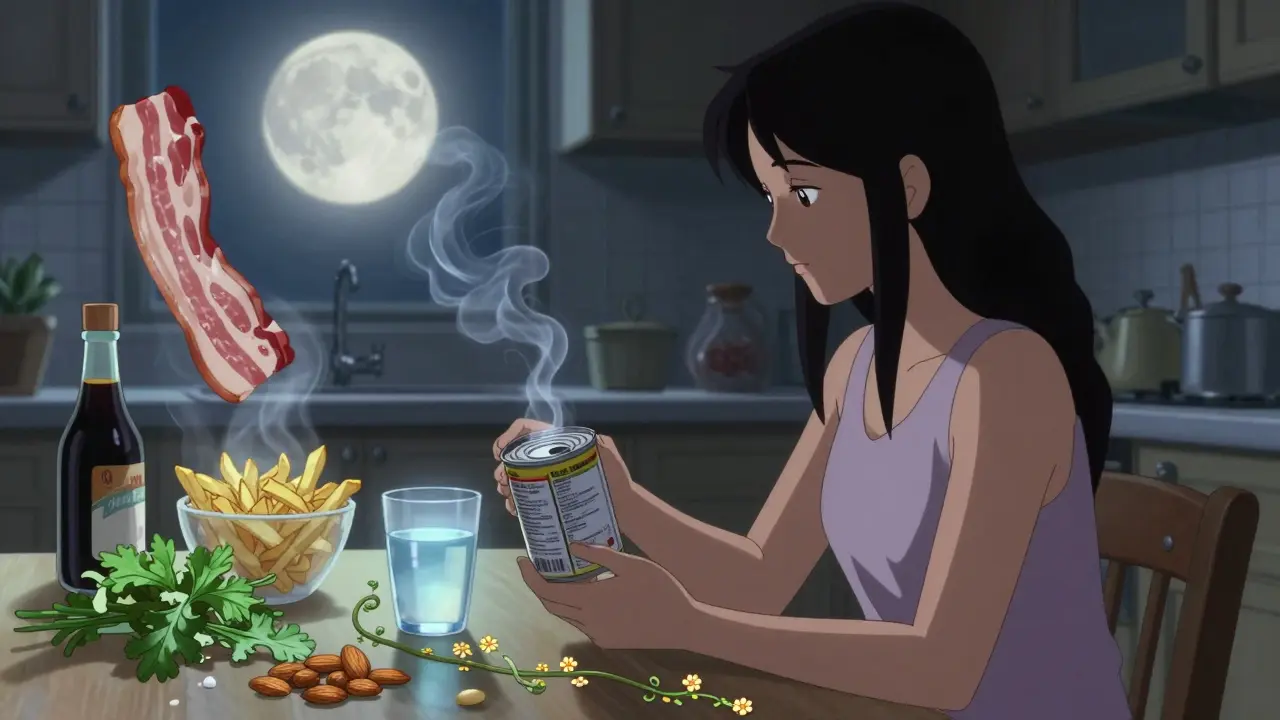
Fluid Balance: Drink More Water, Not Less
You might think, if fluid buildup causes problems, then I should drink less. That’s a common mistake. Dehydration actually makes Meniere’s worse.
Your body needs steady fluid levels to regulate inner ear pressure. When you’re dehydrated, your body tries to hold onto every drop of water - including in your inner ear. That’s the opposite of what you want.
The 2024 study in Acta Otolaryngologica didn’t just restrict sodium - it also told patients to drink 35 ml of water per kilogram of body weight daily. For someone weighing 70 kg (about 154 lbs), that’s around 2.5 liters, or about 10 cups of water. Not more. Not less. Just enough to keep your system balanced.
Spread it out. Don’t chug it all at once. Sip water throughout the day. Avoid sugary drinks, energy drinks, and alcohol - they all interfere with your body’s fluid balance. Caffeine, too, can narrow blood vessels in the inner ear, making symptoms worse.
What to Eat - and What to Avoid
Here’s a simple food guide for your Meniere’s diet:
Do Eat:
- Fresh fruits and vegetables (no added salt)
- Unsalted nuts and seeds
- Lean meats, poultry, and fish (grilled or baked, not cured)
- Whole grains like brown rice, quinoa, and oats (check labels - some are salted)
- Low-sodium dairy (unsalted butter, plain yogurt, fresh cheese)
- Herbs and spices: garlic, ginger, turmeric, basil, rosemary
Avoid or Limit:
- Processed meats: bacon, ham, salami, hot dogs
- Canned soups, vegetables, and beans (unless labeled “no salt added”)
- Sauces: soy sauce, ketchup, mustard, Worcestershire sauce, barbecue sauce
- Snack foods: chips, pretzels, crackers, popcorn (unless unsalted)
- Fast food and restaurant meals (you can’t control the salt)
- Pre-packaged meals: frozen dinners, instant noodles, meal kits
- Alcohol and caffeine: coffee, tea, soda, energy drinks, beer, wine
When you cook at home, skip the salt. Use lemon juice, vinegar, or spice blends instead. Keep salt shakers off the table - out of sight, out of mind. And when you eat out, ask for food to be prepared without added salt. Most restaurants will accommodate you if you ask politely.
How Long Until You See Results?
Don’t expect miracles overnight. This isn’t a quick fix. Most people start noticing fewer vertigo attacks after 4 to 8 weeks. Hearing and tinnitus improvements often take 3 to 6 months. That’s because your inner ear needs time to rebalance its fluid levels.
One study found that 68% of patients who stuck to a low-sodium diet (<3,000 mg/day) saw major symptom reduction. But 22% gave up because the food tasted bland or social situations got too hard. This isn’t a diet you do for a month - it’s a lifestyle you live for the long haul.
Keep a symptom journal. Write down what you ate, how much water you drank, and whether you had a vertigo episode. After a few weeks, you’ll start seeing patterns. Maybe your attacks spike after eating pizza. Maybe you feel better when you drink your water before noon. That data is gold.

How This Compares to Other Treatments
Doctors often prescribe diuretics like hydrochlorothiazide to flush out excess fluid. They work - about half to 70% of people get relief. But they come with side effects: dizziness, low potassium, kidney stones, dehydration.
Injecting steroids or gentamicin directly into the ear can stop vertigo - but steroids need repeat visits, and gentamicin can permanently damage your hearing.
Compared to all that, dietary change is low-risk, low-cost, and gives you control. No prescriptions. No needles. No hospital visits. Just your plate and your choices.
That’s why the American Academy of Otolaryngology lists low-sodium diet as the very first step in treating Meniere’s disease - before any medication. Over 90% of ENT specialists in the U.S. recommend it.
What If It Doesn’t Work?
Some people don’t respond to diet alone. That doesn’t mean you failed. Meniere’s is complex. What works for one person might not work for another.
If you’ve been strict for 6 months and still have frequent attacks, talk to your doctor. You might need a combination of diet, medication, and vestibular rehab. Or you might be a candidate for newer treatments like intratympanic injections.
But don’t give up on the diet. Even if it doesn’t stop all your symptoms, it often reduces their severity. Many patients say their attacks are shorter, less intense, or less frequent - even if they still happen.
And remember: this isn’t about perfection. It’s about progress. One less salty meal a week. One less soda. One more glass of water. Small changes add up.
Final Thoughts: You’re Not Alone
Living with Meniere’s disease is exhausting. The unpredictability, the isolation, the fear of the next attack - it wears you down. But you’re not powerless.
What you eat matters. How much water you drink matters. Your daily choices have real power over your inner ear. This isn’t a cure, but it’s one of the most effective, safest tools you have.
Start today. Read one food label. Swap your salted snack for unsalted almonds. Drink a glass of water before breakfast. These aren’t big moves - but they’re the ones that change your life.
Can I still eat out with Meniere’s disease?
Yes, but you need to be strategic. Choose restaurants that serve fresh food - grilled chicken, steamed veggies, plain rice. Ask for no salt, no sauces, and no butter. Avoid soups, fried foods, and anything described as "seasoned" or "marinated." Many places will accommodate you if you explain you have a medical condition. Call ahead if you’re unsure.
Is sea salt better than table salt for Meniere’s?
No. Sea salt, Himalayan salt, kosher salt - they’re all sodium chloride. The amount of sodium per teaspoon is nearly identical. The mineral traces in sea salt don’t reduce its impact on fluid retention. If you’re counting sodium, all salt counts the same.
How do I know if I’m drinking enough water?
A simple rule: drink 35 ml of water per kilogram of body weight each day. For example, if you weigh 70 kg, aim for 2.5 liters. Your urine should be pale yellow - not clear (which means you’re overhydrated) and not dark (which means you’re dehydrated). Spread your intake evenly - don’t drink it all at once.
Can I have caffeine or alcohol with Meniere’s?
It’s best to avoid them. Caffeine constricts blood vessels in the inner ear, which can trigger or worsen symptoms. Alcohol affects your balance system directly and can cause dehydration. Even small amounts can make vertigo or tinnitus worse. If you do drink, limit it to very occasional, minimal amounts - and never on an empty stomach.
How long should I follow this diet?
Long-term. Meniere’s disease is chronic, and fluid balance in your inner ear is a daily battle. Most people see the best results after 6 months of consistent low-sodium eating and proper hydration. Even if symptoms improve, continuing the diet helps prevent flare-ups. Think of it like managing high blood pressure - you don’t stop when you feel better.
Is there a specific brand of low-sodium food I should buy?
No brand is universally best - but look for labels that say "No Salt Added," "Unsalted," or "Low Sodium (140 mg or less per serving)." Brands like Amy’s, Pacific Foods, and Imagine offer low-sodium soups and broths. Fresh or frozen vegetables without sauces are always safe. Always check the nutrition label - serving sizes are often smaller than you think.
Yeah right. I tried this 'low sodium' nonsense for two weeks. Lost 3 pounds of water weight, felt like a ghost, and still got hit with vertigo while brushing my teeth. This isn't medicine, it's a cult.
My doctor said 'maybe' and handed me a pamphlet. Meanwhile, my ear is still ringing like a broken alarm clock.
The physiology here is fascinating, really. The inner ear isn't just a passive receiver of signals-it's a dynamic, fluid-regulated organ that responds to systemic osmotic pressure like a tide pool adjusting to lunar cycles. When we reduce sodium, we're not just 'cutting salt,' we're allowing the endolymphatic sac to reassert its role as a pressure regulator, a biological overflow valve that modern diets have drowned in sodium brine. It's not about deprivation; it's about restoring a balance our ancestors maintained instinctively through whole foods and seasonal eating. We've turned our bodies into saltwater aquariums and wonder why the fish are gasping.
This actually helped me. I was having 3-4 attacks a week. After 6 weeks of low sodium + 2.5L water, I went from 'can't leave the house' to 'took the dog for a walk without puking.'
It's not magic, but it's real. I still avoid soy sauce like it's poison. And yes, I cry when I see a bag of chips.
Low salt = less spinning. Duh.
I’ve been on this diet for 8 months now. 🌊 The first time I woke up and didn’t feel like I was on a carnival ride? I cried. Not because I was sad. Because I remembered what normal felt like.
It’s not just about sodium. It’s about reclaiming your body from processed food corporations who don’t care if you fall down the stairs. You’re not just eating-you’re fighting back.
so like... you just dont eat salt? but what about the flavor?? i mean like... my food tastes like cardboard now. and why is everyone so obsessed with water?? i drink like 3 liters and still feel like a raisin
This is why America is collapsing. People think eating less salt fixes inner ear fluid. You don't fix biology with grocery lists. You fix it with real medicine. Or just accept you're broken and stop pretending diet changes are science.
Oh sweetie. You really think your tinnitus is from soy sauce? 😏 I’ve seen people spend $200 on 'low sodium' quinoa while still drinking 4 espressos and a bottle of wine. You can't out-eat your bad habits.
Also, 'no salt added' beans? Please. They're still packed with MSG. You're being played.
I’ve got Meniere’s and this worked for me, but honestly? I messed up the water intake at first. Drank 2L in the evening and woke up with my head pounding. Turns out, spacing it out matters more than the total. Also, try herbal teas like ginger or chamomile-no caffeine, helps with the nausea too. 🌿
I love how people treat this like it's a miracle cure. It's not. It's a management tool. Like wearing a seatbelt. Doesn't guarantee you won't crash, but it sure as hell helps when you do.
Also, the 'drink water' thing? Yeah, I used to think it was BS too. Until I stopped chugging Gatorade at 3am after an attack. Then I actually felt human again. Weird, right?
This is why we need to ban processed food. It's not a diet. It's a war. And we're losing. I'm proud of anyone who tries this. Most people just take pills and hope it goes away. Pathetic.
I tried this. Lasted 11 days. Then I ate a slice of pizza and cried for 45 minutes. Not because of the vertigo. Because I realized I miss flavor. Like, actual flavor. Not this bland, sad, rabbit-food existence.
Also, why is everyone acting like this is a moral victory? I’m not a saint. I’m just trying not to fall over.
You people are obsessed with sodium. In India, we’ve had Meniere’s for centuries and no one counts milligrams. We use turmeric, ginger, and yoga. Your Western obsession with numbers is a distraction. The real issue? Stress. You’re all too anxious to feel your own ears.
I just want to say-thank you-for writing this. I’ve been struggling for years. I thought I was crazy. I thought it was all in my head. But reading this? It’s the first time I’ve felt seen. I’m starting tomorrow. No more canned soup. No more soy sauce. Just me, my herbs, and my 2.5 liters of water. I’m not giving up.
Low sodium? Yeah right. I live in America. We don't do 'moderation.' We do 'extra crispy' and 'double bacon.' If your ear is clogged, maybe you should've stayed in the 1950s where people ate meat and potatoes and didn't overthink everything. This is why the West is dying.