
Mouth Sores Prevention Calculator
Prevention Risk Assessment
This tool evaluates your risk for medication-induced mouth sores and recommends personalized prevention strategies based on clinical evidence.
Getting mouth sores from your medication isn’t rare-it’s expected. If you’re on chemotherapy, radiation, or even some common drugs like antibiotics or blood pressure pills, your mouth might start to hurt before you even notice other side effects. These aren’t just minor irritations. They’re called oral mucositis, and they can turn eating, talking, and even swallowing into painful challenges. For cancer patients, up to 100% may develop them. But here’s the truth: most of these sores don’t have to happen. Prevention works better than treatment, and the right steps taken early can make all the difference.
Why Medications Cause Mouth Sores
It’s not magic-it’s biology. Many drugs, especially chemotherapy and radiation, target fast-growing cells. That’s great for killing cancer cells, but your mouth is full of them too. The lining of your mouth renews itself every few days. When these cells get damaged by drugs, they die off faster than they can heal. That’s when open sores, red patches, and ulcers form. It’s not an infection. It’s not poor hygiene. It’s direct tissue damage.
Some drugs are worse than others. Melphalan and 5-fluorouracil are known for triggering severe mouth sores. Even drugs like methotrexate, certain antibiotics, and immunosuppressants can cause them. The risk goes up if you’re older, smoke, have poor dental health, or already have dry mouth. And once a sore forms, it can get worse fast-especially if you’re not protecting your mouth daily.
Prevention Is the Only Real Strategy
Doctors used to wait until sores appeared, then try to numb them or treat infections. That’s like waiting for a leak to flood your house before fixing the roof. The best approach? Stop the damage before it starts. The Multinational Association of Supportive Care in Cancer (MASCC/ISOO) guidelines say prevention isn’t optional-it’s standard.
Here’s what works:
- Dental checkup 2-4 weeks before treatment: Cavities, infected teeth, or ill-fitting dentures can turn into open wounds when your immune system is down. Getting them fixed beforehand cuts severe mouth sores by 78%.
- Switch to a soft-bristle toothbrush: Use one with bristles under 0.008 inches. Brush twice a day with fluoride toothpaste. Avoid toothpastes with sodium lauryl sulfate (SLS)-they strip away protective layers and make sores worse.
- Use baking soda rinses: Mix 1 teaspoon of baking soda in 8 ounces of water. Swish after meals to neutralize acid and calm irritation. Do this 3-4 times daily.
- Stay hydrated: Dry mouth = more sores. Drink water constantly. If your mouth feels like sandpaper, try artificial saliva products like Biotene or take pilocarpine 5mg tablets three times a day. They boost natural saliva by 47%.
The Proven Prevention Tools
Not all mouthwashes or gels are created equal. Some are hype. Others are backed by solid science.
Benzydamine mouthwash (0.15%) is the most cost-effective option for people getting radiation. Used 3-4 times a day, starting before treatment, it cuts severe sores by 34%. It’s cheap-$15 to $25 per course-and doesn’t cause systemic side effects. But if you’re allergic to aspirin, skip it. It’s an NSAID.
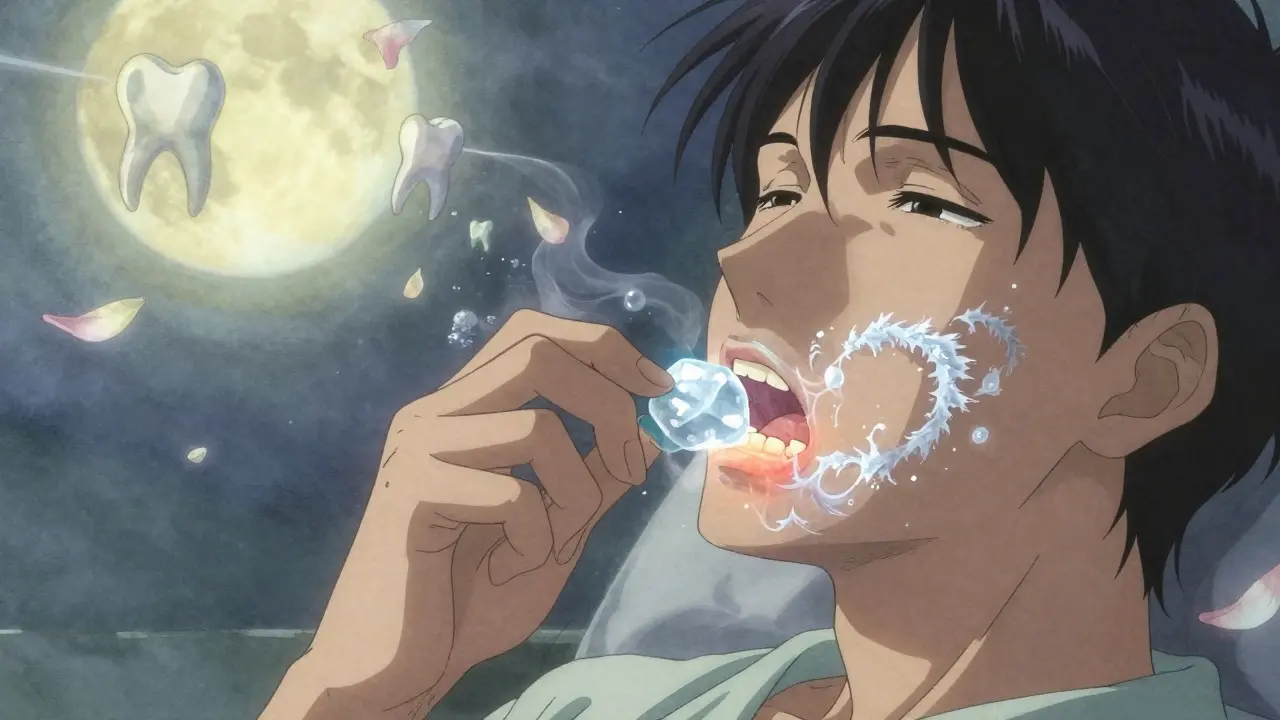
Cryotherapy (ice chips) is shockingly effective for specific chemo drugs like melphalan and 5-fluorouracil. You must suck on ice chips for 30 minutes, starting 5 minutes before your infusion. This chills the mouth, slowing blood flow and reducing drug exposure to tissues. Studies show it cuts severe sores by 50%. The catch? It only works for short infusions. And 42% of people quit because the cold is unbearable. If you can handle it, it’s one of the best tools you have.
Palifermin is a powerful drug given by IV before and after stem cell transplants. It helps your mouth lining regenerate faster. It reduces severe sores from 63% to 20%. But it costs over $10,500 per course. Medicare covers it for transplants, but most people without insurance can’t afford it. It’s not for everyone-but for high-risk transplant patients, it’s life-changing.
Glutamine is a supplement you dissolve in water and swish before swallowing. One study showed a 43% drop in how long sores lasted. But later studies are mixed. It seems to help only if you have head and neck cancer getting radiation. Don’t waste money on it unless your doctor says it fits your case.
Allopurinol mouthwash (500mg in 20mL water, swished 4 times a day) shows promise for radiation-induced sores, cutting severe cases by 40%. But there’s little proof it works for chemo. Still, it’s cheap and safe to try.
What Doesn’t Work (And Why)
Chlorhexidine mouthwash is everywhere. Dentists hand it out like candy. But here’s the truth: it only reduces risk by 15%. That’s barely better than placebo. Worse, long-term use can stain your teeth brown and mess up your taste. A 2020 survey found 28% of users hated the metallic aftertaste. The MASCC/ISOO guidelines only give it a weak recommendation.
Antibiotics? Don’t take them to prevent sores. A 2021 study found they increase your risk of a dangerous gut infection (Clostridium difficile) by 27%. Your mouth sores aren’t caused by bacteria-you don’t need to kill germs. You need to protect tissue.
Benzocaine gels and sprays? They numb pain, but they’re risky. The FDA warns against them for kids under 2 because they can cause a rare but deadly blood condition. Even for adults, they mask pain without healing anything. You might feel better for an hour, but the sore keeps growing underneath.
Pain Relief When Sores Happen
Even with prevention, sores can still appear. When they do, you need fast, safe relief.
Gelclair is a gel you swish or apply directly. It coats the sores with a protective layer made of hyaluronic acid and glycerin. It doesn’t heal them-but it makes them feel better for up to 4 hours. People rate it 4.2 out of 5. The downside? It’s slimy. Some say it makes talking feel like you’ve got cotton in your mouth. But if you can’t eat or drink, that’s a small price.
Dexamethasone mouthwash (0.5mg in 5mL water) is a steroid rinse. Used 4 times a day, it cuts pain scores by 37% on a 10-point scale. It’s not for long-term use, but for acute flare-ups, it’s one of the most effective options. Ask your oncologist for a prescription.
Low-level laser therapy (LLLT) is new but promising. In a 2023 study, patients who got laser treatments (650nm wavelength, 2J/cm²) saw severe sores drop from 41% to 18%. It’s not widely available yet, but more cancer centers are adding it. Ask if your hospital offers it.

Real People, Real Experiences
Patients aren’t just numbers. On forums like CancerCare and Reddit, people share what actually works.
- “I used ice chips during my 5-FU chemo. I hated it at first, but the pain dropped so much I kept doing it.” - Sarah, 58
- “Gelclair was the only thing that let me eat soup again. The texture was weird, but I didn’t care.” - Mark, 42
- “I switched to a baby toothbrush. No more bleeding gums. Simple, but it made a difference.” - Lena, 67
- “I spent $10,000 on palifermin. Insurance covered it. I’m alive because of it.” - David, 51
- “I stopped using my regular toothpaste. Found an SLS-free one. Sores didn’t come back.” - Priya, 45
One common thread? People who started care before treatment had far fewer problems. Those who waited until their mouth hurt? They spent weeks in pain, missed meals, and sometimes had to delay chemo.
What You Should Do Today
If you’re about to start treatment:
- Call your dentist. Get a full checkup. Fix loose fillings, cracked teeth, or gum disease now.
- Buy a soft-bristle toothbrush and SLS-free toothpaste. Start using it now.
- Ask your oncologist: “Am I on a drug linked to mouth sores? Should I use ice chips, benzydamine, or something else?”
- Start rinsing with baking soda water after meals.
- Keep water handy. Sip all day.
If you already have sores:
- Stop using alcohol-based mouthwashes. They burn.
- Try Gelclair or dexamethasone rinse (if prescribed).
- Eat soft, cool foods. Avoid citrus, spicy, or crunchy stuff.
- Don’t ignore pain. Tell your team. There are options.
The Big Picture
The global market for mouth sore treatments is growing fast-projected to hit $2 billion by 2030. That’s because hospitals now get paid better if they prevent these complications. CMS ties reimbursement to how many patients develop severe mucositis. So it’s not just about comfort-it’s about quality of care.
And the future? Personalized prevention is coming. Memorial Sloan Kettering has built a tool that uses 12 factors-your age, drug type, dental history, even your saliva flow-to predict your risk with 84% accuracy. Soon, your care plan won’t be generic. It’ll be built for you.
Right now, you have power. You don’t have to suffer. Mouth sores from medication aren’t inevitable. With the right steps, taken early, you can keep your mouth healthy while your body fights what it needs to.
Can over-the-counter mouthwashes prevent medication-related mouth sores?
Most OTC mouthwashes, like Listerine, won’t help-and some can make things worse. Alcohol and strong antiseptics irritate damaged tissue. Chlorhexidine has weak evidence and can stain teeth. The only OTC options with proven benefit are baking soda rinses and SLS-free toothpaste. For real prevention, you need targeted tools like benzydamine or cryotherapy, which often require a prescription or specific instructions from your care team.
Is it safe to use ice chips during chemotherapy?
Yes, for specific drugs like melphalan and 5-fluorouracil. Sucking on ice chips for 30 minutes, starting 5 minutes before infusion, cuts severe mouth sores by half. It’s safe for most adults. But if you have Raynaud’s, cold sensitivity, or nerve damage, talk to your doctor first. Some people can’t tolerate the cold, and that’s okay-there are other options.
Why does my dentist need to see me before cancer treatment?
When your immune system is weakened by chemo or radiation, even a small cavity or loose filling can turn into a serious infection. Studies show that getting dental problems fixed before treatment starts prevents 78% of severe mouth sores. Your dentist will remove risky teeth, clean your gums, and make sure dentures fit properly. This isn’t a routine checkup-it’s a critical part of your cancer care plan.
Can glutamine supplements really help with mouth sores?
Maybe-but only for some people. One study showed glutamine reduced how long sores lasted in head and neck cancer patients getting radiation. But other studies found no benefit for chemo-only patients. If you’re considering it, ask your oncologist if your treatment type and cancer location make you a good candidate. Don’t waste money on it unless there’s a clear reason it might help you.
What should I avoid eating if I have mouth sores?
Avoid anything that stings or scrapes: citrus fruits, tomatoes, spicy foods, crunchy snacks like chips, alcohol, and hot drinks. Also skip foods with vinegar or strong acids. Stick to soft, bland, cool foods: mashed potatoes, yogurt, oatmeal, smoothies, scrambled eggs, and pudding. Use a straw for liquids to avoid contact with sores. Eat small meals often-it’s easier on your mouth.
How long do medication-related mouth sores last?
It depends on the drug and your body. For chemo, sores usually start 5-10 days after treatment and peak around day 10-14. They often heal within 2-4 weeks after your last dose. With radiation, they can appear later and last longer-sometimes up to 8 weeks. Prevention can cut this time in half. If sores last more than 4 weeks or get worse, tell your doctor. You might need stronger pain control or a different treatment plan.
Are mouth sores from medication contagious?
No. Medication-related mouth sores are not caused by viruses or bacteria. They’re a direct result of tissue damage from drugs. You can’t pass them to someone else. But if a sore becomes infected (red, swollen, oozing, or smells bad), that’s a different problem-and you’ll need medical care. Don’t assume it’s just a sore. Get it checked.
Don’t wait until your mouth hurts to act. Prevention isn’t extra-it’s essential. Talk to your care team now. Use the tools that work. Protect your mouth like you’re protecting your health-because you are.
Just started chemo last week and I’ve been doing the ice chips since day one. It’s brutal cold but worth it-no sores yet. I didn’t believe it until I saw my nurse’s face when she checked my mouth.
This is exactly what I needed! I was scared to start treatment but now I feel like I have a plan. Thank you for breaking it down so clearly. Stay strong everyone! 💪
Let’s be real-this article reads like a pharmaceutical whitepaper disguised as patient advice. Palifermin? $10k? And you’re telling me this isn’t just a revenue stream for hospitals? The real issue is systemic neglect of supportive care until it becomes a billing code.
As someone who’s navigated this journey twice, I can confirm: the baking soda rinse is the unsung hero. Not glamorous, not patented, but it works. I mix mine with a splash of honey-soothes like a lullaby. And yes, I still use my baby toothbrush. My gums thank me daily.
Also, never underestimate the power of a cold spoon. Not ice chips, just a metal spoon chilled in the freezer. Hold it against your inner cheek when the burn hits. Simple. Free. Effective.
Y’all are overthinking this. I did NONE of this stuff and still got through chemo. Just drank milkshakes and watched Netflix. My mouth hurt? So what. I survived. Stop acting like you need a PhD to not get mouth sores.
How quaint. We’ve turned medical care into a DIY wellness ritual. Ice chips? Baking soda? As if the body is a garden and we’re just pruning the weeds. The truth? Your mucosa is being chemically cauterized by a system that prioritizes tumor reduction over human dignity. But hey, at least you’ve got your colloidal silver and your SLS-free toothpaste. 🙃
I’ve been helping my mom through radiation for head and neck cancer, and honestly, this post saved us. We didn’t know about benzydamine until her oncologist mentioned it-she started it before her first session and hasn’t had a single ulcer. We switched to a soft brush, started baking soda rinses after every meal, and kept water by her bed. She’s 72, never drank enough water before, now she’s sipping all day. Small changes, huge difference.
Also, Gelclair? Yeah, it’s slimy. But when she could finally eat yogurt again after two weeks of only broth? Worth every sticky second. I cried. She smiled. That’s the win.
Guys, I’m from India and we use neem twigs for cleaning teeth since ancient times. My uncle did chemo and he used neem water rinse-no sores. Maybe science hasn’t caught up yet. Neem has natural anti-inflammatory and antimicrobial properties. Try it! Cheap, natural, and no side effects. 🌿
Thank you for writing this. My sister is starting treatment next week and I was so scared. Now I feel like I can actually help her. I’ll get the toothbrush and the baking soda today. You’re right-don’t wait until it hurts.
So let me get this straight-you want me to spend hours sucking on ice chips, buy expensive gels, and see a dentist before chemo… but the hospital won’t cover any of it? And you’re surprised people skip it? This isn’t prevention-it’s a luxury. Meanwhile, my cousin got sores, got infected, and had to delay chemo. No one apologized. No one paid for her pain. This article is a feel-good fantasy for people with good insurance.
Ice chips worked for me! 🥶❤️ Also, SLS-free toothpaste = game changer. No more burning. #MouthSoresSuck
Notice how every ‘proven’ solution requires a prescription, a device, or a $10k drug? Coincidence? Or is this just another way for Big Pharma to monetize suffering? The real cure? Stop poisoning people with chemo. But hey, keep rinsing with baking soda. It’s cheaper than litigation.
The data presented is methodologically sound and aligns with current MASCC/ISOO guidelines. Prevention remains the cornerstone of supportive care. The efficacy of cryotherapy for specific agents is well-documented in peer-reviewed literature. However, patient adherence remains a significant barrier, particularly with interventions requiring sustained behavioral change.
I appreciate the thoroughness, but I must point out that your assertion regarding palifermin’s cost-effectiveness ignores the broader economic implications of hospital readmissions and treatment delays. The $10,500 price tag is not merely a cost-it is a calculated investment in continuity of care. Your framing, while emotionally compelling, lacks systemic nuance.
Wow. Just… wow. You actually believe this? Ice chips? Baking soda? You think your grandma’s kitchen remedies are going to stop a drug designed to kill fast-growing cells? This isn’t a yoga retreat-it’s chemotherapy. You’re not ‘preventing’ damage-you’re just hoping it won’t be too bad. And don’t get me started on that ‘personalized risk tool’-it’s just AI with a fancy name. They’re still guessing. And you’re buying it? Pathetic.