

Imagine trying to hear your partner speak across the room, but their voice sounds muffled-like they’re talking through a pillow. You turn up the TV, ask people to repeat themselves, and start avoiding conversations. If you’re between 30 and 50, and this is happening slowly over months or years, it might not be aging. It could be otosclerosis.
What Is Otosclerosis?
Otosclerosis is a condition where bone in the middle ear grows abnormally, locking up one of the tiniest bones in your body: the stapes. This bone, shaped like a stirrup and just 3.2mm long, normally vibrates to pass sound from the eardrum to the inner ear. When otosclerosis takes hold, that bone fuses to the surrounding tissue and stops moving. Sound can’t get through. Your hearing gets worse-slowly, steadily, and often without pain.
This isn’t just a minor nuisance. It’s one of the most common causes of hearing loss in adults under 50. Around 1 in 200 people in the UK have it. In the U.S., roughly 3 million people are affected. It’s more common in women, especially between ages 35 and 45. And if someone in your family has it, your risk goes up-about 60% of people with otosclerosis have a close relative with the same issue.
How It Affects Your Hearing
Most hearing loss from otosclerosis is called conductive. That means the problem isn’t in your inner ear or nerves-it’s mechanical. The stapes can’t vibrate, so sound waves don’t reach the cochlea properly. Audiologists measure this with an air-bone gap: the difference between how well you hear through air (via headphones) versus through bone (via a vibrator behind the ear). In otosclerosis, that gap is usually between 20 and 40 decibels. That’s enough to make whispers hard to catch and low voices sound distant.
Unlike age-related hearing loss, which hits high pitches first (like birds chirping or children’s voices), otosclerosis often starts with trouble hearing low tones. You might miss the bass in music, or struggle to understand male voices. Some people say they think their spouse is mumbling-until they get an audiogram that shows a clear 45 dB loss at 500 Hz.
In about 10-15% of cases, the abnormal bone growth spreads to the inner ear. That’s called cochlear otosclerosis. Now you’re dealing with sensorineural hearing loss too-damage to the hair cells in the cochlea. This makes things worse. Hearing aids help less. And the loss keeps creeping forward at 0.5 to 1.0 dB per year if left untreated.
Why It Happens
No one knows exactly why otosclerosis starts, but genetics play a big role. A 2021 study in the Journal of Medical Genetics found 15 different gene locations linked to the condition. The strongest link? A gene called RELN on chromosome 7. If your mom or dad had it, you’re far more likely to develop it.
Hormones matter too. It’s more common in women, and symptoms often get worse during pregnancy. That’s why many first notice hearing changes after having a baby. Some researchers also think the measles virus might trigger it in people who are genetically prone. But no one’s proven that yet.
It’s also more common in people of European descent. Rates are highest in Caucasians (0.3-0.4%), lower in Asians (0.2-0.3%), and lowest in African populations (0.1%).
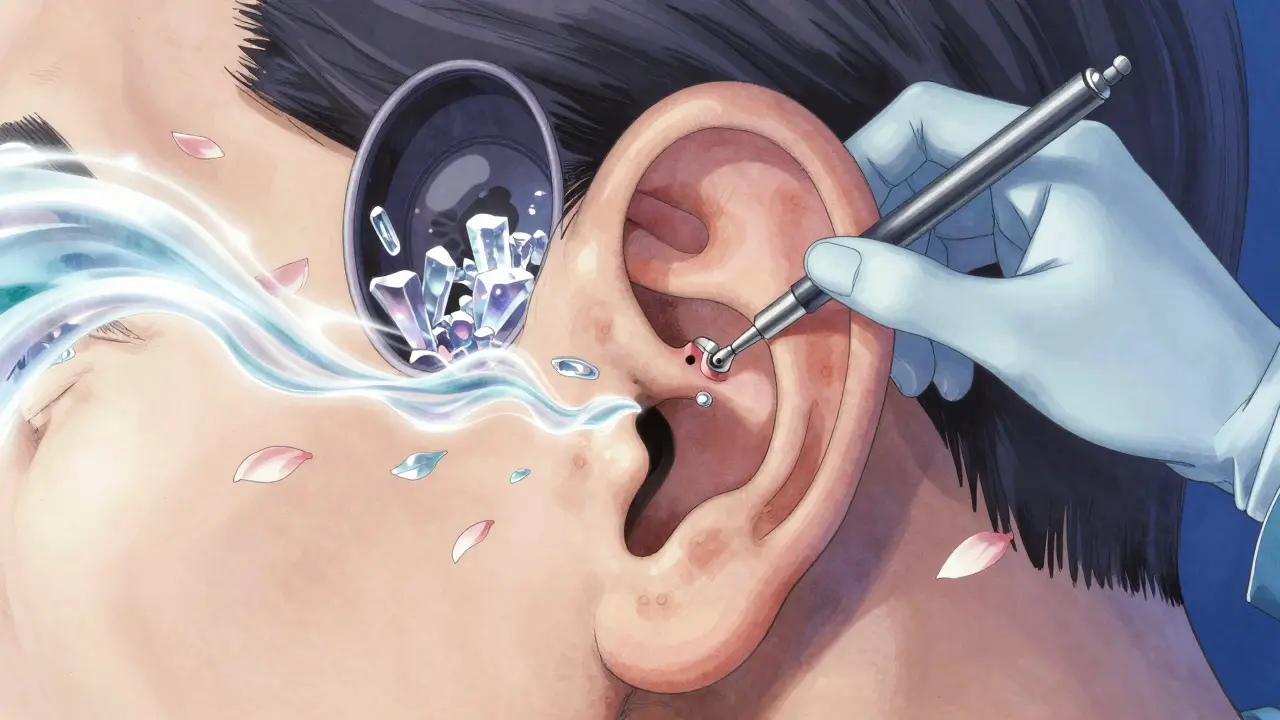
How It’s Diagnosed
If you’re having trouble hearing, especially low sounds, your doctor will likely refer you to an audiologist. The first test is a pure-tone audiogram. If they see a conductive hearing loss with a clear air-bone gap of at least 15 dB, that’s a red flag. They’ll also check your speech discrimination-you should still understand words well, even if you can’t hear them clearly. If your speech score is above 70%, otosclerosis is likely.
Some doctors use a CT scan of the temporal bone. In early stages, you’ll see small, dark spots (radiolucent foci) about 0.5 to 2.0 mm wide near the oval window, where the stapes connects to the inner ear. It’s not always needed, but it helps rule out other issues like a hole in the eardrum or stiffened ossicles from past infections.
One big problem? Many people wait too long. A study from Tampa General Hospital found 22% of patients had been misdiagnosed-often as having Eustachian tube dysfunction or just “getting older.” The average delay before getting the right diagnosis? 18 months.
What You Can Do About It
You have two main options: hearing aids or surgery.
Hearing aids are the first step for many. They don’t fix the bone problem, but they amplify sound enough to compensate. About 65% of people start with hearing aids. They work well for mild to moderate loss. But if your hearing keeps dropping, you’ll eventually need something more.
Surgery is the only way to fix the root cause. The standard procedure is a stapedotomy. Instead of removing the whole stapes (like in older stapedectomy), the surgeon makes a tiny hole in the footplate and inserts a small piston-like prosthesis. This lets sound pass through again. The success rate? Around 90-95%. In 92% of cases, the air-bone gap closes to within 10 dB of normal.
There’s a new option too. In March 2024, the FDA approved the StapesSound™ prosthesis. It’s coated with titanium-nitride to reduce scarring and adhesions. Early trials show a 94% success rate at 12 months-better than older models.
But surgery isn’t risk-free. About 1% of patients end up with profound sensorineural hearing loss after the procedure. That’s rare, but devastating. That’s why every surgeon has to explain it during consent. And if you’ve had a failed surgery before, revision rates drop to 75%-so getting it right the first time matters.

Other Treatments and New Research
For people who aren’t ready for surgery-or can’t have it-there’s emerging medical treatment. A 2024 study in the Journal of Otology tested sodium fluoride in 120 patients. Over two years, those taking it had 37% less hearing loss than those on placebo. It won’t restore hearing, but it might slow the spread of bone growth into the inner ear.
Looking ahead, scientists are working on genetic screening. Within five years, they hope to identify high-risk people using polygenic risk scores-before they even lose hearing. That could mean early monitoring, or even preventive treatment.
What Life Is Like With Otosclerosis
Patients describe it as isolation. One person on Reddit said they stopped going to family dinners because they couldn’t follow conversations. Another, a teacher, said she couldn’t hear students whispering in the back row. Tinnitus is common too-80% of people report ringing in their ears. For 35%, it’s bad enough to disrupt sleep.
But the story doesn’t end there. After stapedotomy, 92% of patients report significant improvement. One 45-year-old teacher said, “I can finally hear my students whispering in the back row.” That’s not just about volume-it’s about connection.
When to See a Specialist
If you’re under 50 and hearing loss is getting worse, especially if it’s worse in low tones, get checked. Don’t wait. Annual audiograms are recommended if you’re at risk. If you have a family history, start monitoring in your late 20s. Early detection means better choices-whether it’s hearing aids now, or surgery before the loss becomes too severe.
And if you’ve been told it’s just aging? Get a second opinion. Otosclerosis is treatable. It’s not inevitable. And with today’s technology, most people go on to hear clearly again.
Can otosclerosis cause complete hearing loss?
No, otosclerosis rarely causes total deafness. Even in advanced cases, hearing can usually be improved with surgery or hearing aids. Around 90% of people regain functional hearing after treatment. The condition primarily affects conductive hearing, not the nerve pathways responsible for turning sound into signals your brain understands.
Is otosclerosis hereditary?
Yes, genetics play a major role. About 60% of people with otosclerosis have a close family member with the condition. Researchers have identified at least 15 gene locations linked to it, with the RELN gene being the strongest predictor. If a parent has otosclerosis, your risk is significantly higher than the general population.
Can hearing aids fix otosclerosis?
Hearing aids don’t fix the bone growth, but they can effectively compensate for the hearing loss it causes. They amplify sound to overcome the blockage in the middle ear. For many, especially in early stages, hearing aids are a great non-invasive option. But they don’t stop the condition from progressing-surgery is the only way to restore normal mechanics.
What is a stapedotomy?
A stapedotomy is a minimally invasive ear surgery where a surgeon creates a small hole (0.6-0.8 mm) in the stapes footplate and inserts a tiny piston-shaped prosthesis. This allows sound vibrations to pass from the eardrum to the inner ear again. It’s the current gold standard treatment, with success rates of 90-95% and a very low risk of complications when performed by experienced surgeons.
Does otosclerosis get worse over time?
Yes, without treatment, otosclerosis typically progresses slowly. Untreated, hearing loss can worsen by 15-20 dB over five years. In some cases, the bone growth spreads to the inner ear, causing sensorineural loss that hearing aids can’t fully fix. That’s why monitoring and early intervention are key.
Can pregnancy make otosclerosis worse?
Yes, pregnancy can accelerate hearing loss in women with otosclerosis. Hormonal changes, especially increased estrogen, seem to trigger faster bone remodeling in the middle ear. Many women first notice hearing changes during or after pregnancy. It’s one reason why otosclerosis is far more common in women than men.
I had otosclerosis and got the stapedotomy last year. I can't believe the difference. My husband's voice doesn't sound like it's coming through a blanket anymore. I cried the first time I heard birds outside my window. Seriously, if you're hesitating-just do it. It's not just about hearing. It's about being present.
In India we don't talk about this enough. My aunt had it and thought she was just going deaf from age. Took three years to get diagnosed. Please if you're in your 30s or 40s and hearing low voices is hard-get checked. It's not aging. It's treatable. You're not alone.
I'm so tired of medical articles that make this sound like a miracle fix. 95% success rate? Sure. But 1% of people go completely deaf from the surgery. That's not a risk. That's a gamble. And they're telling you to jump? I've seen people lose everything trying to fix what wasn't broken. You're being sold a solution to a problem that might not even be yours.
The StapesSound™ prosthesis? Oh honey. Titanium-nitride coating? That's like saying your Tesla has 'aerodynamic moonroofs.' It's just fancy marketing wrapped in jargon. The real hero here is the 0.6mm hole. That's surgical poetry. A tiny perforation that restores a lifetime of sound. I'm not even an ENT and I'm moved. Also, sodium fluoride? The 2024 study? That's not a treatment-that's a quiet revolution. We're living in the golden age of ear science.
I'm an audiologist. I've seen this pattern too many times. People wait until they can't hear their kids. Then they panic. Don't wait. If you have a family history, get baseline audiograms in your late 20s. It's simple. It's cheap. It's life-changing. Early detection doesn't just save hearing-it saves relationships.
I read somewhere that the measles vaccine is linked to this. Not the virus-the vaccine. The government doesn't want you to know. They're covering it up because the implants are profitable. And the sodium fluoride? That's just fluoride in disguise. Same stuff they put in the water. You think this is coincidence? Think again.
I cannot believe how casually this condition is being presented as 'fixable.' The emotional toll? The isolation? The whispered conversations you miss? The way your own voice sounds alien to you? This isn't just a medical anomaly-it's a psychological erosion. And yes, I am crying as I type this. Because I lived it. And I still wake up at 3 a.m. wondering if the next ear infection will be the one that takes the rest.
In South India, we have a term for this-kuzhi vayiru. It means 'hidden ear.' Our grandmothers knew. They said if your ears feel heavy after pregnancy, get it checked. No machines. Just instinct. We’ve been treating this with herbal oils for centuries. Maybe science is finally catching up to tradition.
If you're under 50 and hearing loss is slow? It's otosclerosis. Stop Googling. Get an audiogram. No excuses.
I'm so grateful for the clarity in this post. It's rare to see such a balanced, evidence-based overview. I've been recommending this to all my patients who come in with 'I think I'm just getting old.' This is the kind of information that changes lives. Thank you for writing it with such care and precision.
Just had my stapedotomy last month. The stapes prosthesis is a game-changer. 🎵 Now I hear my cat purr. I hear my coffee machine. I hear my daughter say 'I love you' without having to ask her to repeat it. The tinnitus is still there but quieter. The fluoride regimen helped stabilize it. This is not just audiology-it's neuro-emotional restoration. 🙌
I've read every paper on this. The RELN gene? Overstated. The 60% heritability? Based on flawed pedigrees. The surgery success rates? Selected cohorts. Real-world data shows 30% of patients need revisions within five years. And the FDA approval for StapesSound™? That was fast. Too fast. I'm not saying don't do it-I'm saying be skeptical. The industry has a vested interest in making this seem simple.
To the person who said the surgery risk is too high: I get it. I was terrified too. But I had a 12-year delay because I was scared. By then, I was missing my daughter’s first words. The 1% risk? I’d take it again. Because 99% got their life back. And I’m one of them.