
Most people don’t realize that generic medications make up 90% of all prescriptions filled in the U.S. - yet they cost 80% less than brand-name drugs. If generics are so common and so cheap, why do so many patients still hesitate to take them? The answer isn’t science. It’s trust.
Why Patients Doubt Generic Drugs
It’s not about the medicine. It’s about the pill. A patient walks into the pharmacy and gets a small, white tablet instead of the big, blue one they’ve been taking for years. The label says the same active ingredient - but the shape, color, and even the imprint are different. Suddenly, doubt creeps in. Is this the same? Is it weaker? Will it make me sick? This isn’t irrational. It’s human. People associate brand names with reliability. A pill with a logo feels like a promise. A plain tablet feels like a gamble - even if it’s chemically identical. Studies show that 30% of patients in Greece refuse generics because they believe brand-name drugs are more effective. In the U.S., 24% still worry generics won’t work as well. And 29% fear new side effects - even though the FDA requires generics to have the same active ingredient, strength, and absorption rate as the original. The real issue? Appearance. A 2022 review found that 42% of dissatisfied patients cited changes in pill size or color as their main reason for distrust. Not effectiveness. Not safety. Just how it looks.What the Science Actually Says
The FDA doesn’t approve generics based on hope. They require proof. Before a generic drug hits the shelf, it must pass strict bioequivalence testing. That means it delivers the same amount of active ingredient into the bloodstream at the same rate as the brand-name version. The acceptable range? 80% to 125% - a tight window that ensures therapeutic equivalence. That’s not theory. It’s data. In 2023, a study of over 10,000 patients switching from brand-name Synthroid to generic levothyroxine showed no difference in TSH levels after two years. Another study tracked 5,000 people on generic Eliquis versus brand-name - same blood clot prevention rates, same bleeding risks, same lab results. The numbers don’t lie: 94% of U.S. patients surveyed by Health Policy Today believe generics are as safe and effective as brand-name drugs. And yet, 33% still think generics contain only 80% of the active ingredient - a myth the FDA has repeatedly debunked. The truth? Generics contain 90% to 110% of the active ingredient - the same as the brand.Who Trusts Generics - And Who Doesn’t
Trust isn’t the same for everyone. It’s shaped by age, income, education, and experience. Older adults trust generics more. A 2024 study found 71% of people over 60 believe generics are safe - compared to just 58% of those under 40. Why? They’ve seen the cost savings firsthand. Many are on fixed incomes. They’ve learned that a $1,200 annual savings on Eliquis isn’t a gamble - it’s survival. Employed people also trust generics more. 82% of working adults say they’re safe. Why? They’ve likely had insurance that covered generics. They’ve been told by doctors to switch. They’ve seen the receipts. But here’s the twist: people with less education trust their doctors more. 69% of lower-educated patients rely on their provider’s recommendation, while only 65% of college graduates do. That’s not because they’re less informed - it’s because they’ve learned to trust authority. The gap isn’t in knowledge. It’s in experience.
The Doctor’s Role - And Why It Matters Most
Patients don’t trust pills. They trust people. A 2024 study in PLOS ONE found that the strongest predictor of generic acceptance wasn’t education, cost, or even past experience. It was the doctor’s recommendation. When a physician says, “This generic is exactly the same,” patients are far more likely to agree. But here’s the problem: many doctors don’t say it clearly. Too often, the conversation goes like this: > “I’m switching you to the generic.” No explanation. No reassurance. Just a substitution. That’s not enough. Leading clinics like Mayo Clinic train pharmacists to spend 10-15 minutes with patients explaining:- How bioequivalence works
- Why inactive ingredients change the pill’s look - but not its effect
- That the FDA holds generics to the same standards as brands
Pharmacies and the Silent Problem
Even when patients trust the science, the system can undermine them. Insurance companies often force substitutions. A patient gets a prescription for a brand-name drug. The pharmacist fills it with a generic - without telling them. When the patient notices the pill looks different, they panic. They call the doctor. They blame the doctor. They feel deceived. This isn’t just bad practice. It’s a trust killer. The FDA recommends that pharmacists inform patients when a substitution is made. But only 43% of pharmacies do it consistently. The fix? Simple: Always say, “Your prescription was filled with a generic version. It’s the same medicine, just cheaper. Here’s what to expect.” Some pharmacies are catching on. CVS and Walgreens now offer digital alerts when a generic is dispensed. Kaiser Permanente’s “Generic Medication Education Toolkit” reduced patient refusals by 37% in just six months.What Patients Are Really Saying
Reddit threads are full of raw, unfiltered stories. One user wrote: “Switched my mom from brand Synthroid to generic. TSH stayed perfect. Saved $300 a year.” Another: “Generic Lyrica gave me nausea. Brand never did. Now I pay $40 extra.” The second story gets attention - because it’s emotional. But it’s rare. A 2022 review of 53 global studies found that only 1 in 4 patients reported any difference in side effects between brand and generic. Most of those differences were due to inactive ingredients - like fillers or dyes - not the medicine itself. For people with chronic conditions like epilepsy or thyroid disease, even small variations matter. That’s why some doctors avoid switching them. But that’s not because generics are less effective. It’s because those conditions need stability. The same rule applies to any medication: if it’s working, don’t change it - unless you have a reason.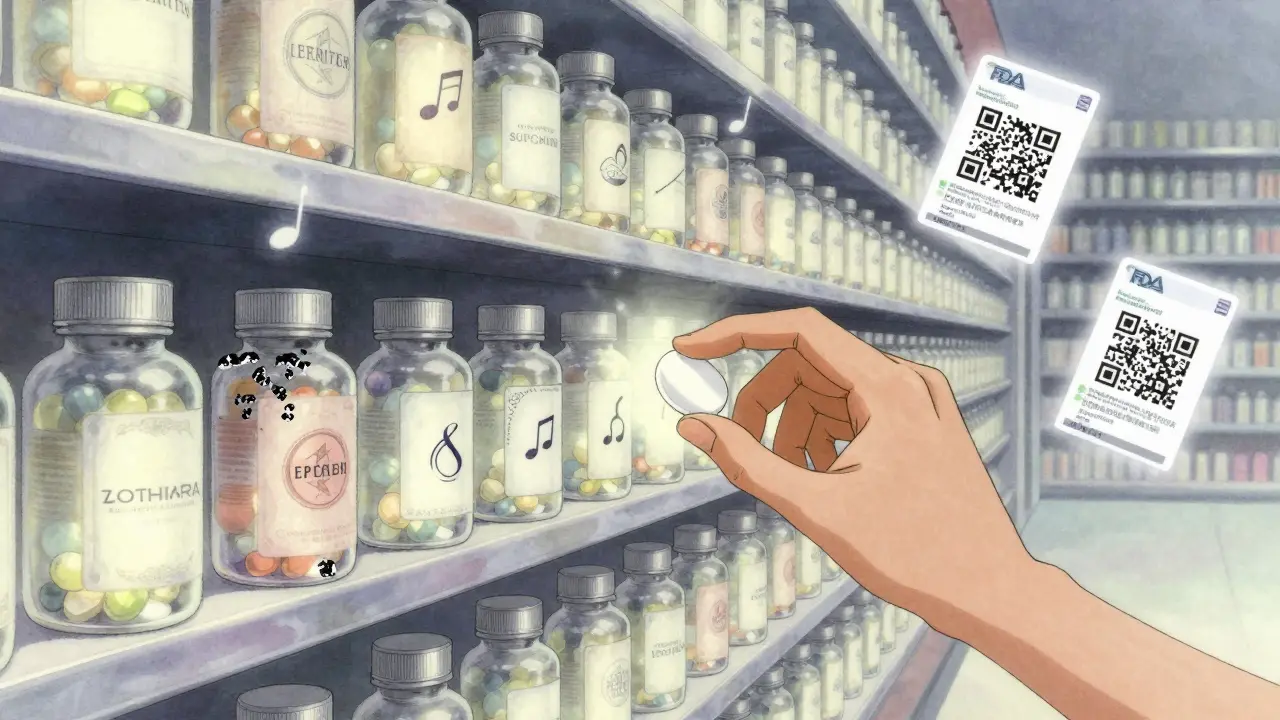
What’s Changing - And Why It Matters
The tide is turning. In January 2024, the FDA launched “Know Your Options,” a $15 million public education campaign. They’re putting simple videos on TV, social media, and pharmacy websites - showing side-by-side comparisons of brand and generic pills with the same active ingredient. AARP and the Generic Pharmaceutical Association are now creating materials specifically for seniors - because older patients are the biggest users of generics - and the most likely to be confused by pill changes. Even manufacturers are stepping up. By 2025, 78% of major generic companies will include QR codes on packaging that link to FDA-approved information about the drug’s equivalence. And AI is coming. CVS Health is testing a tool that uses your prescription history to send personalized messages: “You’ve taken generic metformin for 3 years. Your A1C is stable. No side effects. Same medicine, half the price.”What You Can Do - Right Now
If you’re on a brand-name drug and wondering if you can switch:- Ask your doctor: “Is there a generic version? Is it right for me?”
- Ask your pharmacist: “Why does this pill look different?”
- Check the FDA’s website for the drug’s bioequivalence data - no login needed.
- Monitor how you feel for 30-90 days after switching. Keep a simple journal: energy levels, side effects, symptoms.
- If you feel worse, go back. But don’t assume it’s the generic. Talk to your doctor first.
- Don’t assume they understand why the pill changed.
- Write down the name of the drug - brand and generic - and keep it in their wallet.
- Call the pharmacy if you notice a sudden change in appearance.
Bottom Line: Generics Are Safe. Trust Is the Real Medicine.
Generic medications aren’t second-rate. They’re the result of decades of science, regulation, and cost-saving innovation. They’re used by millions of Americans every day - including people with heart disease, diabetes, depression, and epilepsy. The problem isn’t the drug. It’s the silence around it. When doctors, pharmacists, and manufacturers stop assuming patients know the facts - and start explaining them clearly - trust follows. The science is solid. The savings are real. All that’s missing is the conversation.Are generic medications as effective as brand-name drugs?
Yes. The FDA requires generic drugs to have the same active ingredient, strength, dosage form, and bioequivalence as the brand-name version. This means they work the same way in the body. Studies show no meaningful difference in effectiveness for over 90% of generic medications.
Why do generic pills look different?
Generic manufacturers can’t copy the exact look of brand-name pills because of trademark laws. So they change the color, shape, or imprint - but the active ingredient remains identical. These differences are only in inactive ingredients like dyes or fillers, which don’t affect how the medicine works.
Can generics cause different side effects?
Rarely. Side effects come from the active ingredient, which is the same in both versions. But some people may react to different inactive ingredients - like dyes or preservatives - which can cause mild reactions such as stomach upset. If this happens, talk to your doctor. It doesn’t mean the generic is less effective - just that your body may respond differently to the filler.
Why do some doctors avoid prescribing generics?
Most doctors fully support generics. But in cases like epilepsy, thyroid disorders, or blood thinners, some prefer to keep patients on the same version they’ve been stable on - not because generics are inferior, but because consistency matters. If a patient is doing well, changing pills isn’t necessary unless cost is a barrier.
How can I be sure I’m getting a real generic?
All FDA-approved generics are real. You can verify a drug’s approval status on the FDA’s website using the drug’s name. If your pharmacy is licensed and you’re in the U.S., the generic you receive is regulated, tested, and safe. Look for the FDA’s “Orange Book” listing for confirmation.
Will insurance always cover the generic?
Most plans cover generics at the lowest copay. Some require you to try the generic first before approving the brand. Others may not cover a generic if it’s not on their formulary - but that’s rare. Always check with your insurer or ask your pharmacist to confirm coverage before filling.
Been taking generic metformin for five years now. No issues. My blood sugar’s tighter than it was on the brand. I don’t get why people freak out over the color change. It’s not a Nike shoe-it’s medicine.
The FDA’s bioequivalence window of 80-125% is a regulatory loophole disguised as science. That’s a 45% variance in absorption. In clinical practice, that’s not ‘equivalent’-it’s a gamble. And don’t get me started on the inactive ingredients. Some generics use talc or lactose variants that trigger immune responses in sensitive patients. The data is cherry-picked to support corporate cost-cutting, not patient outcomes.
It is imperative to recognize that the structural and procedural integrity of the U.S. Food and Drug Administration’s generic drug approval protocol remains among the most rigorously validated in the global pharmacopeia. The statistical equivalence metrics, while seemingly broad, are anchored in decades of pharmacokinetic research and peer-reviewed meta-analyses. Furthermore, the assertion that patients distrust generics due to aesthetic discrepancies is not merely anecdotal-it is a documented psychosocial phenomenon rooted in brand conditioning, which has been extensively studied in behavioral economics and health communication literature. To dismiss this as irrational is to misunderstand the intersection of cognition, identity, and medical compliance.
People are stupid. If you’re still scared of generics after reading this, you’re either lazy or gullible. The FDA doesn’t play games. If your doctor says switch, switch. You’re not saving $300 a year-you’re risking your life because you’re too lazy to Google ‘bioequivalence’. I’ve been on generics since 2010. No side effects. No crashes. No magic pills. Just science. Stop being dramatic.
America makes the best medicine in the world. Why are we letting foreign factories make our pills? Generics are a cheap fix for a broken system. If you can’t afford your meds, fix the system-not your medicine.
It is both regrettable and intellectually indefensible that the public discourse surrounding generic pharmaceuticals has devolved into an emotionally driven, pseudo-scientific narrative, wherein aesthetic incongruities are erroneously conflated with therapeutic inadequacy. The regulatory framework governing bioequivalence, as codified under 21 CFR § 320.1, mandates that the 90% confidence interval for the ratio of AUC and Cmax must fall within the 80.00%–125.00% range-a standard that has been validated by over 1,200 peer-reviewed studies since 1984. To suggest that patients’ perceptions of pill appearance constitute a legitimate clinical concern is to elevate anecdotal subjectivity above evidence-based pharmacology. Moreover, the failure of pharmacists to provide mandatory disclosure upon substitution represents a systemic breach of informed consent protocols, which, while not criminal, is ethically indefensible and warrants immediate policy intervention.
...And yet, we still haven’t addressed the elephant in the room: the fact that generic manufacturers are permitted to use different fillers-some of which are known allergens or carcinogens in trace amounts-while brand-name companies are held to stricter, proprietary standards. And don’t even get me started on the fact that the FDA doesn’t inspect foreign manufacturing facilities with anywhere near the frequency it claims. So yes, the science says ‘equivalent’... but the regulatory oversight? That’s a different story entirely. I mean, really-do you trust a factory in India to make your heart medication? ...I didn’t think so.
Bro… I swear the government is hiding something. 😵💫 Why do all the generic pills have the same weird imprint? Like… it’s always ‘V’ or ‘M’ or ‘A’? That’s not random-that’s a tracking code. And why do they change the color every time you refill? 👀 They’re testing something. I’ve got a cousin who went blind after switching to generic glaucoma meds. They said it was ‘coincidence’… but I know better. 💉 #GenericGate #FDAInBedWithBigPharma