
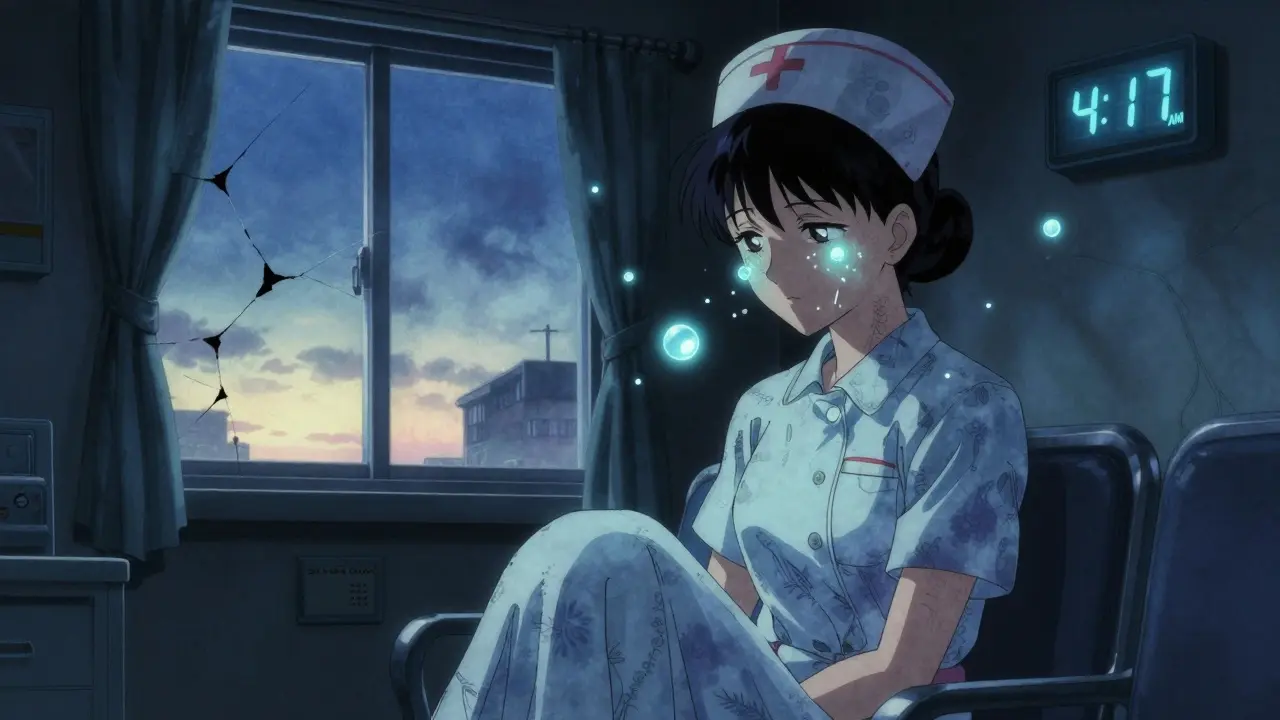
Working nights isn’t just tough-it’s biologically unnatural. Your body wasn’t designed to sleep during the day and stay awake at night. Yet millions of people do exactly that: nurses, truck drivers, factory workers, emergency responders, and retail staff. For many, the struggle isn’t just feeling tired. It’s a full-blown disorder called Shift Work Sleep Disorder (SWSD). If you’re consistently struggling to sleep after a night shift, feeling sleepy on the job, or bouncing between exhaustion and insomnia, you’re not alone-and you’re not just being lazy.
What Exactly Is Shift Work Sleep Disorder?
SWSD isn’t just poor sleep habits. It’s a medically recognized circadian rhythm disorder where your internal body clock is stuck out of sync with your work schedule. The circadian rhythm controls when you feel alert and when you feel sleepy, mostly through melatonin and cortisol. Normally, melatonin rises at night, making you drowsy, and cortisol peaks in the morning to wake you up. But when you work nights, your body keeps trying to follow the sun-not your shift.
According to the American Academy of Sleep Medicine, SWSD is diagnosed when you’ve had trouble sleeping or staying awake during work hours for at least one month, and it’s directly tied to your schedule. The National Institute for Occupational Safety and Health (NIOSH) estimates that 29% of night shift workers and 24% of rotating shift workers experience moderate to severe sleepiness-compared to just 8% of day workers. That’s not normal fatigue. That’s your biology fighting you.
Why Your Body Won’t Cooperate
Your brain has a tiny clock in the hypothalamus called the suprachiasmatic nucleus (SCN). It’s wired to sunlight. When you work nights and try to sleep during the day, light sneaks in-even through blackout curtains. That light tells your SCN: “It’s daytime. Stay awake.” So melatonin stays low, cortisol stays high, and sleep becomes a battle.
Studies show artificial light at night can suppress melatonin by up to 85%. That’s why sleeping during daylight hours feels like trying to fall asleep in a brightly lit room. Even if you use eye masks and white noise, your body’s internal alarm clock is still screaming “wake up!”
And it gets worse. Most shift workers lose 1 to 4 hours of sleep per night. A 2020 study in the Journal of Clinical Sleep Medicine found that night workers get about 1.5 hours less sleep than day workers-even when they try to sleep the same amount of time. That sleep debt adds up fast. One missed night? You can catch up. Five nights a week? You’re running on empty.
What Does SWSD Actually Feel Like?
If you’re a shift worker, you probably recognize these symptoms:
- Falling asleep at your desk, behind the wheel, or during critical tasks
- Struggling to fall asleep after your shift-even when you’re exhausted
- Waking up too early and being unable to fall back asleep
- Feeling foggy, forgetful, or unable to concentrate
- Increased irritability, mood swings, or anxiety
- Headaches, digestive issues, or frequent colds
Reddit threads from shift workers are full of stories like this: “I work 12-hour ER night shifts. I’ve tried blackout curtains, earplugs, white noise, even sleeping pills. I still only get 4 hours. My husband says I’m a zombie.” One survey of 500 shift workers found 78% experienced daytime sleepiness, 63% said it hurt their relationships, and 41% admitted making mistakes at work because of fatigue.
It’s not just personal-it’s dangerous. A case study in Occupational Medicine documented a $2.3 million equipment failure at a manufacturing plant caused by a worker with undiagnosed SWSD. Fatigue isn’t just annoying. It’s a workplace hazard.

Who’s Most at Risk?
Not everyone who works nights gets SWSD. But some people are more vulnerable:
- People over 50: Your body’s ability to adapt to schedule changes drops sharply after age 50. One study found 34% of workers aged 50-64 have SWSD, compared to 15% of those 18-29.
- Women: Research shows women are 28% more likely than men to develop SWSD, possibly due to hormonal differences and caregiving responsibilities.
- Morning larks: If you naturally wake up early and feel tired by 9 p.m., you’re a “morning person.” These people struggle far more with night shifts than “night owls,” who naturally stay up late. One study found night owls adapt 37% better.
- Those with rotating shifts: Constantly switching between day and night schedules prevents your body from ever adjusting. It’s like jet lag that never ends.
How to Manage SWSD-Proven Strategies
You can’t change your schedule? Fine. But you can change how you respond to it. Here’s what actually works, based on clinical guidelines and real-world success stories:
1. Control Light Exposure
Light is your #1 tool. During your night shift, use bright light-ideally 2,000 to 10,000 lux. Special light boxes can simulate daylight. Even a 30-minute session every 2 hours can help your brain stay alert. After your shift, wear blue-light-blocking glasses on the way home. They filter out the morning sun and streetlights that tell your brain it’s time to wake up.
2. Use Melatonin Strategically
Take 0.5 to 5 mg of melatonin 30 minutes before your daytime sleep. Don’t take it before your night shift-that’s when your body naturally makes it. Taking it before bed (daytime) helps trick your brain into thinking it’s nighttime. Studies show this improves sleep quality by up to 45% in shift workers.
3. Time Your Caffeine Right
Caffeine can help you stay alert-but only if you use it smartly. Drink your last cup no later than 2 hours before your sleep time. That means if you finish your shift at 7 a.m., don’t drink coffee after 5 a.m. Otherwise, you’ll be wired when you need to sleep.
4. Nap Like a Pro
Strategic napping is one of the most effective tools. Take a 20- to 30-minute nap before your shift to boost alertness. If your workplace allows, take a short nap during your break. Nurses in one study reported a 68% increase in alertness after scheduled naps. Even 10 minutes helps.
5. Lock Down Your Sleep Environment
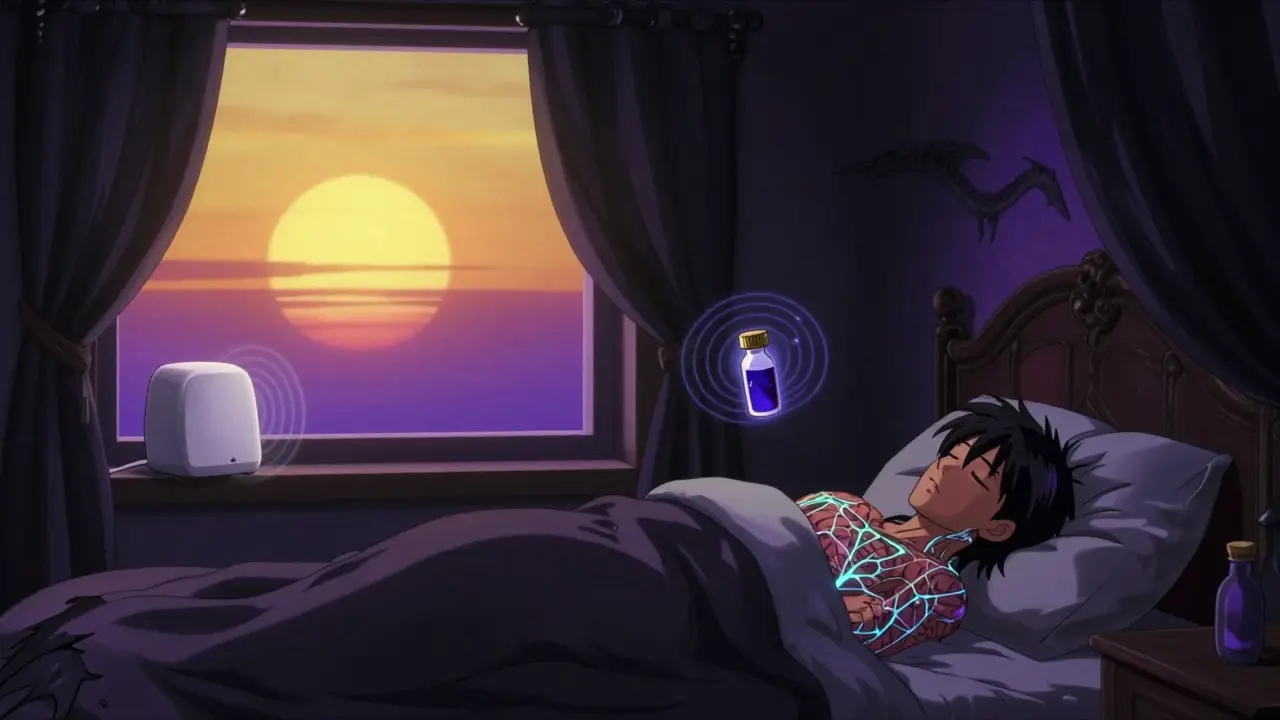
Your bedroom should be a cave. Use blackout curtains, a white noise machine, and earplugs. Tell family members not to disturb you. Turn off your phone. Remove clocks. The less you see and hear, the better your brain will believe it’s nighttime.
6. Stick to a Consistent Schedule
Even on your days off, try to sleep and wake at the same time. Your body craves routine. If you sleep from 8 a.m. to 4 p.m. on workdays, try to do the same on weekends. Going back to a normal schedule on weekends makes it harder to adjust next week.
What Doesn’t Work
Many people try quick fixes-and they fail:
- Sleeping pills: They may help you fall asleep, but they don’t improve sleep quality. You’ll still wake up feeling unrefreshed.
- Alcohol: It makes you drowsy but fragments sleep. You’ll wake up more often and feel worse.
- Just “trying harder”: You can’t outwillpower biology. If your body isn’t adapted, no amount of discipline will fix it.
And don’t wait for your employer to help. Only 22% of shift workers report having access to quiet, dark sleeping facilities at work, according to NIOSH. Don’t rely on them. Take control of what you can.
When to Seek Help
If you’ve tried these strategies for 2-4 weeks and still can’t sleep or stay awake, see a sleep specialist. They can confirm SWSD with a sleep log or actigraphy (a wrist device that tracks movement and sleep patterns). In some cases, doctors may prescribe wakefulness-promoting drugs like modafinil or armodafinil-both FDA-approved for SWSD. In May 2023, the FDA approved sodium oxybate, a new option for severe daytime sleepiness.
But medication should be a last resort. The real solution is behavioral: light, melatonin, naps, and routine. These are low-cost, low-risk, and proven.
Long-Term Risks of Ignoring SWSD
Ignoring this isn’t just about being tired. Chronic circadian misalignment is linked to serious health problems:
- Increased risk of heart disease
- Higher chances of type 2 diabetes
- Greater risk of obesity
- Higher rates of depression and anxiety
- Increased cancer risk-the International Agency for Research on Cancer classifies shift work as “probably carcinogenic”
It’s not a coincidence that shift workers have higher rates of these diseases. Your body is under constant stress. The longer you ignore it, the more damage accumulates.
Final Reality Check
Here’s the truth: Only 2-5% of night shift workers ever fully adapt. Even after decades, most people’s bodies never fully switch. Dr. Charles Czeisler’s research at Brigham and Women’s Hospital shows this clearly. And Dr. Till Roenneberg’s 2022 study says human biology is fundamentally incompatible with long-term night work.
That doesn’t mean you’re doomed. It means you need to work with your biology-not against it. You can’t change your schedule? Fine. But you can change how you sleep, how you light your environment, and how you fuel your body. The difference between surviving and thriving on night shifts isn’t willpower. It’s strategy.
Start tonight. Put on your blue-blocking glasses. Take your melatonin. Block out the light. And sleep like your health depends on it-because it does.
Can you ever fully adapt to working nights?
Very few people fully adapt. Research shows only 2-5% of night shift workers ever achieve complete circadian alignment-even after years on the schedule. Most people’s bodies continue to struggle, which is why Shift Work Sleep Disorder is so common. The goal isn’t full adaptation-it’s minimizing the damage through smart light, sleep, and timing habits.
Is melatonin safe for long-term use in shift workers?
Yes, melatonin is generally safe for long-term use at low doses (0.5-5 mg). It’s a natural hormone your body already produces. Studies in shift workers show no serious side effects with regular use. It’s far safer than sleeping pills. Always start low and take it 30 minutes before your planned sleep time. Avoid high doses-more than 5 mg doesn’t help and may cause grogginess.
Why do I feel more tired on days off?
This is common. On days off, your body still thinks it’s nighttime, but your environment (sunlight, family noise, social plans) pulls you toward a normal schedule. This conflict creates “social jet lag.” The solution is to keep your sleep schedule as consistent as possible-even on weekends. If you sleep from 8 a.m. to 4 p.m. on workdays, try to stick to that on your days off too.
Can rotating shifts be managed better than fixed night shifts?
No-rotating shifts are harder. Constantly switching schedules prevents your body from settling into any rhythm. Fixed night shifts (same hours every night) are easier to adapt to because your body has time to adjust. If you must rotate, try to move forward (day → evening → night) rather than backward. Going backward (night → evening → day) is much harder on your circadian rhythm.
Are there any new treatments for SWSD in 2026?
Yes. In May 2023, the FDA approved sodium oxybate for excessive sleepiness in SWSD. It’s a new option for people who don’t respond to modafinil or armodafinil. Also, wearable circadian trackers are becoming more common in workplaces. Some hospitals now use wrist devices that monitor light exposure and sleep patterns to personalize interventions. While not yet mainstream, these tools are expected to become standard by 2025.
Man I wish I had this when I was pulling 12s at the warehouse
Blue light glasses? Game changer. I used to stumble home at 6am with my eyes burning and my brain on fire
Now I wear them like armor. Sleep like a log. No more coffee after 5am. No more lying awake thinking about the next shift
And melatonin? 1mg before bed. Not 5. Not 10. 1. That’s all it takes. My body finally gets the memo
People think it’s about willpower. Nah. It’s about tricking your biology. You’re not lazy. Your circadian rhythm’s got a grudge
And yeah - rotating shifts are torture. Fixed nights? Easier. Even if it’s still hell
My boss said ‘just sleep more.’ Like that’s the answer. Like I don’t already know that
But this? This is the real shit. Not some corporate wellness pamphlet. Real tactics
Now I nap before my shift. 20 minutes. No guilt. No judgment. Just survival
And if you’re a morning person? You’re screwed. But at least now you know why
Stop blaming yourself. Start optimizing the environment. Light. Silence. Routine. That’s the holy trinity
I used to hate my job. Now I hate it less. Because I’m not fighting my body anymore
God bless the guy who wrote this. You just saved my sanity
Thank you for this comprehensive, clinically grounded overview.
As a nurse who has worked nights for 14 years, I can confirm every point.
The circadian misalignment is not a matter of discipline - it is a physiological reality.
I have personally witnessed colleagues develop hypertension, prediabetes, and depressive episodes directly tied to shift patterns.
Light exposure management is non-negotiable. I use a 10,000 lux lamp during my shift and wear amber lenses on my commute.
Melatonin at 0.5mg, 30 minutes before sleep, has been the single most effective intervention in my personal regimen.
On days off, I maintain the same sleep schedule. I do not ‘catch up.’ I preserve the rhythm.
My family respects this boundary. We have a quiet house policy during my sleep hours.
There is no shame in prioritizing biological integrity over social convenience.
Employers must recognize this as an occupational health issue, not a personal failing.
I recommend this resource to every new night-shift hire.
Knowledge is power - and in this case, it may be life-preserving.
Shift work is brutal but real
Most people don't get how much your body hates this
Light is the enemy
Darkness is the cure
Consistency beats intensity
Try to sleep same time every day even weekends
Don't listen to 'just sleep more' people
They never worked 3am to 7am with a crying kid next door
Melatonin works if you take it right
Blue blockers? Yes. Always.
And naps. Short naps. Before shift. Not after.
It's not magic. It's physics.
Body follows light. Not willpower.
Respect the rhythm or pay the price
Ugh I'm so tired of hearing this 'you just need to sleep more' nonsense
My mom says I should 'just go to bed earlier' like I'm 16 and playing video games
Meanwhile I'm working 12-hour ER shifts and my body is screaming
And now they're talking about sodium oxybate like it's some miracle drug
Meanwhile my hospital won't even give me a quiet room to nap
And don't get me started on rotating shifts - they move us backward like we're some kind of biological experiment
They treat us like machines
But we're humans with circadian clocks
And if you think this is just 'poor sleep hygiene' you've never worked a night shift
It's systemic. It's exploitation. It's not personal
And no - I'm not lazy. I'm just exhausted
Fixed night shift. 3 years. No rotation.
Blue blockers. Melatonin 0.5mg.
Nap before shift.
Blackout curtains.
Zero caffeine after 4am.
Still only get 4.5 hours.
But I'm alive.
And not dead yet.
I’ve been a night shift tech for 8 years.
I used to think I was broken.
Then I found out I’m not alone.
And then I found out there are actual, science-backed ways to cope.
It’s not about being strong.
It’s about being smart.
I wear my blue-blocking glasses like a second skin.
I treat my sleep like a sacred ritual.
I don’t answer texts during my window.
I don’t feel guilty for saying no.
My relationships got better because I stopped being a zombie.
This isn’t a hack.
This is survival.
And if you’re reading this - you’re already trying.
That’s half the battle.
Let me tell you about the time I tried to nap in a hospital break room with the lights on
My brain was like ‘NOPE. WE’RE NOT DOING THIS.’
Then I started using a sleep mask and earplugs
And suddenly - I slept 5 hours
Not perfect
But enough
And then I started taking melatonin
Not because I’m weak
But because my body’s been lied to for years
It thinks it’s daytime
So you gotta trick it
Like a con artist
But for sleep
And damn if it doesn’t work
Now I feel like a human again
Not a ghost
Not a zombie
Just… me
My husband works nights
Used to be a mess
Now he wears glasses, takes melatonin, naps before shift
He’s not perfect
But he’s present
We talk
We laugh
He doesn’t yell anymore
It’s not magic
It’s just… better
And I’m so proud of him for doing the work
You’re not broken
You’re just out of sync
And that’s fixable
Everyone says light and melatonin
But what about the real issue
Our society is built on a 9-to-5 lie
And shift workers are the cost
They don't care about your health
They just want the warehouse running
They don't want you to adapt
They want you to endure
And when you break
They replace you
So yes - use the glasses
Yes - take the melatonin
But don't forget
This isn't a personal problem
This is corporate exploitation dressed up as advice
And until we change the system
You're just patching a sinking ship
I think this is all just a government mind control experiment
They want us tired so we don't question things
Did you know the FDA approved sodium oxybate in 2023? That's the same year they started requiring all shift workers to wear tracking wristbands
It's not about sleep
It's about control
And melatonin? That's not natural - it's a synthetic hormone pushed by Big Pharma
They don't want you to sleep better
They want you to be dependent
And what about the light boxes? Who made them? Who profits?
Look at the corporations behind this
They're not helping you
They're monetizing your exhaustion
Wake up
I’ve been on nights for 11 years
Used to think I was failing
Turns out I was just fighting biology
Now I use blackout curtains
Blue blockers
1mg melatonin
Nap before shift
Zero caffeine after 4am
Same sleep schedule on weekends
My sleep went from 3 hours to 6
My mood improved
My blood pressure dropped
My boss noticed
He didn’t say anything
But he stopped asking if I was ‘okay’
Because I finally looked like I was
While the strategies outlined are scientifically sound, I would like to emphasize the importance of environmental control as the foundational pillar.
Light exposure, noise reduction, and temperature regulation must be optimized before pharmacological interventions.
Studies from the Journal of Occupational Health demonstrate that environmental modifications alone can improve sleep efficiency by up to 37% in shift workers.
Melatonin supplementation is beneficial, but its efficacy is diminished if the sleep environment remains suboptimal.
Consistency in sleep timing is not merely recommended - it is neurologically imperative.
Rotating shifts remain the most detrimental schedule, as they prevent circadian entrainment entirely.
For those with fixed nights, the prognosis is significantly better with disciplined routine.
Systemic change in workplace policy is necessary, but individual agency remains a powerful tool.
Let’s be real
This post is a Band-Aid on a bullet wound
They give you blue glasses and melatonin
But they won’t give you a 3-hour nap room
They won’t stop rotating you every 3 days
They won’t pay you enough to afford a sleep specialist
They won’t stop scheduling you for 16-hour shifts
They won’t fix the broken healthcare system that makes you work nights just to survive
So yes - use the tricks
But don’t be fooled
This isn’t about sleep hygiene
This is about capitalism
And your body is the collateral
They don’t want you to thrive
They want you to show up
Even if you’re half-dead
And you’re being sold a lie
That if you just do this one thing
You’ll be okay
You won’t be
Not until they change the system
There’s a quiet tragedy in shift work
It’s not the fatigue
It’s the erasure
You disappear during daylight
Your life happens in shadows
Your child grows up not knowing your voice at noon
Your partner sleeps alone while you’re awake
You miss birthdays
You miss sunsets
You miss seasons
You don’t just lose sleep
You lose time
And no amount of melatonin or blackout curtains can give that back
The strategies help
They really do
But they don’t heal the loneliness
The grief
The quiet mourning of a life lived in reverse
So yes - take care of your body
But also
Let yourself grieve
It’s okay to miss the sun
I’ve been on nights for 7 years
I used to cry before every shift
Now I just put on my glasses
Take my melatonin
And go to bed
It’s not perfect
But it’s enough
I used to feel guilty for needing help
Now I know - I’m not broken
I’m just working against gravity
And that’s okay
You’re not alone
You’re not lazy
You’re just trying to survive
And that’s brave