

Diabetes Medication Sick Day Decision Tool
What symptoms are you experiencing?
What medications are you taking?
When you’re sick with a cold, flu, or stomach bug, your body is under stress. For people with diabetes, that stress can turn a simple illness into a medical emergency. Diabetic ketoacidosis (DKA) and acute kidney injury (AKI) aren’t just rare complications-they’re preventable, but only if you know exactly what to do with your medications when you’re not feeling well. Too many people assume they should keep taking all their pills the same way, even when vomiting or running a fever. That’s where things go wrong.
Why Illness Changes Everything for Diabetes Medications
Your body doesn’t handle illness the same way it handles a normal day. When you’re sick, your liver pumps out extra glucose. Your muscles stop responding to insulin. Your kidneys struggle to filter waste. And if you’re not eating or drinking enough, your blood sugar can spike-or crash-without warning. The real danger isn’t just high blood sugar. It’s what happens when your diabetes meds interact with dehydration, fever, or vomiting.
Studies show people with diabetes are 3 times more likely to develop DKA and 2 times more likely to suffer AKI during illness than when they’re healthy. In 2023, over 1.2 million diabetes-related hospital visits in the U.S. were tied to medication mismanagement during sickness. That’s not just a statistic-it’s someone’s parent, sibling, or friend who ended up in the ER because they didn’t know when to stop their pills.
Which Medications to Stop-and When
Not all diabetes medications are created equal when you’re sick. Some are safe to keep taking. Others can turn dangerous fast. Here’s what you need to know, based on the latest ADA and IDF guidelines from 2023.
- Metformin: Stop immediately if you’re vomiting, have diarrhea, or have a fever over 100.4°F (38°C). Metformin builds up in your blood when your kidneys aren’t flushing fluids properly. This raises your risk of lactic acidosis-a rare but deadly condition. Even if you feel fine, if you can’t keep fluids down, stop metformin. Restart only after you’ve been eating and drinking normally for 48 hours and your doctor says it’s safe.
- SGLT2 inhibitors (empagliflozin, dapagliflozin, canagliflozin): These must be stopped at the first sign of illness. Why? They make your body flush sugar out through urine-even when your blood sugar is normal. That’s called euglycemic DKA, and it’s sneaky. You might not feel your blood sugar is high, but your body is still making dangerous ketones. The FDA warns that delaying discontinuation by even 24 hours increases DKA risk by 300%. If you’re on one of these, keep them in your sick-day kit so you can toss them out fast.
- ACE inhibitors and ARBs (lisinopril, losartan, valsartan): These blood pressure meds protect your kidneys-but only when you’re hydrated. If you’re drinking less than 1,500 mL (about 6 cups) in 24 hours, pause them. They can cause your kidneys to shut down fast when you’re dehydrated. Check your urine output. If you’re peeing less than usual or your ankles are swelling, don’t wait-call your doctor.
- Sulfonylureas (glimepiride, glyburide): These can cause dangerous lows during illness because you’re not eating. If you’re skipping meals, reduce the dose by 50% or stop until you’re eating regularly again. Don’t guess-call your provider for advice.
Insulin: Don’t Skip It-Adjust It
This is the biggest mistake people make: skipping insulin when they’re sick. That’s like turning off your car’s brakes while driving downhill. Even if you’re not eating, your body still needs insulin to stop ketones from building up.
If you have type 1 diabetes, you’ll likely need 10-20% more basal insulin every 4 hours when your blood sugar is above 15 mmol/L (270 mg/dL). Use your insulin pump’s temporary basal feature, or give extra injections as your doctor taught you. Don’t wait for your sugar to hit 300 or 400-act early.
If you have type 2 diabetes and take insulin, you might also need more. About 68% of people in a 2023 clinical trial needed higher doses during illness. But there’s no one-size-fits-all rule. Track your numbers, and call your provider if your blood sugar stays above 240 mg/dL for more than 6 hours.
How to Monitor: Blood Sugar, Ketones, and Hydration
Monitoring isn’t optional-it’s your lifeline.
- Check blood sugar every 2-4 hours. Set phone alarms if you have to. Six checks a day is the minimum. Write them down. You’ll need this info when you call your doctor.
- Test for ketones if your blood sugar is over 240 mg/dL. Use urine strips or a blood ketone meter. If your blood ketones are above 0.6 mmol/L, or urine ketones are moderate to large, call your doctor now. Don’t wait until you feel worse.
- Drink fluids. Water, sugar-free electrolyte drinks, broth-anything to keep your body hydrated. Aim for at least 1,500 mL (6 cups) a day. If you can’t keep fluids down, sip slowly every 10 minutes. Dehydration is the trigger for most complications.
- Watch for warning signs: fruity breath, fast breathing, confusion, dry skin, no urine for 8+ hours, or swelling in your legs. These aren’t normal. They’re red flags.
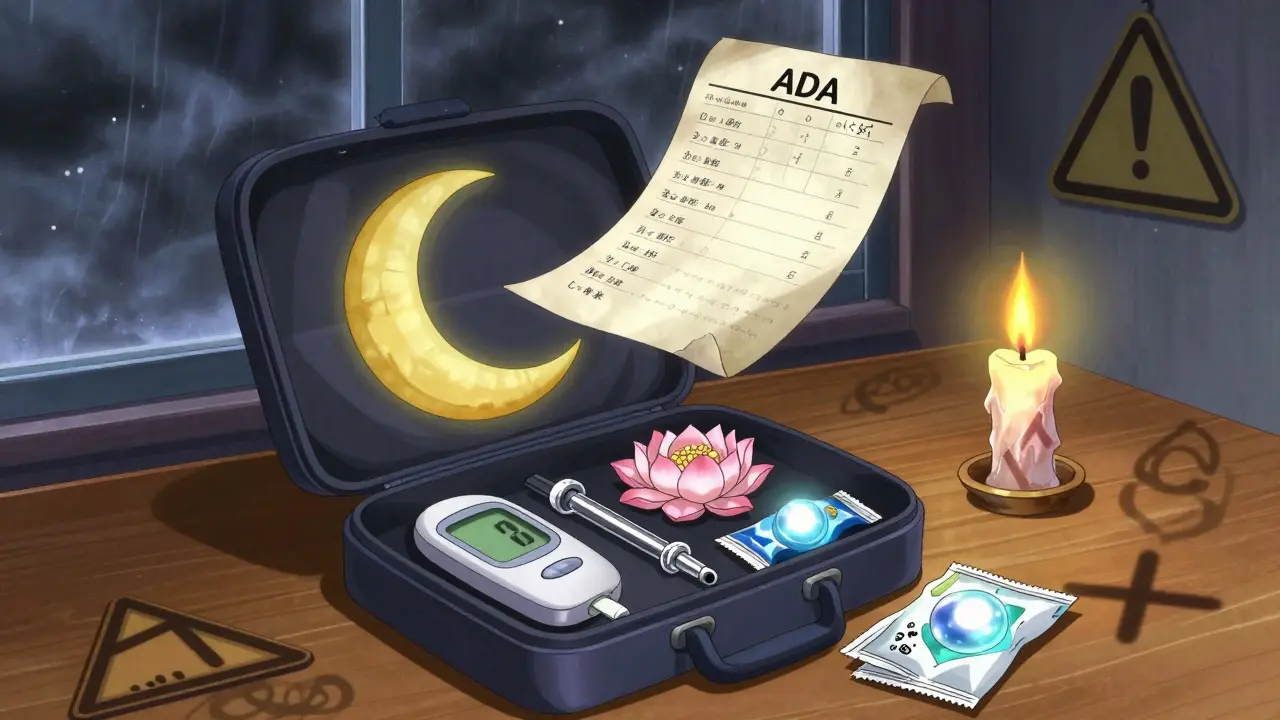
What to Keep in Your Sick-Day Kit
Don’t wait until you’re sick to prepare. Build your kit by October, before flu season hits.
- Glucose meter with 50+ test strips
- Ketone strips (urine or blood, minimum 10)
- 7-day supply of all your medications (in original bottles)
- Sugar-free drinks: water, diet soda, broth, electrolyte packets (Nuun, Pedialyte)
- Fast-acting carbs: juice boxes, glucose tabs, honey packets
- ADA Sick Day Log (print or save on your phone)
- Emergency contact list: your doctor, endocrinologist, pharmacy, and a trusted family member
People who use a sick-day kit are 78% less likely to end up in the hospital. It’s not magic-it’s preparation.
When to Call 911 or Go to the ER
Some situations can’t wait. Don’t hesitate to get help if you have:
- Blood sugar below 70 mg/dL that doesn’t improve after 30g of carbs
- Ketones above 1.5 mmol/L for more than 2 hours
- Vomiting for over 4 hours or diarrhea for over 6 hours
- Difficulty breathing, confusion, or extreme fatigue
- No urine output for 12 hours
These are not "wait and see" moments. DKA and AKI can kill within hours if untreated. Call 911 or go to the nearest ER. Tell them you have diabetes and you’re following sick-day rules.

Why Everyone’s Giving You Different Advice
Confusion is common. The ADA says stop metformin with vomiting. The IDF says stop it for any illness. Your endocrinologist says keep it. Your pharmacist says stop. A Reddit post says it’s fine.
The truth? Guidelines aren’t perfect. Experts disagree on insulin adjustments. Some clinics don’t even have written protocols. A 2024 study found 41% of patients got conflicting advice from their primary care doctor versus their endocrinologist. That’s why you need to know the science behind the rules-not just the advice.
Ask your doctor: "What’s my specific plan for metformin, SGLT2 inhibitors, and my blood pressure meds if I get sick?" Write it down. Keep it with your sick-day kit. Don’t rely on memory when you’re feverish and nauseous.
The Bottom Line: Preparation Saves Lives
Sick days don’t have to mean hospital days. The difference between staying home and ending up in the ICU often comes down to one thing: knowing what to do with your medications before you get sick. You don’t need to be a doctor. You just need to know the basics.
Stop metformin and SGLT2 inhibitors when you’re vomiting or dehydrated. Don’t skip insulin. Test your ketones. Drink fluids. Know your warning signs. Have a plan written down. And if in doubt-call your provider. You’re not overreacting. You’re protecting your health.
By the time you’re too sick to think clearly, it’s too late to learn. Start today. Build your kit. Talk to your doctor. Write your plan. Because when you’re sick, your meds can save you-or hurt you. You get to choose which one.
Should I stop my metformin if I have a stomach bug?
Yes. If you’re vomiting, having diarrhea, or have a fever, stop metformin immediately. Your kidneys can’t clear the drug properly when you’re dehydrated, which raises your risk of lactic acidosis. Don’t restart until you’ve been eating and drinking normally for at least 48 hours-and only after talking to your doctor.
Can I still take my blood pressure meds when I’m sick?
It depends. ACE inhibitors and ARBs (like lisinopril or losartan) can cause acute kidney injury if you’re not drinking enough fluids. If you’re taking less than 1,500 mL (6 cups) of fluid in 24 hours, pause them. Resume once you’re drinking normally again and your urine output returns to normal. Always check with your doctor before restarting.
Do I need to check ketones if my blood sugar is normal?
Yes-if you’re on an SGLT2 inhibitor. These drugs can cause euglycemic DKA, where your blood sugar stays in the normal range but your body is still producing dangerous ketones. Test ketones if you’re sick, even if your sugar is under 240 mg/dL. Blood ketones above 0.6 mmol/L mean you need medical help.
What if I can’t keep fluids down?
Sip small amounts every 10-15 minutes: water, broth, or sugar-free electrolyte drinks. If you can’t keep anything down for more than 4 hours, call your doctor or go to the ER. Dehydration leads to AKI and makes DKA worse. IV fluids may be needed. Don’t wait.
Should I skip insulin if I’m not eating?
No. Even if you’re not eating, your body still needs insulin to stop ketone production. For type 1 diabetes, increase your basal insulin by 10-20% every 4 hours if your blood sugar is above 15 mmol/L (270 mg/dL). For type 2, check with your provider-some need more insulin during illness, even if they’re not eating.
How do I know if I’m developing AKI?
Signs include: urinating much less than usual, swelling in your legs or ankles, feeling unusually tired, or having nausea. If you’re on an ACE inhibitor or ARB and you’re dehydrated, your kidneys are at risk. Check your urine output. If you haven’t peed in 8-12 hours, get medical help.
Is it safe to use over-the-counter cold medicine?
Be careful. Many cold medicines contain sugar, decongestants (which raise blood sugar), or alcohol. Choose sugar-free versions. Avoid decongestants like pseudoephedrine if your blood sugar is already high. Always check labels and ask your pharmacist: "Is this safe for someone with diabetes?"
What should I do if I’m confused about my sick-day plan?
Call your endocrinologist or diabetes educator. If you can’t reach them, call the ADA helpline at 1-800-DIABETES. Don’t guess. Don’t rely on internet advice. Your plan should be written down and reviewed with your care team at least once a year-ideally before flu season.
What to Do Next
Right now, open your medicine cabinet. Look at your diabetes and blood pressure meds. Do you know which ones to stop if you get sick? If not, write down your plan today. Print the ADA’s Sick Day Log. Pack your kit. Talk to your doctor. Make a list of your meds, your warning signs, and your emergency contacts.
Don’t wait until you’re feverish and vomiting to figure this out. The best time to prepare is when you’re healthy. Because when you’re sick, you won’t have the energy to think clearly. But if you’ve already planned it? You’ll be ready.
Stop metformin when sick. Period. No excuses. I saw my uncle end up in ICU because he kept taking it while vomiting. Don't be him.
I just want to take a moment to really sit with how terrifying it is that something as simple as a stomach bug can turn into a death sentence if you're diabetic and don't know the fine print on your meds. I mean, think about it-your body is basically screaming for help, but the very drugs meant to save you are quietly turning into poison because you didn't read the tiny footnote about dehydration. And we're supposed to just trust our doctors? But half the time they give conflicting advice. I spent three days in the ER last year because I kept my SGLT2 inhibitor on thinking, 'I'm not that sick.' Turns out, I was. Euglycemic DKA isn't a buzzword-it's a silent killer that doesn't even let your glucose spike to warn you. And now I keep ketone strips next to my toothbrush. Every. Single. Day.
You guys are doing AMAZING just by reading this and preparing! Seriously. This isn't just info-it's a lifeline. I started my sick-day kit last month and already used it when I got the flu. Tested ketones, stopped my glimepiride, kept sipping electrolytes, and stayed out of the hospital. YOU CAN DO THIS. Write it down. Print it. Stick it on your fridge. Your future self will thank you. 💪❤️
so u stop metformin when u puke... but u still take insulin even if u eat nothing? yeah ok doc. i bet ur also tellin folks to drink 6 cups of water while throwin up. lol. but hey at least the ADA printed it so it must be gospel. #blessed
I just want to say... thank you. Seriously. This post saved me. I’ve been on metformin for 7 years and never knew about lactic acidosis risk during illness. I had a bad cold last week, and I stopped my meds right away, checked ketones twice a day, and called my endo before things got scary. I didn’t panic-I had a plan. And I’m alive because of it. If you’re reading this and you’re diabetic-please, don’t wait until you’re sick to learn this. Print this. Share it. Save it. Your life matters.
Oh, so now we’re supposed to become amateur nephrologists and pharmacologists just to survive a cold? Brilliant. Let me just toss my ACE inhibitor like it’s expired milk while I’m barfing into a bowl and simultaneously calculating my basal insulin adjustments with a glucose meter in one hand and a juice box in the other. Meanwhile, my doctor’s office is closed, my pharmacy won’t answer at 2 a.m., and my ‘sick-day kit’ is just a drawer full of expired strips and a vague sticky note that says 'do something.' This isn’t healthcare-it’s a survival RPG with a side of medical gaslighting.
The casual dismissal of clinical nuance in this post is not only irresponsible-it is morally indefensible. To suggest that laypersons, many of whom are elderly, cognitively impaired, or socioeconomically disenfranchised, can reliably self-manage life-threatening medication adjustments during acute illness is to endorse systemic negligence under the guise of empowerment. The very premise that one can 'build a kit' and 'write a plan' ignores the structural failures of healthcare access, provider communication gaps, and the documented 41% discordance in guidelines cited within this very article. This is not preparation. This is performative self-help propaganda that absolves institutions of their duty to provide coherent, standardized, and accessible care.
bro this is gold. i had dka last year and no one told me about sglut2 thing. i thought normal sugar = safe. big mistake. now i keep ketone strips in my pocket. if u sick, stop metformin. drink water. dont skip insulin. call doc. simple. u got this. india here and same rules work. u not alone.