
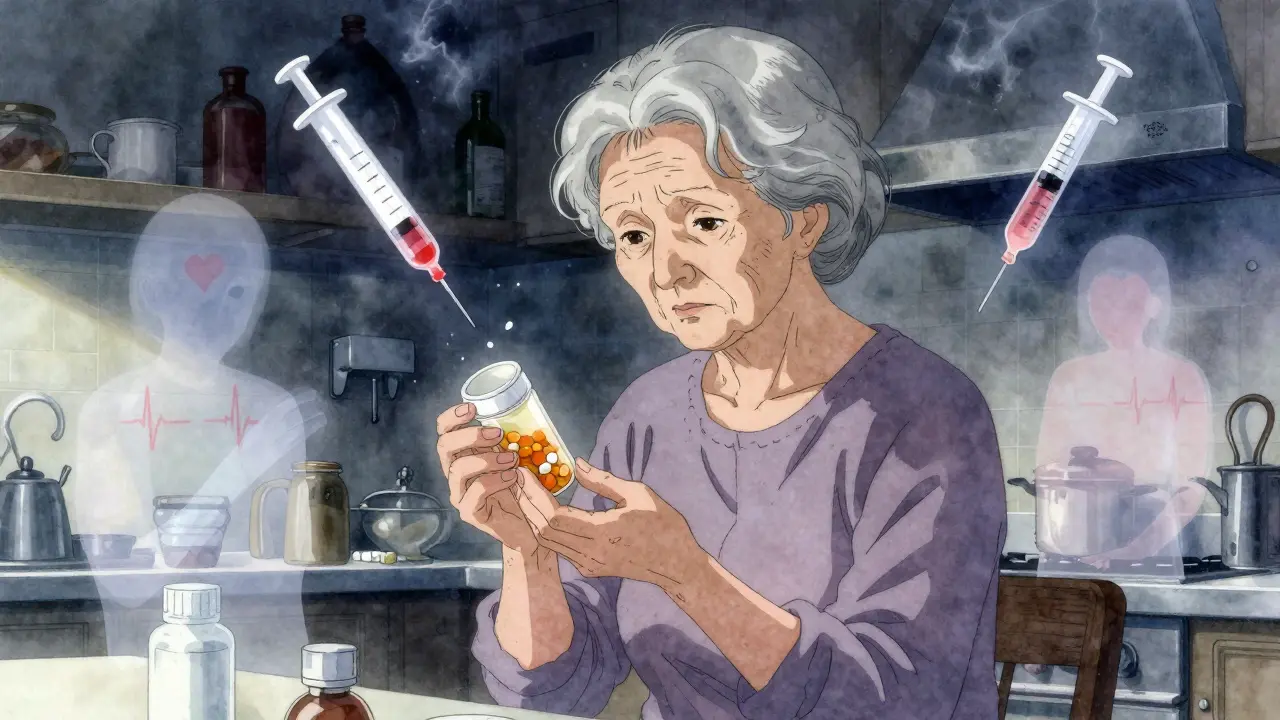
Skipping a pill here and there might seem harmless-maybe you forgot, or it didn’t feel necessary that day, or the cost was too high. But what if that one missed dose adds up? What if it’s not just about forgetting, but about the silent, slow erosion of your health? The truth is, medication nonadherence isn’t a minor oversight. It’s a public health crisis that kills more people than many realize.
Every Missed Dose Has a Ripple Effect
When you don’t take your medication exactly as your doctor ordered, you’re not just breaking a rule-you’re disrupting the biological balance your treatment was designed to restore. For someone with high blood pressure, skipping a dose can cause dangerous spikes in pressure that damage arteries over time. For someone on insulin, missing even one injection can send blood sugar soaring, leading to emergency hospital visits. For those with depression or schizophrenia, skipping meds can trigger relapses that take weeks or months to recover from.
Studies show that about half of all people taking medication for chronic conditions don’t take them as prescribed. That’s not a small number-it’s millions of people. And the consequences aren’t theoretical. In the U.S. alone, medication nonadherence contributes to up to 125,000 preventable deaths each year. That’s more than traffic accidents. More than opioid overdoses. More than many cancers.
Why People Skip Their Meds-It’s Not Just Forgetting
People don’t skip meds because they’re lazy. The reasons are real, complex, and often tied to systemic issues.
- Cost: One in 12 working-age adults in the U.S. says they’ve skipped a dose because they couldn’t afford it. In 2021, out-of-pocket drug costs rose to $63 billion. For seniors on fixed incomes, choosing between medicine and groceries isn’t a hypothetical-it’s daily reality.
- Side effects: Fear of nausea, dizziness, weight gain, or sexual dysfunction makes people stop. Many don’t tell their doctor because they think it’s normal or they’re being judged.
- Complex regimens: Taking five different pills at three different times a day? It’s overwhelming. No wonder adherence drops over time.
- Lack of understanding: If you don’t know why a pill matters-especially if you feel fine-you’re less likely to take it. Many don’t realize that high cholesterol or early-stage diabetes often have no symptoms until it’s too late.
- Systemic barriers: Living in a pharmacy desert, lacking transportation, not having a regular doctor, or mistrusting the medical system due to historical discrimination all play a role. Black, Latino, and Indigenous communities face higher rates of nonadherence not because of personal choices, but because of unequal access.
The Hospital Door Is Often Just One Missed Dose Away
Nonadherence doesn’t just make you sicker-it lands you in the hospital. About 20% of Medicare patients who get readmitted within 30 days are sent back because they didn’t take their meds. Half of those readmissions are directly tied to skipping pills.
Think about heart failure. If you stop taking your diuretic because you don’t want to pee all night, fluid builds up. Your lungs fill. You can’t breathe. You end up in the ER. That hospital stay costs $10,000 to $20,000. And it’s entirely preventable.
Same with asthma. Skipping inhalers leads to flare-ups. COPD patients who don’t use their bronchodilators regularly end up in intensive care. Diabetics who skip metformin or insulin risk nerve damage, kidney failure, or amputations down the line.
And then there’s mental health. Nearly 60% of people with serious mental illness don’t take their meds consistently. That’s not because they don’t care-it’s because of stigma, side effects, or lack of support. But the result? More emergency calls, more police interventions, more time in jail instead of treatment.

The Financial Toll Is Staggering
The cost of nonadherence isn’t just measured in lives lost. It’s measured in billions of dollars.
In 2016, the U.S. spent $529 billion on avoidable healthcare costs because people didn’t take their meds. That includes emergency room visits, hospital stays, long-term care, and lost productivity. The average patient who skips meds adds $5,000 to $50,000 in extra costs over a year.
And it’s not just the system that pays. Individuals pay too. A person who skips blood pressure meds might end up with a stroke. The cost of that stroke? Over $200,000 in lifetime care. The lost wages. The need for home care. The emotional toll on family.
In Europe, nonadherence creates €80-125 billion in avoidable costs every year. In Australia, where I live, the same patterns are emerging-rising drug prices, aging populations, and growing gaps in access.
Older Adults Are at the Highest Risk
People over 65 are the most likely to be on multiple medications. On average, they take four to six prescriptions daily. That’s a lot to manage.
ChenMed estimates that 100,000 deaths among older adults each year in the U.S. are preventable-if only they’d taken their meds. Why? Memory issues. Confusion over pill schedules. Difficulty opening bottles. Fear of interactions. And often, no one checking in on them.
One woman in Melbourne told her pharmacist she stopped her blood thinner because she was afraid of bleeding. She didn’t know that skipping it increased her stroke risk by 500%. She didn’t know the alternative was a simple, low-dose version. She just didn’t ask.
What Actually Works to Fix This
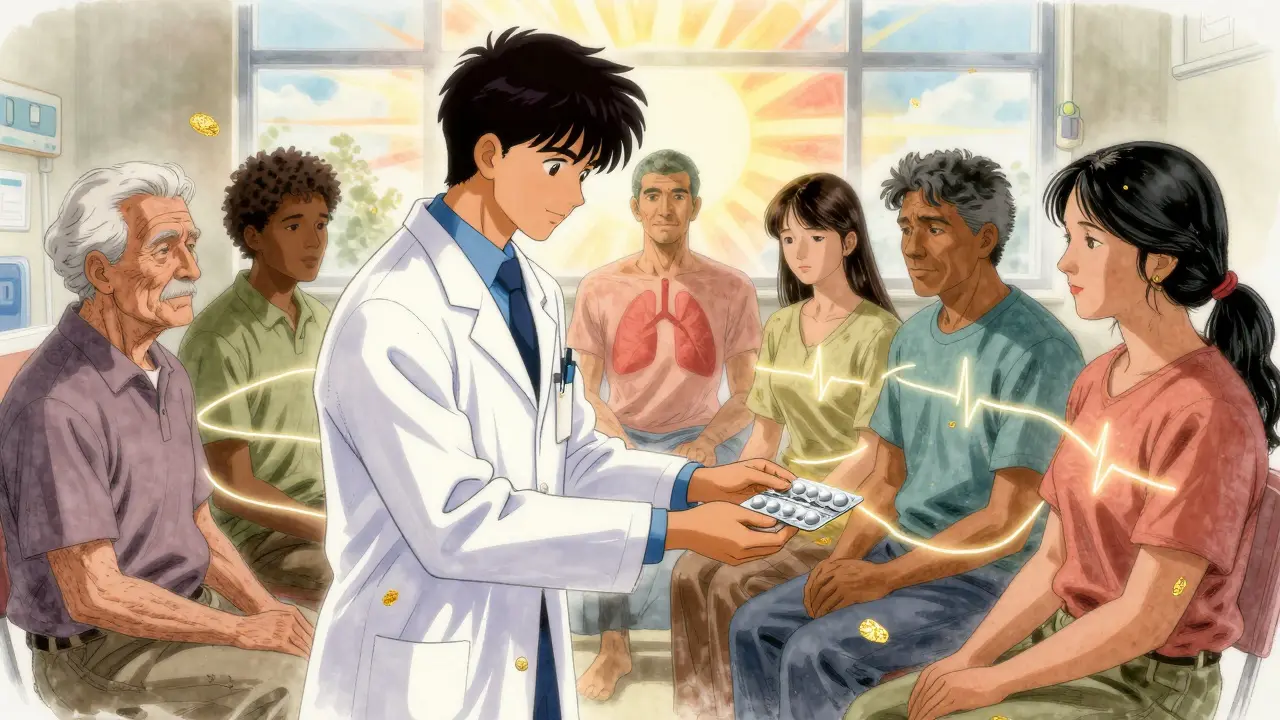
There’s no single fix. But there are proven strategies.
- Pharmacist-led counseling: When pharmacists take 10 minutes to sit down and explain why each pill matters, adherence jumps by 15-20%. They can also simplify regimens-switching from three pills a day to one combo pill.
- Text reminders: A simple daily text saying “Take your lisinopril” improves adherence by 12-18%. It’s cheap. It’s effective.
- Blister packs and dosette boxes: Pre-sorted pills by day and time make it impossible to forget. Many pharmacies offer them for free or low cost.
- Medication therapy management (MTM): A pharmacist reviews all your meds, checks for interactions, and helps you cut unnecessary ones. Studies show $3-$10 saved for every $1 spent on MTM.
- Integrated care: When your doctor, pharmacist, and nurse talk to each other-instead of working in silos-you get better support. That’s especially critical for minority groups who face systemic barriers.
But here’s the problem: most of these services aren’t covered by insurance. Pharmacist time? Not reimbursed. Home visits? Not paid for. That means even when solutions exist, they’re not widely available.
You’re Not Alone-And Help Is Available
If you’re skipping meds because of cost, ask your doctor about generic alternatives. Ask if there’s a patient assistance program. Many drug companies offer free or low-cost meds to those who qualify.
If you’re scared of side effects, don’t stop. Call your doctor. There’s often another option. Maybe a lower dose. Maybe a different pill. Maybe a non-pill treatment.
If you’re overwhelmed by the number of pills, ask for a med review. Bring all your bottles to your pharmacist. They can help you cut the clutter.
If you’re lonely and forgetful, ask a family member to help. Or use a phone alarm. Or get a pill box with a light that flashes when it’s time.
Medication adherence isn’t about perfection. It’s about progress. Even getting to 80% adherence makes a huge difference. The goal isn’t to be flawless-it’s to stay alive, stay out of the hospital, and keep living your life.
What You Can Do Today
- Write down every pill you take, including dose and time.
- Ask your pharmacist: “Is there a simpler way to take these?”
- Ask your doctor: “What happens if I miss a dose?”
- Set a daily phone alarm for your most important meds.
- If cost is an issue, say it out loud. “I can’t afford this.” That’s not weakness-it’s the first step to getting help.
Medications aren’t magic. They’re tools. And like any tool, they only work when you use them correctly. Skipping them doesn’t make you stronger. It doesn’t make you independent. It just makes you vulnerable.
What happens if I skip one dose of my medication?
It depends on the medication. For some, like antibiotics, skipping even one dose can let bacteria survive and become resistant. For others, like blood pressure or cholesterol pills, one missed dose won’t cause immediate harm-but it increases your long-term risk of stroke, heart attack, or kidney damage. Consistency matters more than perfection.
Why do people stop taking their meds even when they know it’s dangerous?
Most don’t stop because they’re careless. They stop because they’re scared of side effects, can’t afford them, don’t understand why they’re needed, or feel overwhelmed by the number of pills. Some distrust the system. Others think they feel fine, so the meds aren’t working. The truth? If you feel fine, it’s often because the meds are working.
Can I just stop taking my meds if I feel better?
Never stop without talking to your doctor. Many conditions like high blood pressure, diabetes, or depression don’t have obvious symptoms when they’re under control. Stopping meds can cause your condition to come back worse than before. Even if you feel fine, your body still needs the medication to stay stable.
Are generic drugs less effective than brand-name ones?
No. Generic drugs contain the same active ingredients as brand-name drugs and are required by law to work the same way. The only differences are in fillers, color, or shape. Most doctors prescribe generics because they’re just as safe and effective-but much cheaper. If cost is an issue, ask for the generic version.
How can I remember to take all my pills every day?
Use a pill organizer with compartments for morning, afternoon, evening, and night. Set phone alarms labeled with the name of the pill. Ask a family member to check in. Or ask your pharmacist about blister packs-they sort your pills by day and time. Technology helps, but human support works better.
Is medication nonadherence a bigger problem in certain communities?
Yes. Black, Latino, Indigenous, and low-income communities face higher rates of nonadherence-not because of personal choices, but because of systemic barriers: lack of access to pharmacies, higher drug costs, language barriers, distrust in medical systems, and fewer healthcare providers. These are not individual failures-they’re societal failures that need policy solutions.
Can I talk to my pharmacist about my meds without a doctor’s note?
Yes. Pharmacists are trained medication experts. You can walk in and ask for a free med review. Bring all your pills-even vitamins and supplements. They can check for interactions, simplify your regimen, and tell you if you’re taking something you don’t need. No appointment needed.
What should I do if I can’t afford my medication?
Don’t skip doses. Don’t cut pills in half. Ask your doctor for a generic. Ask your pharmacist about patient assistance programs. Many drug companies offer free meds to people who qualify based on income. Some states and nonprofits also help. Calling your pharmacy is the first step-no shame in asking.
Medications are meant to help you live-not to be a burden. If you’re struggling, you’re not failing. You’re just stuck. And help is closer than you think.
Just took my blood pressure med after forgetting yesterday. Feels good to be back on track. One day at a time.
I used to skip my antidepressants because I 'felt fine'-until I didn't. Like, at all. Then I ended up in the ER crying in a hallway because I couldn't remember my own phone number. Don't wait for a breakdown to start caring. Your brain isn't a battery you can just turn off and on. It's a fragile, beautiful thing. Please, just take the pill. Even if it's late. Even if you're mad. Even if you think it's not working. Just. Take. It.
My dad died from a stroke because he stopped his blood thinner after his wife passed. He said he didn't need it anymore. He didn't know it wasn't about feeling sick-it was about preventing disaster. I wish someone had sat him down and explained it like this. This post? It's the one I wish I'd found five years ago.
The statistical analysis presented herein is both methodologically sound and empirically robust; however, the absence of longitudinal cohort data limits the causal inference potential regarding nonadherence as a primary driver of mortality. Furthermore, the conflation of correlation with causation in the assertion that medication omission directly results in preventable deaths-while statistically prevalent-requires stratification by socioeconomic quartile, comorbidity burden, and healthcare access index to mitigate ecological fallacy.
Okay but like… why are we acting like this is some shocking revelation? People skip meds because they’re broke, tired, scared, or just done with a system that treats them like a number. And now we’re gonna act like the answer is ‘just take your pills’? Meanwhile, the same people who wrote this post probably have a $5 co-pay and a pharmacist who remembers their name. This isn’t about willpower. It’s about capitalism. And if you’re not talking about drug pricing, insurance loopholes, and Medicare gaps-you’re not talking about the real problem. Just saying.
I work in a rural clinic in India. People skip meds because they walk 10km for refills. No one cares. We give them pillboxes. They still skip. They say, I feel fine. I say, Good. That’s because the medicine works. They nod. Next month, same thing. No one talks about this. Not even here.
Hey-I used to be the person who skipped meds because I thought I was fine. Then I got hospitalized for a mini-stroke from high blood pressure. I didn’t even know I had it. Now I use a pill box, set three alarms, and my sister checks in every morning. It’s not about being perfect. It’s about being alive. And if you’re struggling, you’re not weak-you’re human. Reach out. Text someone. Call your pharmacist. You’re not alone. I’ve been there. I’m still here. And you can be too.
The efficacy of pharmacological interventions is contingent upon patient compliance, yet systemic failures in healthcare infrastructure-particularly in low-income urban and rural settings-render adherence metrics statistically irrelevant without structural reform. The current paradigm of individualized behavioral intervention is a Band-Aid on a hemorrhage. Policy must mandate subsidized access, pharmacist-led MTM reimbursement, and culturally competent outreach. Otherwise, we are merely documenting failure while pretending to solve it.
I’m 72 and on 7 meds. Some days I mix them up. Some days I just don’t feel like it. But I got a pill organizer from my pharmacy, and my grandson set up voice reminders on my tablet. He says, ‘Grandpa, if you don’t take your pills, you’re gonna miss my graduation.’ So I take them. Not because I’m good at it. But because I love him. And I want to be there.
Wait-so if I feel fine, does that mean my meds are working? Like… for real? I’ve been taking my cholesterol pill for 3 years and never checked my levels. I assumed it wasn’t doing anything. So if I feel fine, does that mean I’m actually doing okay? Or am I just lucky?