

Have you ever picked up a prescription refill and noticed the pill is suddenly blue instead of white, or oval instead of round? It can be a bit jarring, and it might even make you wonder if you're taking the wrong medication. You aren't alone-plenty of people get a momentary panic attack when their meds change looks. But here is the surprising part: those differences aren't an accident or a sign of poor quality. In fact, generic drugs are legally required to look different from their brand-name counterparts.
Key Takeaways
- Trademark laws prevent generic drugs from mimicking the exact look of brand-name meds to avoid consumer confusion.
- Visual differences (color, shape, size) do not change the drug's safety, strength, or effectiveness.
- Generics must be bioequivalent, meaning they work in the body just like the brand version.
- Differences in inactive ingredients like fillers and dyes are what cause the visual changes.
The Legal Tug-of-War: Trademarks vs. Medicine
To understand why your pill changed color, we have to look at the law. In the United States, Trademark Laws is a legal framework designed to protect the intellectual property and brand identity of a company, ensuring that consumers can distinguish one manufacturer's product from another . When a pharmaceutical company develops a new drug, they don't just patent the chemical formula; they often trademark the specific look of the pill.
The FDA (Food and Drug Administration) makes it very clear: trademark laws don't allow a generic drug to look exactly like another drug already on the market. If a generic manufacturer made a pill that was an identical twin to the brand-name version in color, shape, and size, they could be sued for trademark infringement. The law is there to prevent "confusion in the marketplace," even if that marketplace is your local pharmacy counter.
What Exactly Can Be Different?
While the active chemistry must be a match, the "packaging" of the medicine can vary wildly. When we talk about appearance, we're talking about a few specific attributes:
- Color: A brand pill might be bright yellow, while the generic is stark white or pale pink.
- Shape: You might move from a round tablet to a capsule or an oval-shaped pill.
- Size: Some generics are slightly larger or smaller, though the FDA encourages them to stay close to the original size to help patients.
- Scoring: Those little lines that let you break a pill in half? Those can differ between versions.
- Flavor: For chewable or liquid meds, the flavoring agents often differ.
These differences come down to Inactive Ingredients, which are substances like fillers, binders, colors, and preservatives that don't treat the condition but help the pill hold its shape or taste better . Because these don't affect how the drug works, the FDA allows them to vary.
| Feature | Brand-Name Drug | Generic Drug |
|---|---|---|
| Active Ingredient | Identical | Identical |
| Safety & Efficacy | High Standard | Equivalent Standard |
| Visual Appearance | Trademarked (Unique) | Must be distinct |
| Inactive Ingredients | Specific Formula | Varies by Manufacturer |
| Cost | Premium Price | Typically 80-85% cheaper |
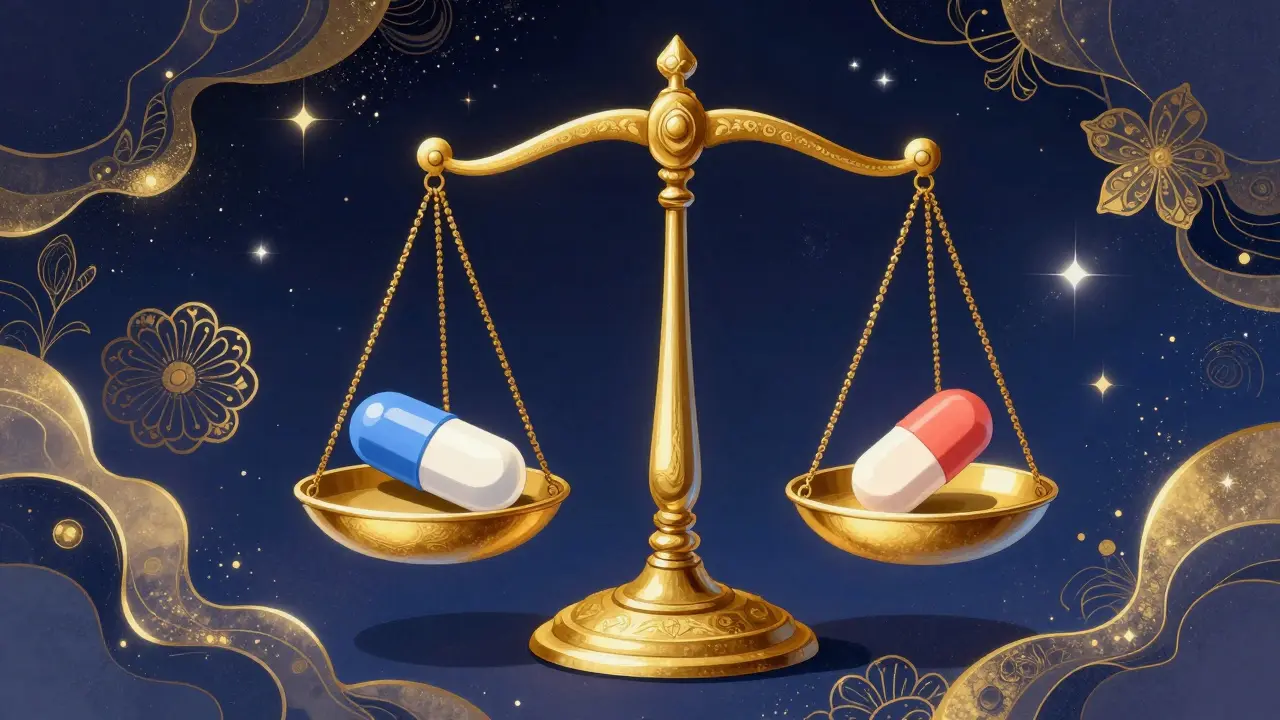
Does a Different Look Mean a Different Result?
This is the biggest worry for most patients: if it looks different, does it work differently? The short answer is no. To get approval, generic manufacturers must prove Bioequivalence, which is the requirement that a generic drug delivers the same amount of active ingredient into the bloodstream at the same rate as the brand-name drug .
The FDA's standards are incredibly tight. Most generic drugs show a tiny difference in absorption-sometimes as low as 3.5%-which is well within the acceptable range of 80% to 125%. Whether the pill is neon green or a dull beige, the Active Ingredient-the part that actually fights the disease-is exactly the same. It's like buying a generic brand of bottled water; the label is different, and the bottle might be a different shape, but the H2O inside is the same.
The Real-World Danger: Medication Confusion
While the legal side of things makes sense, the human side is trickier. If you've been taking a small white pill for ten years and suddenly your pharmacy switches suppliers and you get a large yellow one, it's natural to hesitate. This is known as medication confusion.
In some cases, this leads to actual errors. A patient might think they were given the wrong medicine and accidentally skip a dose, or worse, take a double dose because they aren't sure what they're looking at. This is why pharmacists often place unique labels on vials to alert you when the appearance of your medication has changed. It's a safety net to bridge the gap between trademark law and patient peace of mind.
Why We Accept This System
You might wonder why we don't just force generics to look the same to avoid this confusion. The reason is economic. The Hatch-Waxman Act, a landmark piece of legislation from 1984, created the path for generics to enter the market after a brand's patent expires. This system encourages innovation (by giving the original company a period of exclusivity) but eventually allows for massive cost savings for the public.
Because of this balance, generics now make up about 90% of the prescriptions filled in the US, while costing only a fraction of what brand-name drugs do. We trade a bit of visual consistency for a huge increase in affordability. For most people, saving 80% on a monthly prescription is a fair trade-off for having to check the pill color once in a while.
Can I ask my pharmacist for a specific color or shape of a generic?
Generally, no. Pharmacies buy from different wholesalers and manufacturers. While they can't always guarantee a specific look, they can tell you if the manufacturer has changed. If a specific shape or color is critical for your safety (e.g., you have trouble swallowing large pills), talk to your doctor about a specific formulation.
If the color is different, is it because of a different dye?
Yes, the color is determined by inactive ingredients like dyes and coatings. These are used for identification, stability, or to make the pill easier to swallow, and they do not interfere with the active drug's performance.
Are generic drugs less effective because they look different?
Not at all. The FDA requires that generics have the same active ingredients, strength, and quality as brand-name drugs. The appearance is a legal requirement of trademark law, not a reflection of the drug's potency.
What should I do if my refill looks different?
Don't panic, but do verify. Check the pharmacy label on the bottle to ensure it's the correct medication and dosage. If you're still unsure, call your pharmacist and ask if the manufacturer has changed. It's always better to ask than to guess.
Do all generic drugs have to look different from the brand?
Yes, under US trademark laws, they cannot be visually identical. However, the FDA encourages generics to keep a similar size and shape to the original to reduce patient confusion, as long as they aren't exact copies.
Next Steps for Patients
To keep your medication routine safe and stress-free, try these simple habits:
- Check the label: Always read the bottle name and dosage, not just the pill color.
- Ask at pickup: When picking up a refill, ask the pharmacist, "Is this the same manufacturer as last time?"
- Use a pill organizer: This helps you track your doses regardless of what the pill looks like.
- Document it: If you're managing multiple meds, keep a small note of what the current generic version looks like so you can spot changes immediately.