Rhabdomyolysis: Causes, Risks, and How Medications Can Trigger It
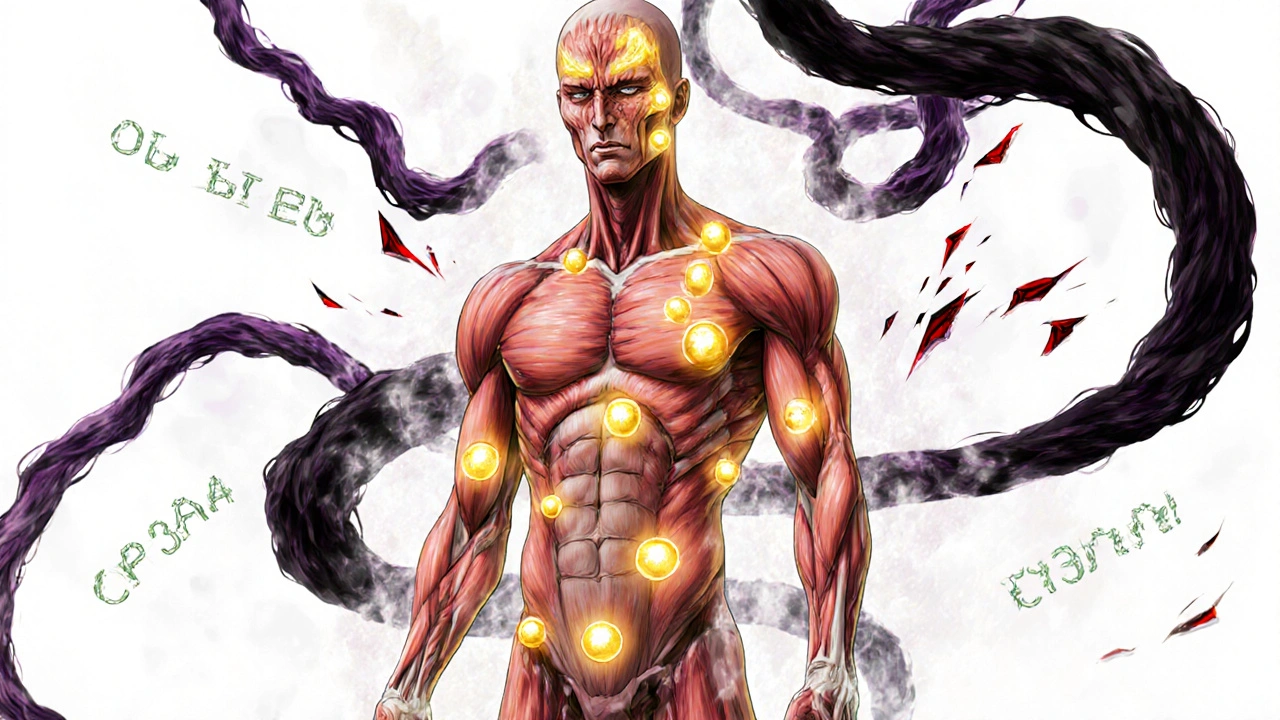
When muscle tissue breaks down too fast, it releases a protein called myoglobin into your bloodstream—this is rhabdomyolysis, a medical condition where skeletal muscle breaks down rapidly, releasing harmful substances into the blood that can damage kidneys. Also known as muscle breakdown syndrome, it’s not just a rare side effect—it’s a hidden danger tied to many common medications and health habits. Many people don’t realize that something as simple as a new statin, an intense workout, or mixing alcohol with certain drugs can set this process in motion.
Rhabdomyolysis often shows up after medication side effects, unintended and harmful reactions to drugs that can range from mild to life-threatening, especially with statins, antidepressants, or antipsychotics. It’s also linked to drug interactions, when two or more medications combine in a way that increases toxicity or reduces safety. For example, taking a statin with a fibrate or certain antibiotics can spike your risk. Even dehydration from a fever or overexertion can make your muscles more vulnerable. The real danger? Your kidneys can’t handle the flood of myoglobin—leading to acute kidney injury, which may need dialysis.
This isn’t just about gym-goers or people on heavy meds. It’s about anyone taking multiple prescriptions, especially seniors whose kidneys and liver process drugs slower. You might not feel anything until your urine turns dark brown—or until you’re in the ER with severe muscle pain and weakness. That’s why recognizing early signs matters: unexplained muscle soreness, swelling, or dark urine after starting a new drug? Don’t wait. Talk to your doctor. The posts below cover exactly these scenarios—how certain medications trigger muscle damage, what combinations to avoid, and how to spot the warning signs before it’s too late. You’ll find real-life examples, drug-specific risks, and practical steps to protect yourself.