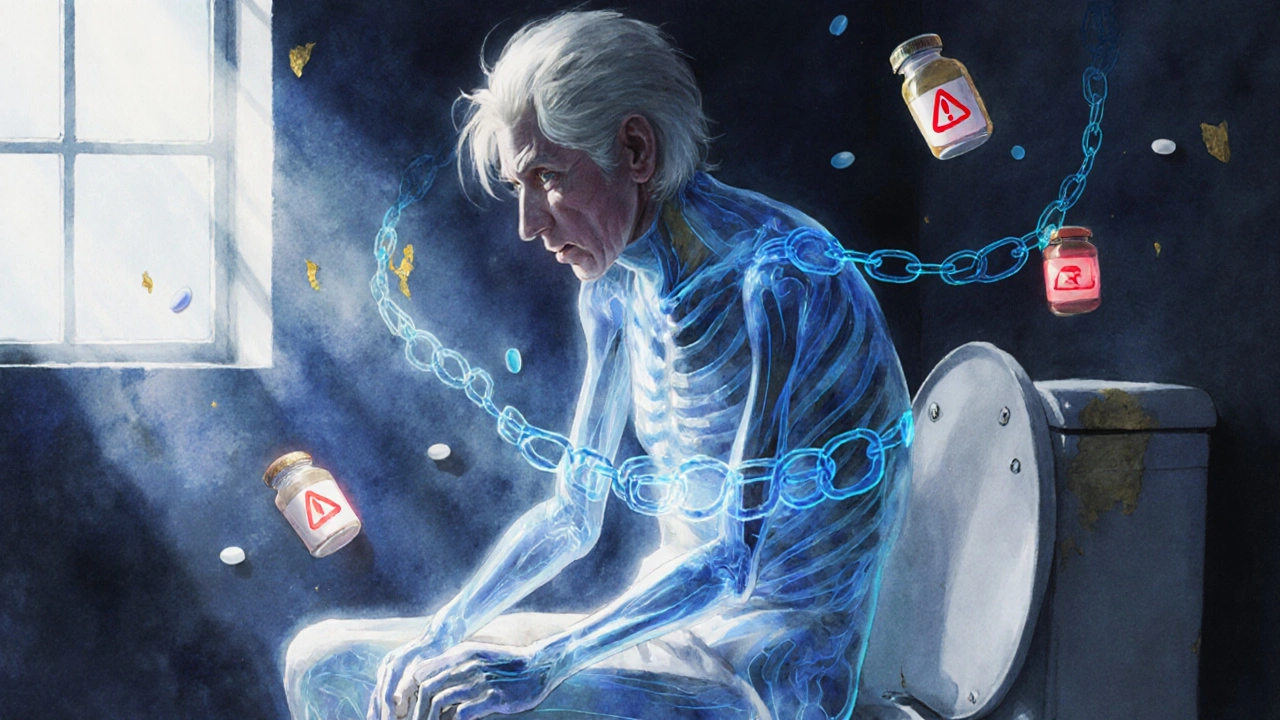
Urinary Retention: Causes, Risks, and What Medications Can Do
When your bladder won’t empty, you’re dealing with urinary retention, a condition where the bladder doesn’t fully empty during urination. Also known as bladder retention, it’s not just a nuisance—it can lead to infections, kidney damage, or sudden, painful blockage.
Many people don’t realize that common medications can trigger or worsen urinary retention. Drugs like antihistamines, decongestants, antidepressants, and even some pain relievers can relax the bladder muscle or tighten the sphincter, making it harder to pee. For older men, benign prostatic hyperplasia (BPH), an enlarged prostate that squeezes the urethra is the most frequent cause. But it’s not just men—women with nerve damage, pelvic surgery history, or neurological conditions like multiple sclerosis can also struggle with it. Even medication side effects, especially from drugs that affect the nervous system, are a silent contributor many doctors overlook.
What makes urinary retention tricky is how slowly it often develops. You might start noticing you’re going more often, but only in small amounts. Or you feel pressure in your lower belly but can’t fully empty. These aren’t normal aging signs—they’re red flags. If you’ve recently started a new medication and your urination habits changed, that’s a clue worth sharing with your doctor. Some people wait months before seeking help, but delaying can turn a manageable issue into an emergency.
The posts here don’t just list drugs—they show how they connect to real problems like this. You’ll find clear breakdowns of how antidepressants like SSRIs can affect bladder control, how common OTC meds might be silently causing trouble, and why certain diabetes or heart medications carry hidden risks. You’ll also see how aging changes your body’s response to these drugs, and what alternatives exist that won’t leave you stuck. This isn’t theory—it’s what people actually experience when their meds don’t match their body’s needs.