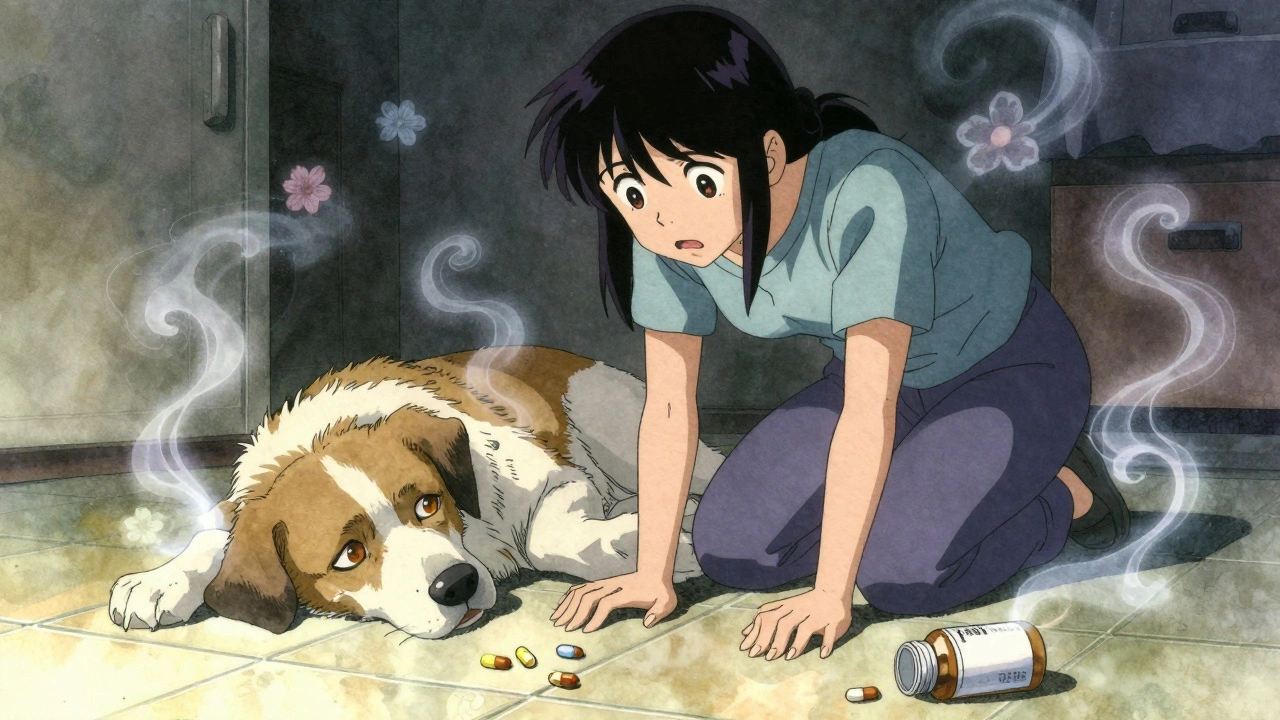
Human Meds Toxic to Pets: Common Drugs That Can Kill Your Dog or Cat
When you leave a pill on the nightstand, your pet doesn’t see medicine—they see a treat. Human meds toxic to pets, including common over-the-counter and prescription drugs like ibuprofen, acetaminophen, and antidepressants. Also known as pet-safe medication risks, these substances can trigger organ failure, seizures, or death in dogs and cats—even at tiny doses. A single 200mg ibuprofen tablet can cause stomach ulcers and kidney damage in a 20-pound dog. One acetaminophen pill can be fatal to a cat. There’s no safe amount for most human drugs in pets.
The real danger isn’t just the drug itself—it’s how quickly your pet’s body processes it. Dogs and cats don’t metabolize drugs the same way humans do. NSAIDs, like ibuprofen and naproxen, block enzymes pets need to protect their stomach lining and kidneys. Antidepressants, including SSRIs like fluoxetine, can cause serotonin syndrome in pets, leading to tremors, high fever, and heart problems. Even blood pressure pills, like beta-blockers or ACE inhibitors, can crash a pet’s blood pressure to dangerous levels. And don’t assume your pet won’t eat it—dogs will swallow anything. Cats are pickier, but they’ll still lick residue off your skin or a spilled pill.
You won’t always see symptoms right away. A dog might seem fine for hours after eating a pill, then suddenly collapse. A cat might act normal for a day, then start vomiting or stop eating. That’s why waiting is never an option. If your pet swallows any human medication, call your vet or a pet poison hotline immediately. Have the pill bottle ready—dose, name, and time matter more than you think. In many cases, early action can save a life.
Below, you’ll find real cases and clear advice on what to do when your pet gets into your meds. We cover which drugs are most dangerous, how to spot poisoning early, what to keep out of reach, and what your vet will do if it happens. No fluff. Just what you need to protect your pet before it’s too late.