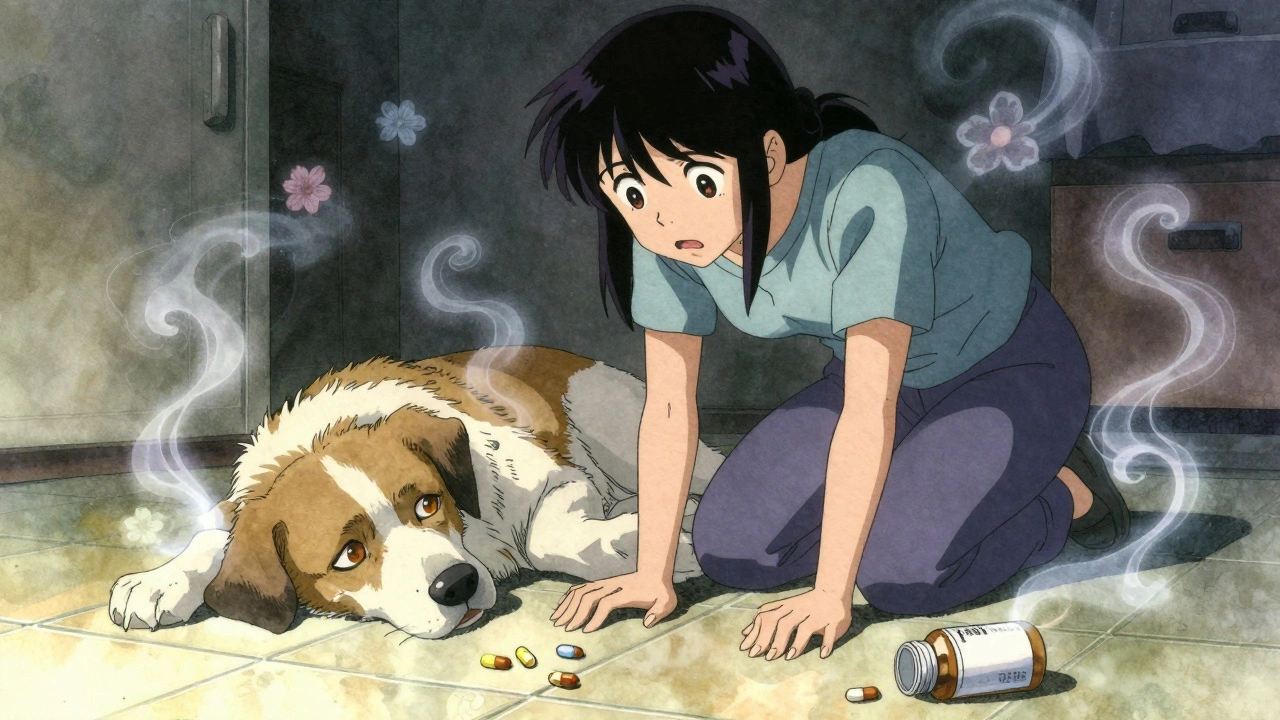
Pet Overdose: What to Do When Your Animal Accidentally Takes Too Much Medication
When a pet overdose, a dangerous accidental ingestion of medication by a dog, cat, or other animal. Also known as animal toxicity, it’s one of the most common veterinary emergencies—and often preventable. Your pet doesn’t know the difference between their pill and yours. A single human tablet of ibuprofen, acetaminophen, or even a blood pressure med can send them to the ER—or worse.
Common culprits include NSAIDs, nonsteroidal anti-inflammatory drugs like ibuprofen and naproxen, which can cause stomach ulcers and kidney failure in dogs. Antidepressants, including SSRIs like sertraline or fluoxetine, can trigger seizures or serotonin syndrome in cats. Even vitamin D supplements, often taken by humans for bone health, are deadly in tiny amounts to pets. These aren’t rare cases. Vet clinics see them weekly, especially around holidays when pills are left on nightstands or in open purses.
Signs of a pet overdose aren’t always obvious. Your dog might vomit once and seem fine. Your cat might just sleep more than usual. But internal damage can start within hours. Look for lethargy, drooling, wobbling, rapid breathing, pale gums, or seizures. Time is everything. Don’t wait for symptoms to worsen. Don’t try home remedies like hydrogen peroxide unless a vet tells you to. Call your vet or a pet poison control line immediately—have the pill bottle ready. Many cases are treatable if caught early.
What you’ll find below are real, practical guides on how medications affect pets differently than humans. From why Bactrim can spike INR in dogs to how antifungals and statins interact in cats, these posts break down the science without the jargon. You’ll learn which human meds are most dangerous, how to build a pet emergency kit, how to read labels for pet-safe dosing, and what to do when your pet gets into something they shouldn’t. This isn’t theory. These are stories from vet clinics, pet owners, and pharmacists who’ve seen it all—and want to help you avoid the worst.